Latest Comments by Shmerl
AMD have delayed the Ryzen 9 3950X and 3rd generation Threadripper until November
20 Sep 2019 at 10:17 pm UTC Likes: 1
20 Sep 2019 at 10:17 pm UTC Likes: 1
I got 3900X, but it was hard. They appear for a short time in stores, and are gone in minutes. So unless you catch those periods, they are basically all the time out of stock. May be with 3950X coming out, demand on 3900X will go down.
This can be useful: https://www.nowinstock.net/computers/processors/amd/ [External Link]
This can be useful: https://www.nowinstock.net/computers/processors/amd/ [External Link]
A French court has ruled that Valve should allow people to re-sell their digital games
20 Sep 2019 at 8:12 pm UTC
So no, you don't need to give up on actual ownership. You should just use the right tools for it.
20 Sep 2019 at 8:12 pm UTC
Quoting: ObsidianBlkI get this... and I'm not saying I don't have digital games myself, but still... I have CDs I bought in the early 90s that I can still read data off of. How many hard drives can you say the same for?Consider yourself lucky, but don't think it's a reliable method of storage. Optical discs deteriorate with time, and are a lot more error prone than hard drives which in contrast are built to last for many years.
Quoting: ObsidianBlkAlso, depending on the size of your collection (and the size of the games within your collection), that huge hard drive may still only store about a hundred or so (thinking ~50gb sized games these days).Not all games are 50 GB. But let's say they are and let's say you have 8 TB hard drive (around $200 these days). That will fit 160 of such games? If you need more, you can get even bigger hard drives (14 TB for example), or get several. Still a lot easier than managing a whole pile of optical disks to hold the same amount of data. If you need backups, get a NAS.
So no, you don't need to give up on actual ownership. You should just use the right tools for it.
A French court has ruled that Valve should allow people to re-sell their digital games
20 Sep 2019 at 4:32 pm UTC
20 Sep 2019 at 4:32 pm UTC
Quoting: ObsidianBlkAgain, I highly doubt any of this will really happen... But, call me old if you'd like, but I do like physically owning my games.Hard drive is physical, and can hold a ton of your backed up games, without requiring any individual physical media. Buy the game on GOG, back it up, use it and you are set. No need to sell it on physical disks or cards. They don't offer anything useful if you can download it.
Hot Lava from Klei Entertainment is in the works for Linux
20 Sep 2019 at 4:28 pm UTC
20 Sep 2019 at 4:28 pm UTC
Looks cool and hopefully will come out on GOG. One major issue I have with Klei though, they practically never respond to bug reports on their forums. So I don't really see them as reliable developers. I posted several in the past, and they never responded.
A French court has ruled that Valve should allow people to re-sell their digital games
20 Sep 2019 at 1:17 am UTC Likes: 1
20 Sep 2019 at 1:17 am UTC Likes: 1
Why would you want to go back to physical distribution? It's surely step backwards.
A French court has ruled that Valve should allow people to re-sell their digital games
20 Sep 2019 at 12:24 am UTC Likes: 1
20 Sep 2019 at 12:24 am UTC Likes: 1
Quoting: x_wingThe law just says that you should be able to resell, but it doesn't says where. So, I think that is quite probable that you will only be able to resell in a internal market of the store (and the store can get a fee from that resell)I don't think that would fit the idea of that law. I.e. it's not mandating a middleman. So it means you can sell it however you want, and the store and developers might get nothing from the secondary sales.
A French court has ruled that Valve should allow people to re-sell their digital games
20 Sep 2019 at 12:17 am UTC Likes: 1
I.e. this is not the main issue here. The main issue is simply less sales for developers due to legitimate resales. Not due to someone selling and keeping the copy.
20 Sep 2019 at 12:17 am UTC Likes: 1
Quoting: SalvatosPrecisely. Whether it’s a copy or an original, you have to part with a book to sell it, which is not the case with digital files; thus the can of worms.You can part with it - delete it. I see no difference in developers trusting you not to copy it around to others (DRM-free sale) vs trusting you to delete it once you sold it. You can as well make a photocopy of the book and then sell it if you really wanted to. Yet it's not bothering publishers to attach police bots to their books.
I.e. this is not the main issue here. The main issue is simply less sales for developers due to legitimate resales. Not due to someone selling and keeping the copy.
A French court has ruled that Valve should allow people to re-sell their digital games
20 Sep 2019 at 12:08 am UTC
20 Sep 2019 at 12:08 am UTC
Quoting: SalvatosOne could argue that you can’t actually sell files. What you have on your drive, whether you got it from Steam or a second-hand reseller, is a copy of the seller’s files. And you can’t resell your files for the same reason.That's moot. Printed book is also called a copy, except it's a physical one. What defines the right to resell is this first sale doctrine idea. In theory it's not wrong. You should be able to sell what you bought. Trying to restrict that is wrong. The problem is the nature of digital goods. As I said before, if that market can function well, such different nature shouldn't be a blocker for reselling. But if it can't - it's a problem. I wouldn't try to make a prediction how well it could work. It's hard to tell.
A French court has ruled that Valve should allow people to re-sell their digital games
19 Sep 2019 at 11:23 pm UTC Likes: 4
19 Sep 2019 at 11:23 pm UTC Likes: 4
This whole "license" thing is messed up. What you are buying are files. Something that contains digital goods. Attempts to frame it as "licensing" are just dumb methods to reduce user's rights.
However, the problem is in the nature of digital goods themselves. Once you have the result, it costs practically nothing to reproduce it. Question is, how to make this whole model sustainable. I.e. developers make a game, and they need to have certain number of sales to make profit. If this idea of reselling will make it a lot worse for them - they might go bust altogether. May be it won't though. It's up to the user, whether they'll prefer to support those developers, or buy a "used" copy (even though there is no idea of "used" in digital sense).
However, the problem is in the nature of digital goods themselves. Once you have the result, it costs practically nothing to reproduce it. Question is, how to make this whole model sustainable. I.e. developers make a game, and they need to have certain number of sales to make profit. If this idea of reselling will make it a lot worse for them - they might go bust altogether. May be it won't though. It's up to the user, whether they'll prefer to support those developers, or buy a "used" copy (even though there is no idea of "used" in digital sense).
A French court has ruled that Valve should allow people to re-sell their digital games
19 Sep 2019 at 11:11 pm UTC
However I don't think it fixes their worries about total number of sales going down. Imagine someone playing a game, and then selling it to others, who are buying from such people instead of the store directly. The bottom line would be less sales for the store and developers.
19 Sep 2019 at 11:11 pm UTC
Quoting: g000hFor those thinking this will be a good thing for DRM-Free Gaming: I think the opposite - This will push all new commercial games to become purely rental titles, i.e. You can download the game for free, but you won't be able to play it without a subscription.I can see some publishers reacting to this, by only selling games where you can't download actual games (i.e. Stadia). Essentially DRM on steroids. And this really "fixes" their worries about illegal reselling part. Transferring something like Stadia game access is trivial and the original user loses access as soon as it's transferred.
However I don't think it fixes their worries about total number of sales going down. Imagine someone playing a game, and then selling it to others, who are buying from such people instead of the store directly. The bottom line would be less sales for the store and developers.
- Proton Experimental upgraded to Proton 11 for better Linux gaming compatibility
- Colorado Age Attestation bill gets amendments to have open source excluded
- Framework Laptop 13 Pro revealed with major changes and great Linux support
- Steam Beta gets battery indicator for wireless gamepads as the new Steam Controller nears
- Australia targets Steam, Roblox and others in new legal push against extremists and predators
- > See more over 30 days here
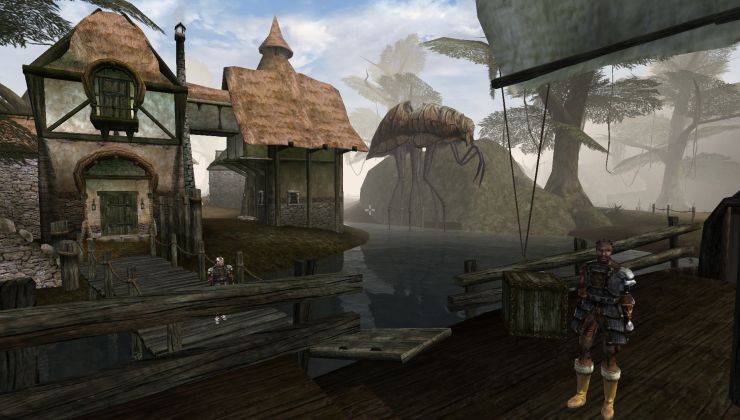 How to setup OpenMW for modern Morrowind on Linux / SteamOS and Steam Deck
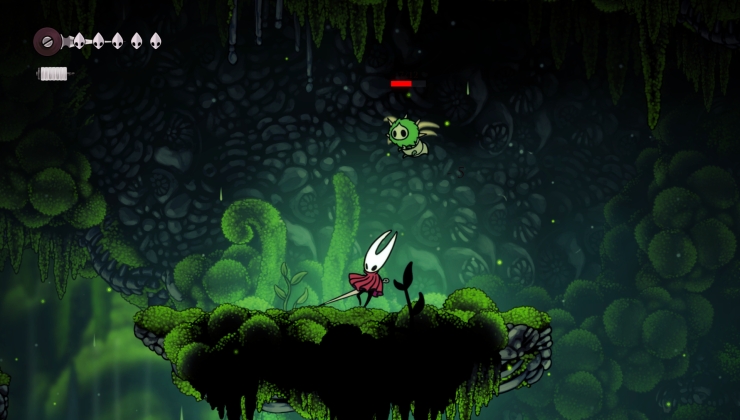 How to install Hollow Knight: Silksong mods on Linux, SteamOS and Steam Deck
- Shop Crush - Psychological Horror Thrift Sim with Literal Illusio…
- hollowlimb - Lutris alternatives
- Shmerl - Welcome back to the GamingOnLinux Forum
- Shmerl - Steam achievement conundrum
- GustyGhost - Fanatical links changes
- Ehvis - See more posts