 Support us on Patreon
 PayPal
Latest Comments by Shmerl
A French court has ruled that Valve should allow people to re-sell their digital games
19 Sep 2019 at 10:55 pm UTC
19 Sep 2019 at 10:55 pm UTC
Hm, according to this. EU already allowed it before. So what's new in this ruling?
https://en.wikipedia.org/wiki/First-sale_doctrine#Application_to_digital_copies [External Link]
https://en.wikipedia.org/wiki/First-sale_doctrine#Application_to_digital_copies [External Link]
In Europe, the European Court of Justice ruled, on July 3, 2012, that it is indeed permissible to resell software licenses even if the digital good has been downloaded directly from the Internet, and that the first sale doctrine applied whenever software was originally sold to a customer for an unlimited amount of time, as such sale involves a transfer of ownership, thus prohibiting any software maker from preventing the resale of their software by any of their legitimate owners.[5][6][7] The court requires that the previous owner must no longer be able to use the licensed software after the resale, but finds that the practical difficulties in enforcing this clause should not be an obstacle to authorizing resale, as they are also present for software which can be installed from physical supports, where the first-sale doctrine is in force.[8][9] The ruling applies to the European Union, but could indirectly find its way to North America; moreover the situation could entice publishers to offer platforms for a secondary market.
A French court has ruled that Valve should allow people to re-sell their digital games
19 Sep 2019 at 10:44 pm UTC
19 Sep 2019 at 10:44 pm UTC
Interesting. Basically, confirmation that first sale doctrine should apply to digital goods as well.
https://en.wikipedia.org/wiki/First-sale_doctrine [External Link]
However not sure if there is a major consensus that it's a good idea.
https://en.wikipedia.org/wiki/First-sale_doctrine [External Link]
However not sure if there is a major consensus that it's a good idea.
The Valve-funded shader compiler 'ACO' is being queued up for inclusion in Mesa directly (updated: merged)
19 Sep 2019 at 7:07 pm UTC Likes: 6
19 Sep 2019 at 7:07 pm UTC Likes: 6
That's Steam backend compiling shaders for specific architecture on the server, and then downloading and using it for local games. Not what they called online in the above quote.
The Valve-funded shader compiler 'ACO' is being queued up for inclusion in Mesa directly (updated: merged)
19 Sep 2019 at 6:27 pm UTC Likes: 1
19 Sep 2019 at 6:27 pm UTC Likes: 1
I think by online compilation they mean what I said above. Online → runtime. That should make it more clear. Simply compilation of shaders on your computer during game execution. Nothing to do with online as "on the network".
The Valve-funded shader compiler 'ACO' is being queued up for inclusion in Mesa directly (updated: merged)
19 Sep 2019 at 6:09 pm UTC
19 Sep 2019 at 6:09 pm UTC
Quoting: torbidoBecause in its announcement they mentioned "online compilation of game shadersDo you have an exact quote? I'm not sure what "online compilation" means. Possibly just on demand, during game execution.
The Valve-funded shader compiler 'ACO' is being queued up for inclusion in Mesa directly (updated: merged)
19 Sep 2019 at 5:37 pm UTC Likes: 9
19 Sep 2019 at 5:37 pm UTC Likes: 9
If this isn't clear, here is how it works. Games or anything else GPU targeted, ship GPU programs, that are called "shaders". To address the issue of multiple GPUs that exist (that have different hardware architecture), you can't just ship shaders in the form of the machine code, like you do for regular compiled CPU programs.
So what happens is (simple case, not covering complex ones like translation layers and Wine), that your shader written in high level language like GLSL or HLSL is compiled into portable intermediate representation (bytecode) i.e. SPIR-V during your development. This shader is shipped with the game. When the game runs, it passes the shader to the graphics backend (i.e. Vulkan "driver"). It has to use a compiler, to compile that SPIR-V shader into GPU machine code. That compiler is arleady specific to the GPU it's targeted at. I.e. the same game would work with Intel, AMD or Nvidia, in each of those cases, relying on different compilers to turn SPIR-V into machine code to be executed on the GPU.
This way developers themsleves don't need to compile shaders before hand into machine code, which makes games more portable and future proof. I.e. if you'd be shipping machine code shaders with your game, it would break on each new GPU generation or so, plus you'd need to compile for every existing GPU architecture yourself, and then select it at runtime yourself too. Basically - too messy.
Until now, Mesa used amdgpu (llvm based) compiler for AMD cards for Vulkan and OpenGL use cases:
* https://github.com/llvm-mirror/llvm/tree/master/lib/Target/AMDGPU [External Link]
* https://github.com/llvm-mirror/llvm/blob/master/docs/AMDGPUUsage.rst [External Link]
* https://llvm.org/docs/AMDGPUUsage.html [External Link]
Now developers are working on standalone compiler, that's not relying on llvm. Again, this has nothing to do with Steam service, but Valve developers are leading the effort though.
So what happens is (simple case, not covering complex ones like translation layers and Wine), that your shader written in high level language like GLSL or HLSL is compiled into portable intermediate representation (bytecode) i.e. SPIR-V during your development. This shader is shipped with the game. When the game runs, it passes the shader to the graphics backend (i.e. Vulkan "driver"). It has to use a compiler, to compile that SPIR-V shader into GPU machine code. That compiler is arleady specific to the GPU it's targeted at. I.e. the same game would work with Intel, AMD or Nvidia, in each of those cases, relying on different compilers to turn SPIR-V into machine code to be executed on the GPU.
This way developers themsleves don't need to compile shaders before hand into machine code, which makes games more portable and future proof. I.e. if you'd be shipping machine code shaders with your game, it would break on each new GPU generation or so, plus you'd need to compile for every existing GPU architecture yourself, and then select it at runtime yourself too. Basically - too messy.
Until now, Mesa used amdgpu (llvm based) compiler for AMD cards for Vulkan and OpenGL use cases:
* https://github.com/llvm-mirror/llvm/tree/master/lib/Target/AMDGPU [External Link]
* https://github.com/llvm-mirror/llvm/blob/master/docs/AMDGPUUsage.rst [External Link]
* https://llvm.org/docs/AMDGPUUsage.html [External Link]
Now developers are working on standalone compiler, that's not relying on llvm. Again, this has nothing to do with Steam service, but Valve developers are leading the effort though.
The Valve-funded shader compiler 'ACO' is being queued up for inclusion in Mesa directly (updated: merged)
19 Sep 2019 at 5:23 pm UTC Likes: 5
19 Sep 2019 at 5:23 pm UTC Likes: 5
Quoting: torbidoIs there any review or an article to backup your words?That's what it is. A shader compiler for the Vulkan driver (radv). I.e. why do you assume it's something to do with Steam (service)? If you think so, you should have a source for such assumption, not the other way around.
The Valve-funded shader compiler 'ACO' is being queued up for inclusion in Mesa directly (updated: merged)
19 Sep 2019 at 3:10 pm UTC Likes: 6
19 Sep 2019 at 3:10 pm UTC Likes: 6
Quoting: torbidoI don't think that it will provide any noticeable results with non Steam games. Correct me if I am wrong.It makes a difference for Vulkan games. Nothing to do with Steam specifically.
The Valve-funded shader compiler 'ACO' is being queued up for inclusion in Mesa directly (updated: merged)
19 Sep 2019 at 2:03 pm UTC Likes: 6
https://en.wikipedia.org/wiki/Shader [External Link]
19 Sep 2019 at 2:03 pm UTC Likes: 6
Quoting: torbidoThe shaders are available to be downloaded from Steam. How is it available for non Steam games?!Shaders come with games, Steam probably only provides cached versions of compiled shaders for some games that have too much stutter on startup without the cache. I.e. Steam has nothing to do with the concept of shaders themselves.
https://en.wikipedia.org/wiki/Shader [External Link]
The Valve-funded shader compiler 'ACO' is being queued up for inclusion in Mesa directly (updated: merged)
19 Sep 2019 at 2:01 pm UTC Likes: 1
19 Sep 2019 at 2:01 pm UTC Likes: 1
Nice progress! Some clarification from ACO developers about upstreaming and usage of their development Git repos:
This github repo [External Link] will include some optimizations that haven't yet been upstreamed for a while.
The contents of the aco-navi branch [External Link] is not upstreamed, so you will need it to test ACO with Navi.
- Proton Experimental upgraded to Proton 11 for better Linux gaming compatibility
- Colorado Age Attestation bill gets amendments to have open source excluded
- Framework Laptop 13 Pro revealed with major changes and great Linux support
- Steam Beta gets battery indicator for wireless gamepads as the new Steam Controller nears
- Australia targets Steam, Roblox and others in new legal push against extremists and predators
- > See more over 30 days here
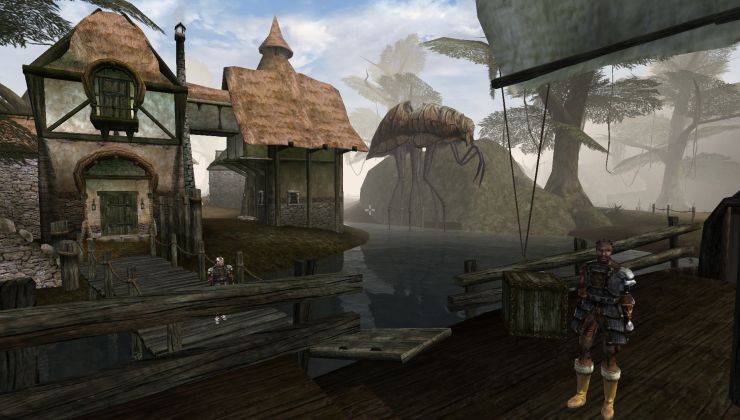 How to setup OpenMW for modern Morrowind on Linux / SteamOS and Steam Deck
 How to install Hollow Knight: Silksong mods on Linux, SteamOS and Steam Deck
- Shop Crush - Psychological Horror Thrift Sim with Literal Illusio…
- hollowlimb - Lutris alternatives
- Shmerl - Welcome back to the GamingOnLinux Forum
- Shmerl - Steam achievement conundrum
- GustyGhost - Fanatical links changes
- Ehvis - See more posts