Latest Comments by gradyvuckovic
Valve overhauled Steam Deck 'As Mouse' Gyro option in new Beta
22 Sep 2023 at 5:25 pm UTC
22 Sep 2023 at 5:25 pm UTC
I use gyro on a lot of games, particularly anything that involves aiming or first person, I find it really helpful with shooters. Always happy to see improvements there.
The open source Godot Engine has a new Godot Development Fund
13 Sep 2023 at 1:43 am UTC Likes: 8
Blender + Inkscape + Godot + Krita = ?
Now that's a really good power teamup I reckon.
13 Sep 2023 at 1:43 am UTC Likes: 8
Quoting: SoulprayerBlender+Godot=:heart:Ah, yes but what about:
Blender + Inkscape + Godot + Krita = ?
Now that's a really good power teamup I reckon.
Now official: you can buy a refurbished Steam Deck from Valve
9 Aug 2023 at 12:58 am UTC Likes: 6
9 Aug 2023 at 12:58 am UTC Likes: 6
If you're trying to get into PC gaming and are looking for a really dirt cheap entry price this could be a component of a really cheap build:
$319USD - Refub 64GB Steam Deck -
$25USD - 256GB SD card (eg: SanDisk 256GB Extreme)
$27USD - Bluetooth keyboard/mouse combo (eg: Logitech MK270R)
$25USD - USBC-HUB (eg: Anker 332)
$49USD - Bluetooth gamepad (eg: 8BitDo Pro 2)
$120USD - Cheap 27 inch 1080p monitor (eg: Acer KB272)
Can use the Steam Deck's speakers and mic for audio needs. At most you might need to add a small desk and a cheap chair if you don't already have one, but you have a setup which lets you play first person shooters at a desk with a mouse and keyboard, or play some racing games on a portable gaming system you can undock easily, or play some emulated console games on your TV for some couch gaming etc. All well supported and with good performance.
Bam, $565USD (plus taxes/delivery fees etc) and you have a great entry to PC gaming.
At $1149USD, it's less than half of the cost of a new RTX 4080! [External Link]
And you could easily upgrade the setup later with a dedicated desktop gaming PC if you wish, upgrade the keyboard/mouse/monitor/etc, as you need/like, and the Steam Deck will always be still useful regardless.
Prices based on searches for products on US Amazon store.
$319USD - Refub 64GB Steam Deck -
$25USD - 256GB SD card (eg: SanDisk 256GB Extreme)
$27USD - Bluetooth keyboard/mouse combo (eg: Logitech MK270R)
$25USD - USBC-HUB (eg: Anker 332)
$49USD - Bluetooth gamepad (eg: 8BitDo Pro 2)
$120USD - Cheap 27 inch 1080p monitor (eg: Acer KB272)
Can use the Steam Deck's speakers and mic for audio needs. At most you might need to add a small desk and a cheap chair if you don't already have one, but you have a setup which lets you play first person shooters at a desk with a mouse and keyboard, or play some racing games on a portable gaming system you can undock easily, or play some emulated console games on your TV for some couch gaming etc. All well supported and with good performance.
Bam, $565USD (plus taxes/delivery fees etc) and you have a great entry to PC gaming.
At $1149USD, it's less than half of the cost of a new RTX 4080! [External Link]
And you could easily upgrade the setup later with a dedicated desktop gaming PC if you wish, upgrade the keyboard/mouse/monitor/etc, as you need/like, and the Steam Deck will always be still useful regardless.
Prices based on searches for products on US Amazon store.
FACEIT Anti-Cheat to support Linux / Steam Deck with BattleBit Remastered
17 Jul 2023 at 4:36 am UTC Likes: 1
17 Jul 2023 at 4:36 am UTC Likes: 1
Always great to see the Steam Deck is helping encourage developers to ensure their games run on Linux even with anticheat.
Valve appear to be banning games with AI art on Steam (updated)
2 Jul 2023 at 1:21 am UTC Likes: 5
Those two things are not even remotely the same thing. They really aren't. Humans look at examples of things, find patterns, learn, invent new things based on what they've seen, they experiment and try things, and stick with concepts they like or which they show to other people and are well received. None of the AI image generators in the market today do that.
The first artists who learned to paint and draw, and stylise humans with interesting representations, did so without any examples to look at at all. They just looked at other people, and experimented with different strokes and lines, and experimented until they found something they liked, and kept going with it and evolved their style over time.
AI image generators are certainly not doing that, they don't experiment, they have no sense of even 'liking' or 'disliking' what they're generating or being fed, a crucial aspect of how humans learn to do art and how new art styles are developed, so how could the AI be 'learning' the same way humans do?
All AI image generators do, is take a bunch of examples of data, and their algorithms are tuned to reproduce that data, and to combine it together based on keys. Combining the image data of blonde hair with image data of blue eyes to create an image of a person with both. There's no 'learning', there's no 'experimenting', and there's certainly no 'art'.
To me legally there's little difference between running 100,000 images through an AI image generator and claiming copyright over the result, and running 1 image through an image editor with a hue slider to shift the colour and claiming copyright over the result.
The only difference is, the latter example is infringing the copyright of one prior artist, the former example is infringing the copyright of likely thousands of artists. Both equally wrong.
AI image generators do have potential uses, such as a means of automatically generating variations of artworks automatically to fill a need for a large sum of procedural data, but AI image generators should not be used as a smokescreen to basically steal copyrighted works from artists, which seems to be the way they're being mainly used right now.
So I think it's very good to see Valve insisting 'If you're using AI image generators in your game, then you should be able to prove you have copyright over the images that were used to train the AI image generator'.
2 Jul 2023 at 1:21 am UTC Likes: 5
Quoting: gaboverstaThe recent news about AI generated images getting worse as previous AI generated images end up in the training data shows that it is still far closer to copying than actual creativity.I think this is the key. One of the biggest objections I have is the way many people have insisted there's 'no difference' between AI software having it's parameters tuned on a dataset of copyrighted images and 'humans learning art by studying the works of other artists'.
An intelligent artist improves by referencing their own work, not degrades.
"They're both just looking at pictures and learning, what's the difference bro??"And every time I hear that my first thought is, "Clearly you don't understand either AI or art".
Those two things are not even remotely the same thing. They really aren't. Humans look at examples of things, find patterns, learn, invent new things based on what they've seen, they experiment and try things, and stick with concepts they like or which they show to other people and are well received. None of the AI image generators in the market today do that.
The first artists who learned to paint and draw, and stylise humans with interesting representations, did so without any examples to look at at all. They just looked at other people, and experimented with different strokes and lines, and experimented until they found something they liked, and kept going with it and evolved their style over time.
AI image generators are certainly not doing that, they don't experiment, they have no sense of even 'liking' or 'disliking' what they're generating or being fed, a crucial aspect of how humans learn to do art and how new art styles are developed, so how could the AI be 'learning' the same way humans do?
All AI image generators do, is take a bunch of examples of data, and their algorithms are tuned to reproduce that data, and to combine it together based on keys. Combining the image data of blonde hair with image data of blue eyes to create an image of a person with both. There's no 'learning', there's no 'experimenting', and there's certainly no 'art'.
To me legally there's little difference between running 100,000 images through an AI image generator and claiming copyright over the result, and running 1 image through an image editor with a hue slider to shift the colour and claiming copyright over the result.
The only difference is, the latter example is infringing the copyright of one prior artist, the former example is infringing the copyright of likely thousands of artists. Both equally wrong.
AI image generators do have potential uses, such as a means of automatically generating variations of artworks automatically to fill a need for a large sum of procedural data, but AI image generators should not be used as a smokescreen to basically steal copyrighted works from artists, which seems to be the way they're being mainly used right now.
So I think it's very good to see Valve insisting 'If you're using AI image generators in your game, then you should be able to prove you have copyright over the images that were used to train the AI image generator'.
Steam Summer Sale 2023 is live with the Steam Deck up to 20% off
30 Jun 2023 at 2:53 am UTC Likes: 4
30 Jun 2023 at 2:53 am UTC Likes: 4
20% off the 512GB Steam Deck is a hell of a deal. That thing was already well worth the price at it's normal price, but 20% off? If you don't have one I'd snap that up.
Blender v3.6 is out now as a new long-term support release
29 Jun 2023 at 3:10 am UTC Likes: 2
29 Jun 2023 at 3:10 am UTC Likes: 2
Blender is OP!
Linux hits a multi-year high for user share on Steam thanks to Steam Deck
2 Jun 2023 at 11:01 pm UTC Likes: 8
2 years ago, MacOS was closer to 3%, and Linux was back at 0.8%. Now it's more like 1.5% vs 2.4%. We're much closer and still gaining ground.
2 Jun 2023 at 11:01 pm UTC Likes: 8
Quoting: Mountain ManIt's somewhat disheartening that despite a big multi-year push from Valve, Linux still sits behind MacOS at less 1.5% market share.It's OK, this was always going to be a marathon and not a sprint. The important thing is that Linux's marketshare is growing and as long as it maintains that direction, this can take as long as necessary.
2 years ago, MacOS was closer to 3%, and Linux was back at 0.8%. Now it's more like 1.5% vs 2.4%. We're much closer and still gaining ground.
The latest Steam Survey had a huge surge of Simplified Chinese
13 Apr 2023 at 2:29 pm UTC Likes: 5
13 Apr 2023 at 2:29 pm UTC Likes: 5
I have some theories and opinions on why Linux isn't particular popular in non-English speaking countries.
It's because, in my opinion, the experience for Non-English speaking users on Linux isn't particularly great.
Aside from often lackluster translations available for software on Linux, and the OSes themselves, and even the distro websites, or OS manuals, the bigger issue is that the UX on Linux is still not quite at the point where someone could sit down at a Linux OS desktop PC and figure out every issue through navigating a GUI alone. It's not that completely self explanatory. It's still necessary to go online for help, and often the answers will be on Reddit, or Github, or some online forum, etc, and all of it in English.
And it's often the case that there's no where to go online to ask for help because most of the Linux communities are English-only. Either through enforced rules forbidding people from using languages other than English or simply because no one in the communities happens to speak a language other than English, or at least few enough speak non-English languages to make finding help online basically a non-starter.
I just don't think multilanguage support on Linux seems to be a particularly high priority and so it's not surprising to me at all that the userbase numbers in non-English speaking countries is so low.
English is spoken by less than 1 in 5 people on the planet, as long as multilanguage support on Linux remains lackluster, I think that's going to keep holding back growth in non-English markets.
It's because, in my opinion, the experience for Non-English speaking users on Linux isn't particularly great.
Aside from often lackluster translations available for software on Linux, and the OSes themselves, and even the distro websites, or OS manuals, the bigger issue is that the UX on Linux is still not quite at the point where someone could sit down at a Linux OS desktop PC and figure out every issue through navigating a GUI alone. It's not that completely self explanatory. It's still necessary to go online for help, and often the answers will be on Reddit, or Github, or some online forum, etc, and all of it in English.
And it's often the case that there's no where to go online to ask for help because most of the Linux communities are English-only. Either through enforced rules forbidding people from using languages other than English or simply because no one in the communities happens to speak a language other than English, or at least few enough speak non-English languages to make finding help online basically a non-starter.
I just don't think multilanguage support on Linux seems to be a particularly high priority and so it's not surprising to me at all that the userbase numbers in non-English speaking countries is so low.
English is spoken by less than 1 in 5 people on the planet, as long as multilanguage support on Linux remains lackluster, I think that's going to keep holding back growth in non-English markets.
- Blender change the Anthropic AI funding deal, with discussions planned for AI Policies
- Here's the top Steam Deck games for April 2026
- Steam Survey for April 2026 shows Linux still trending well
- SteamOS 3.8.3 Beta gets ready for the Steam Machine and Steam Controller
- Linux Mint begin shipping HWE (Hardware Enablement) ISOs for better hardware support
- > See more over 30 days here
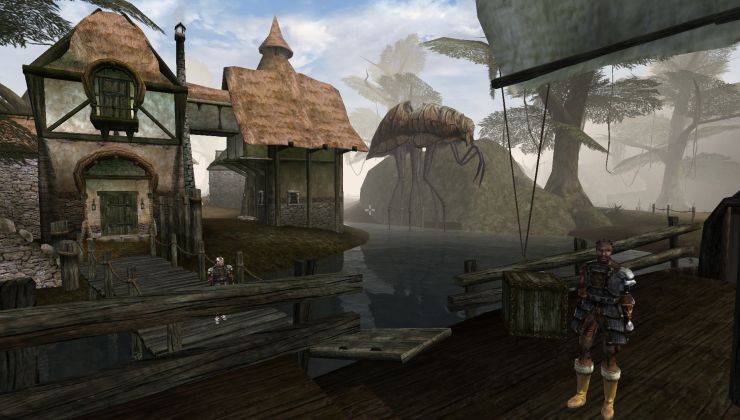 How to setup OpenMW for modern Morrowind on Linux / SteamOS and Steam Deck
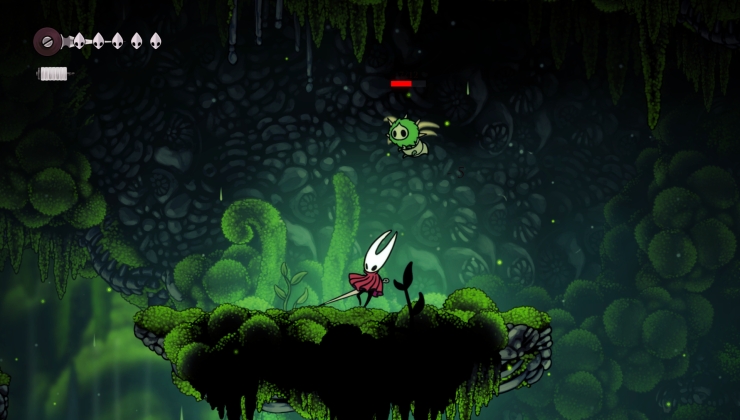 How to install Hollow Knight: Silksong mods on Linux, SteamOS and Steam Deck
Recently Updated
- Feedback needed - future website updates
- Liam Dawe - Steam Deck desktop mode localization
- on_en_a_gros - Why most people are approaching the xz-attack wrong.
- LoudTechie - Lutris alternatives
- sourpuz - Welcome back to the GamingOnLinux Forum
- sourpuz - See more posts