 Support us on Patreon
 PayPal
Latest Comments by Desum
A look over the ProtonDB reports for June 2019, over 5.5K games reported to work with Steam Play
2 Jul 2019 at 7:29 am UTC Likes: 1
2 Jul 2019 at 7:29 am UTC Likes: 1
Valve has done a lot of good work, but the industry that gaming has become is fickle and fair weather at best. Because of this, We should also be showing a little more love to the surprising number of good open source games. They'll never abandon us, after all. And projects like GemRB, Exult, Nuvie, Xoreos and the like. Most of these engine re-write projects are in DIRE need of more help.
After initially being rejected by Valve, The Expression Amrilato is now live on Steam
28 Jun 2019 at 2:56 am UTC
28 Jun 2019 at 2:56 am UTC
Quoting: Purple Library GuyThe majority of Esperanto's lexicon comes from Latin and Romance languages. This doesn't help having to memorize what gender a noun is, but it does help clue you into what words mean without having to be told.Quoting: DesumYour points about the simplicity of Esperanto are doubtless all very true, and English is certainly a very messy language. But that just tells us that Esperanto should be a significantly easier language to learn than a natural language. It does not tell us that you learn more about Spanish from learning Esperanto than from learning Spanish. Learning Esperanto does not subtract any of those complicated features you mention from Spanish when you go to learn Spanish.Quoting: Purple Library GuyIt's a matter of how high you want the first hurdle to be. Spanish is a much more complex language (grammatically, I would not be surprised if the lexicons are more even thanks to the online community built around Esperanto constantly adding new words) and has several quirks. And lets not undersell how much of a pain it is to learn the gender of every single noun; especially when there is no rhyme or reason for thing A to be male and thing B to be female. These things compound to make even relatively easy languages to learn (Like Spanish) have a longer road to mastery than Esperanto. And before anyone thinks I'm just dunking on Spanish, the terrible state of English spelling (less than 80% phonetic in some cases) and over abundance of homophones and 'exceptions' to its own rules makes it an even bigger hurdle.Quoting: DesumIf I study Esperanto, I know Esperanto's grammar and vocabulary. This will have some commonalities with those of various other languages, and no doubt will make it easier to learn them. Further, any second language I learn will increase my flexibility in terms of understanding language concepts--I will have to come to terms with the fact that there can be other grammatical structures, sounds and so forth from the set I first learned, and having done so, further languages are a smaller step. There are lots of studies about this effect--it's quite well established. So sure, studying Esperanto will help one learn other languages.Quoting: Purple Library GuyOutlandish? Esperanto is easier to learn than any Germanic, Romance, or Slavic language that evolved naturally. Yet, it has something in common with nearly all of them. It's not hard to see how that makes it a good bridge to other, more complex and quirk ridden, European languages.Quoting: DesumI'd want more than one study, and some pretty meticulous rigor, for a claim that outlandish; that's way too big an effect to be believable. It defies logic to say that I would not only be helped in my study of subject A by studying subject B, but actually learn more about subject A by studying subject B than by studying subject A.Quoting: Purple Library GuyLearning Esperanto is easier than almost any natural language since it lacks most of the quirks and inconsistencies most languages that develop naturally have. It's also a mix of many European languages, which makes it particularly useful to learn before Romance, Germanic, or even Slavic languages. As for time spent, look at my second post. Child A who spends two years learning Esperanto and then three years learning Spanish will likely out perform Child B who spent the full five years on Spanish.Quoting: DesumSome balk at the utility of leaning Esperanto, but it has been shown that learning it as a first additional language makes learning subsequent natural languages (at least European languages) much easier.As I understand it, learning any additional language makes learning subsequent languages easier. So how much more easier does that language being Esperanto make it? Unless the differential was huge, or you were planning to learn a lot of languages, I suspect that any gains would not be big enough to make up for the time actually spent learning Esperanto.
Like I mean, if learning any second language made subsequent languages 20% easier, and if it's Esperanto subsequent languages are 30% easier, then you'd break even at around 10 languages . . . and that's if the effects don't even out as you add languages.
The most compelling case I've seen for Esperanto was as an easily-learned sort of "middle layer" diplomats and translators could use, like at the UN or whatever. Computers are arguably making such middle layers obsolete, and I've noticed that manga translations that are two step kind of suck anyway. So even that niche is pretty iffy.
That said, I tend to think Esperanto is cool and doesn't really need an excuse. Not as cool as, say, Quenya or Sindarin though. And not cool enough in any of those cases for me to want to actually learn them.
Educational studies are notoriously tricky. They've found enhanced results for practically any kind of new and different pedagogical approach, basically because any time the teachers and students think they're doing something special, they work harder and have better attitudes. So if you believe the studies, all the approaches are vastly superior to, well, each other.
But studying Esperanto is still studying Esperanto, not studying Spanish. I will obviously learn more about Spanish from studying Spanish than from studying Esperanto. It is just silly to assert that my Spanish knowledge gain from studying Esperanto will be greater than my Spanish knowledge gain from studying Spanish. I would, as I say, require a lot more than one study to establish such an extreme claim, especially in a field (pedagogy) which is, as I said, very tricky to do studies in. And which, frankly, has historically had a whole lot of fluff research.
I don't see the simplicity thing as a likely help in learning further languages. It may make learning Esperanto itself easier, but if anything I would expect it would leave one less prepared for the messiness of real languages.
Think of Esperanto as the perfect warm-up European language. It keeps things as simple as possible for a fully-featured language, while giving you a taste of Germanic, Latin and Slavic languages in the process of learning it.
After initially being rejected by Valve, The Expression Amrilato is now live on Steam
26 Jun 2019 at 11:27 pm UTC
Think of Esperanto as the perfect warm-up European language. It keeps things as simple as possible for a fully-featured language, while giving you a taste of Germanic, Latin and Slavic languages in the process of learning it.
26 Jun 2019 at 11:27 pm UTC
Quoting: Purple Library GuyIt's a matter of how high you want the first hurdle to be. Spanish is a much more complex language (grammatically, I would not be surprised if the lexicons are more even thanks to the online community built around Esperanto constantly adding new words) and has several quirks. And lets not undersell how much of a pain it is to learn the gender of every single noun; especially when there is no rhyme or reason for thing A to be male and thing B to be female. These things compound to make even relatively easy languages to learn (Like Spanish) have a longer road to mastery than Esperanto. And before anyone thinks I'm just dunking on Spanish, the terrible state of English spelling (less than 80% phonetic in some cases) and over abundance of homophones and 'exceptions' to its own rules makes it an even bigger hurdle.Quoting: DesumIf I study Esperanto, I know Esperanto's grammar and vocabulary. This will have some commonalities with those of various other languages, and no doubt will make it easier to learn them. Further, any second language I learn will increase my flexibility in terms of understanding language concepts--I will have to come to terms with the fact that there can be other grammatical structures, sounds and so forth from the set I first learned, and having done so, further languages are a smaller step. There are lots of studies about this effect--it's quite well established. So sure, studying Esperanto will help one learn other languages.Quoting: Purple Library GuyOutlandish? Esperanto is easier to learn than any Germanic, Romance, or Slavic language that evolved naturally. Yet, it has something in common with nearly all of them. It's not hard to see how that makes it a good bridge to other, more complex and quirk ridden, European languages.Quoting: DesumI'd want more than one study, and some pretty meticulous rigor, for a claim that outlandish; that's way too big an effect to be believable. It defies logic to say that I would not only be helped in my study of subject A by studying subject B, but actually learn more about subject A by studying subject B than by studying subject A.Quoting: Purple Library GuyLearning Esperanto is easier than almost any natural language since it lacks most of the quirks and inconsistencies most languages that develop naturally have. It's also a mix of many European languages, which makes it particularly useful to learn before Romance, Germanic, or even Slavic languages. As for time spent, look at my second post. Child A who spends two years learning Esperanto and then three years learning Spanish will likely out perform Child B who spent the full five years on Spanish.Quoting: DesumSome balk at the utility of leaning Esperanto, but it has been shown that learning it as a first additional language makes learning subsequent natural languages (at least European languages) much easier.As I understand it, learning any additional language makes learning subsequent languages easier. So how much more easier does that language being Esperanto make it? Unless the differential was huge, or you were planning to learn a lot of languages, I suspect that any gains would not be big enough to make up for the time actually spent learning Esperanto.
Like I mean, if learning any second language made subsequent languages 20% easier, and if it's Esperanto subsequent languages are 30% easier, then you'd break even at around 10 languages . . . and that's if the effects don't even out as you add languages.
The most compelling case I've seen for Esperanto was as an easily-learned sort of "middle layer" diplomats and translators could use, like at the UN or whatever. Computers are arguably making such middle layers obsolete, and I've noticed that manga translations that are two step kind of suck anyway. So even that niche is pretty iffy.
That said, I tend to think Esperanto is cool and doesn't really need an excuse. Not as cool as, say, Quenya or Sindarin though. And not cool enough in any of those cases for me to want to actually learn them.
Educational studies are notoriously tricky. They've found enhanced results for practically any kind of new and different pedagogical approach, basically because any time the teachers and students think they're doing something special, they work harder and have better attitudes. So if you believe the studies, all the approaches are vastly superior to, well, each other.
But studying Esperanto is still studying Esperanto, not studying Spanish. I will obviously learn more about Spanish from studying Spanish than from studying Esperanto. It is just silly to assert that my Spanish knowledge gain from studying Esperanto will be greater than my Spanish knowledge gain from studying Spanish. I would, as I say, require a lot more than one study to establish such an extreme claim, especially in a field (pedagogy) which is, as I said, very tricky to do studies in. And which, frankly, has historically had a whole lot of fluff research.
I don't see the simplicity thing as a likely help in learning further languages. It may make learning Esperanto itself easier, but if anything I would expect it would leave one less prepared for the messiness of real languages.
Think of Esperanto as the perfect warm-up European language. It keeps things as simple as possible for a fully-featured language, while giving you a taste of Germanic, Latin and Slavic languages in the process of learning it.
After initially being rejected by Valve, The Expression Amrilato is now live on Steam
26 Jun 2019 at 6:02 pm UTC
26 Jun 2019 at 6:02 pm UTC
Quoting: Purple Library GuyOutlandish? Esperanto is easier to learn than any Germanic, Romance, or Slavic language that evolved naturally. Yet, it has something in common with nearly all of them. It's not hard to see how that makes it a good bridge to other, more complex and quirk ridden, European languages.Quoting: DesumI'd want more than one study, and some pretty meticulous rigor, for a claim that outlandish; that's way too big an effect to be believable. It defies logic to say that I would not only be helped in my study of subject A by studying subject B, but actually learn more about subject A by studying subject B than by studying subject A.Quoting: Purple Library GuyLearning Esperanto is easier than almost any natural language since it lacks most of the quirks and inconsistencies most languages that develop naturally have. It's also a mix of many European languages, which makes it particularly useful to learn before Romance, Germanic, or even Slavic languages. As for time spent, look at my second post. Child A who spends two years learning Esperanto and then three years learning Spanish will likely out perform Child B who spent the full five years on Spanish.Quoting: DesumSome balk at the utility of leaning Esperanto, but it has been shown that learning it as a first additional language makes learning subsequent natural languages (at least European languages) much easier.As I understand it, learning any additional language makes learning subsequent languages easier. So how much more easier does that language being Esperanto make it? Unless the differential was huge, or you were planning to learn a lot of languages, I suspect that any gains would not be big enough to make up for the time actually spent learning Esperanto.
Like I mean, if learning any second language made subsequent languages 20% easier, and if it's Esperanto subsequent languages are 30% easier, then you'd break even at around 10 languages . . . and that's if the effects don't even out as you add languages.
The most compelling case I've seen for Esperanto was as an easily-learned sort of "middle layer" diplomats and translators could use, like at the UN or whatever. Computers are arguably making such middle layers obsolete, and I've noticed that manga translations that are two step kind of suck anyway. So even that niche is pretty iffy.
That said, I tend to think Esperanto is cool and doesn't really need an excuse. Not as cool as, say, Quenya or Sindarin though. And not cool enough in any of those cases for me to want to actually learn them.
Educational studies are notoriously tricky. They've found enhanced results for practically any kind of new and different pedagogical approach, basically because any time the teachers and students think they're doing something special, they work harder and have better attitudes. So if you believe the studies, all the approaches are vastly superior to, well, each other.
After initially being rejected by Valve, The Expression Amrilato is now live on Steam
26 Jun 2019 at 4:22 pm UTC
26 Jun 2019 at 4:22 pm UTC
Quoting: Purple Library GuyLearning Esperanto is easier than almost any natural language since it lacks most of the quirks and inconsistencies most languages that develop naturally have. It's also a mix of many European languages, which makes it particularly useful to learn before Romance, Germanic, or even Slavic languages. As for time spent, look at my second post. Child A who spends two years learning Esperanto and then three years learning Spanish will likely out perform Child B who spent the full five years on Spanish.Quoting: DesumSome balk at the utility of leaning Esperanto, but it has been shown that learning it as a first additional language makes learning subsequent natural languages (at least European languages) much easier.As I understand it, learning any additional language makes learning subsequent languages easier. So how much more easier does that language being Esperanto make it? Unless the differential was huge, or you were planning to learn a lot of languages, I suspect that any gains would not be big enough to make up for the time actually spent learning Esperanto.
Like I mean, if learning any second language made subsequent languages 20% easier, and if it's Esperanto subsequent languages are 30% easier, then you'd break even at around 10 languages . . . and that's if the effects don't even out as you add languages.
The most compelling case I've seen for Esperanto was as an easily-learned sort of "middle layer" diplomats and translators could use, like at the UN or whatever. Computers are arguably making such middle layers obsolete, and I've noticed that manga translations that are two step kind of suck anyway. So even that niche is pretty iffy.
That said, I tend to think Esperanto is cool and doesn't really need an excuse. Not as cool as, say, Quenya or Sindarin though. And not cool enough in any of those cases for me to want to actually learn them.
After initially being rejected by Valve, The Expression Amrilato is now live on Steam
26 Jun 2019 at 3:58 pm UTC
Here is a relevant TEDx talk on the subject: https://youtu.be/8gSAkUOElsg [External Link]
26 Jun 2019 at 3:58 pm UTC
Quoting: tmtvlEsperanto's grammar is actually basically Slavic whereas most of it's lexicon is Latin/Germanic based. And I did say (granted, inside brackets) that it seems to help with European languages, not languages in general. There was a study that showed that young children who learned Esperanto for two years and then Spanish for three, tended to have a better grasp on it than children who only learned Spanish over the course of five years.Quoting: DesumSome balk at the utility of leaning Esperanto, but it has been shown that learning it as a first additional language makes learning subsequent natural languages (at least European languages) much easier.Well, according to J. H. Halloran, "A four year experiment in Esperanto as an introduction to French":
[...]among the more intelligent students, the best success in French was among those who began it immediately.[...]Unfortunately there doesn't seem to be any research available on the benefits of Esperanto for learning languages that don't fit into the Germanic or Romanic language groups (e.g. Finnish, Vietnamese, Arabic).
[...]Those who began with Esperanto achieved a better "passive knowledge" and those who began with French acquired better "active use."[...]
Still, for most people who haven't yet picked up a couple of additional languages Esperanto seems pretty easy and useful to pick up, so it may still be worth a look... if this game floats your boat it may be useful.
Here is a relevant TEDx talk on the subject: https://youtu.be/8gSAkUOElsg [External Link]
After initially being rejected by Valve, The Expression Amrilato is now live on Steam
26 Jun 2019 at 10:22 am UTC Likes: 3
26 Jun 2019 at 10:22 am UTC Likes: 3
Some balk at the utility of leaning Esperanto, but it has been shown that learning it as a first additional language makes learning subsequent natural languages (at least European languages) much easier.
OpenVIII, an in-development open source game engine for Final Fantasy VIII
25 Jun 2019 at 11:37 pm UTC Likes: 1
25 Jun 2019 at 11:37 pm UTC Likes: 1
Quoting: namikoNo emulator is perfect for one thing, nor are they particularly apt at making games look better at current year resolutions. The issues you'd face playing the games aside, having source code is always better than having even a F/OSS emulator to run the game in from a preservation standpoint. It also renders the game infinitely more moddable. You can, in theory, make the "Squall is dead" hypothesis a blatant reality via mods with somethign like OpenVIII. Much more of a challenge to do that with the old PS1 iso or even the PC version without proper mod support.Quoting: DesumI mean, we all understand running Morrowind in OpenMW is better than Gambryo Morrowind running in Wine. Right?The newer the code base running your game (the game's engine), the better it will run an old game's assets on newer machines into the future, so far as I know...
Is that correct? Not sure if I understand precisely why... :/
OpenVIII, an in-development open source game engine for Final Fantasy VIII
25 Jun 2019 at 11:07 pm UTC Likes: 4
I mean, we all understand running Morrowind in OpenMW is better than Gambryo Morrowind running in Wine. Right?
25 Jun 2019 at 11:07 pm UTC Likes: 4
Quoting: GuestOk, sounds cool but there is something i do not understand: Doesn't FF8 works with ePSXe ? And ePSXe has a Linux version. (But i confess i haven't used it in years)Kinda worrisome Linux users are not seeing the advantages of having a free engine has over running an old binary in an emulator... Saw similar comments when Beamdog poached off one of GemRB's main devs "Too bad about GemRB, but you can just run these shiny new remasters (for now), isn't that great?". Having a free engine, free source code, for a game is INFINITELY better than having a way to emulate it from a modding and even preservation view point.
I mean, we all understand running Morrowind in OpenMW is better than Gambryo Morrowind running in Wine. Right?
OpenVIII, an in-development open source game engine for Final Fantasy VIII
25 Jun 2019 at 10:56 am UTC Likes: 1
25 Jun 2019 at 10:56 am UTC Likes: 1
Wait... Didn't FF7-9 use basically the same engine?
- New US Congress bill proposal requires all operating system providers to verify ages [updated]
- Mozilla announced "Thunderbolt", their open-source and self-hostable AI client
- US operating system age verification bill "Parents Decide Act" gets published
- Dune: Awakening to get self-hosted servers, plus they're splitting PvE and PvP
- Amazon Luna rips out game stores, game purchases and third-party subscriptions
- > See more over 30 days here
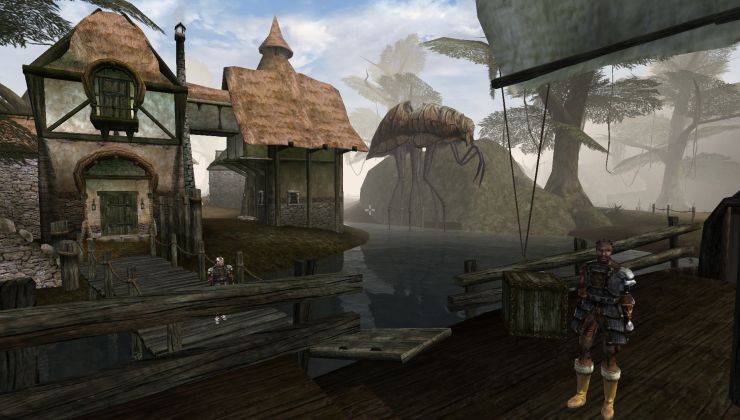 How to setup OpenMW for modern Morrowind on Linux / SteamOS and Steam Deck
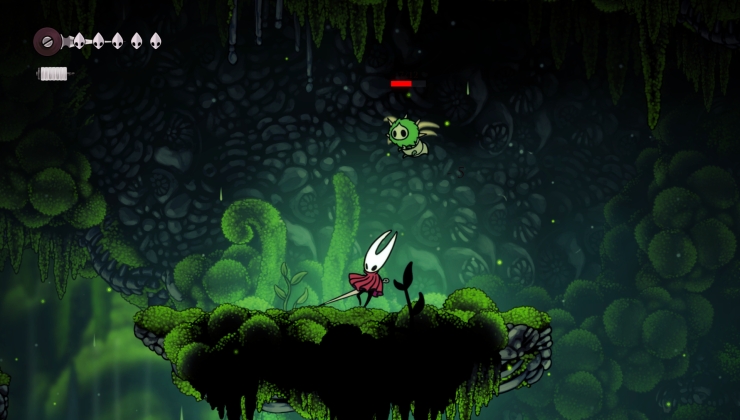 How to install Hollow Knight: Silksong mods on Linux, SteamOS and Steam Deck
Recently Updated
- Testing the VRAM valve patch
- Koopa - New Desktop Screenshot Thread
- tmtvl - Shop Crush - Psychological Horror Thrift Sim with Literal Illusio…
- hollowlimb - Proton/Wine Games Locking Up
- Caldathras - video buffer overflow
- LoudTechie - See more posts