Latest Comments by ObsidianBlk
Steam Deck gets a set of nice bug fixes in a new client update
28 Jun 2022 at 2:11 pm UTC
28 Jun 2022 at 2:11 pm UTC
I've encountered a bug myself. More of an annoyance, but can ruin the experience. When navigating the Steam Deck menus I've fallen into a state a couple times where no matter then directional input I give, the menus always scroll up. Down on the left stick... scrolls up. Down on the DPad... scrolls up. Down on the right stick... still scrolls up. If I go left or right on any of the controls, I eventually hear the little chime you get when you come to the end of a list, but the screen itself does not change.
I can easily break out of this state by hitting the back button to take me to the previous menu. At this point, the previous menu works as expected. If I go back to the menu I was on, it, also, works as expected.
Like I said, this is more an annoyance (as I can break out of the problem easily enough by switching menus), but it often occurs when I'm scrolling large menus (like during... a sale) and having to leave that menu to break the issue means I loose where I was previously.
One work around I have for this issue is to use the touch screen. The scrolling up issue only happens with the controller buttons, but not the touch screen, so, I *can* use the touch screen instead... it's just the touch screen is not my favorite.
I can easily break out of this state by hitting the back button to take me to the previous menu. At this point, the previous menu works as expected. If I go back to the menu I was on, it, also, works as expected.
Like I said, this is more an annoyance (as I can break out of the problem easily enough by switching menus), but it often occurs when I'm scrolling large menus (like during... a sale) and having to leave that menu to break the issue means I loose where I was previously.
One work around I have for this issue is to use the touch screen. The scrolling up issue only happens with the controller buttons, but not the touch screen, so, I *can* use the touch screen instead... it's just the touch screen is not my favorite.
AMD publishes the source code for FidelityFX Super Resolution 2 (FSR 2)
23 Jun 2022 at 6:58 pm UTC
23 Jun 2022 at 6:58 pm UTC
Quoting: ripper81358Fair enough. However, is FSR2 still GPU agnostic?Quoting: ObsidianBlkFSR2 needs to be implemented per game just like DLSS. RSR which is based on FSR1 can be used regardless of an implementation. However the downside of this is that the whole game is affected and this includes the Ui and the gamemenus as well. So things can become quiet tiny and text is hard to read in some games.Quoting: scaineMy understanding of this is limited, but I think it has to be engineered into the game - FSR2 can't be "hacked" into a game externally the way we had with FSR1. But from the videos I've watched, it's pretty incredible. I couldn't really tell the difference between FSR1 and DLSS, but now you'd need a zoomed in side-by-side comparison to spot the difference.My understanding is that it works without the need for a game to support it. Additionally, it would work regardless of whether one is using an AMD or Nvidia GPU. This is kinda FSR's big selling point over DLSS. DLSS needs to be built into the games and is limited to Nvidia GPUs, where FSR is neither.
Fingers crossed this is worked into existing games retroactively too, although that might be too much to hope for.
AMD publishes the source code for FidelityFX Super Resolution 2 (FSR 2)
23 Jun 2022 at 3:30 pm UTC
23 Jun 2022 at 3:30 pm UTC
Quoting: scaineMy understanding of this is limited, but I think it has to be engineered into the game - FSR2 can't be "hacked" into a game externally the way we had with FSR1. But from the videos I've watched, it's pretty incredible. I couldn't really tell the difference between FSR1 and DLSS, but now you'd need a zoomed in side-by-side comparison to spot the difference.My understanding is that it works without the need for a game to support it. Additionally, it would work regardless of whether one is using an AMD or Nvidia GPU. This is kinda FSR's big selling point over DLSS. DLSS needs to be built into the games and is limited to Nvidia GPUs, where FSR is neither.
Fingers crossed this is worked into existing games retroactively too, although that might be too much to hope for.
Wilderness survival sandbox Vintage Story has a massive upgrade out now
16 Jun 2022 at 11:59 am UTC
As far as whether the game will be installable... I bought the game directly through the game's website. From there, it's distributed as a .zip file. For me, "installable" is a matter of unzipping a file. Pound for pound, this is even simpler an install process than a DRM free GOG installable game (is the game available on Steam? If so, I'll have to nab it there to and see how it plays on my Steam Deck)
16 Jun 2022 at 11:59 am UTC
Quoting: TheodisHonestly, for this game, this fear is highly exaggerated, in my opinion. The games DRM is ridiculously minimal as DRM goes and would more than likely hinder your game play experience in none but the most nominal way. As far as the fear of the company going under... while I can't speak to what the developers may actually do, but I get the feeling that if such a case were to occur, their last update would most likely remove the DRM that's there. Even if that doesn't happen, the game fans would have the DRM cracked within a couple weeks if not a couple days and the game will live on until the last fan forgets about the game.Quoting: Purple Library GuyAt this point I'm not sure what you're complaining about--are you saying that it's DRM if you can't download the game again from a company that's gone under?The problem is that you might have a downloaded copy saved, but it might not be installable after the company goes under. It's not like a GoG situation where even if GoG goes under, the installers still work and the game is still playable.
As far as whether the game will be installable... I bought the game directly through the game's website. From there, it's distributed as a .zip file. For me, "installable" is a matter of unzipping a file. Pound for pound, this is even simpler an install process than a DRM free GOG installable game (is the game available on Steam? If so, I'll have to nab it there to and see how it plays on my Steam Deck)
VITURE One XR glasses look fun paired up with a Steam Deck
10 May 2022 at 12:06 pm UTC Likes: 4
10 May 2022 at 12:06 pm UTC Likes: 4
I'm... dubious.
Just power-wise, out of the gate, the glasses do not come with a battery. For the Steam Deck, it looks as if can plug the glasses into the deck for power, but I suspect that would significantly eat into the Decks limited battery (I am not a battery usage expert, but screens are not usually energy sippers), reducing the Deck's mobility. Beyond that, they're already up-selling on not one but two battery packs. One in the neckband and the other is a strait up power bank. This really makes me feel like these glasses truly need far more power then they want you to think they do.
There's other things that make me nervous. Regarding the neckbar, it says...
Lastly, this is more a gut feeling, but, it's showing that, supposedly, these glasses can go fully transparent (like normal sunglasses) or be opaque, showing the actual "screen". This alone would be impressive, but it supports moving the display to at least one corner of your view. I don't know. I'm sure we have technology to do this to a degree, but I strongly doubt the tech to do this and keep the display system as thin (or nearly so) as a pair of standard glasses actually exists. Microsoft has been working on Hololens for years and that device is still quite bulky (from last I'd seen of it). If the display tech has become so good we can cram it all into a standard pair of sunglasses (or even glasses with neckband... but, remember, the neckband is only an add-on), I'd think Microsoft would be trumpeting this tech advancement to all who would listen.
That brings me to my final worry... The presentation. It's all quite slick looking, but what gets me is that the very first thing that's been focused on with this bit of kit is how they went to "one of the most prestigious design firms" to come up with the style for these glasses. Sure, few people what to have duct-tape and cardboard (<- Ha! Google) strapped to their face, but it feels telling that the very first thing the creators of this revolutionary new tech gadget wants to impress upon you is how good it looks. How well it functions comes later. Let's talk about how good it looks.
Look, I don't want to shiz on this product. Maybe it'll be the next big thing. In my opinion, though, what's being presented is such a leap from where I understand head-mounted display tech to be at present with some of the details of this being glossed over... and not to harp on it, but why is the processor in an add-on accessory?!
If this is legit, awesome! I don't think it is, though. We'll see.
Just power-wise, out of the gate, the glasses do not come with a battery. For the Steam Deck, it looks as if can plug the glasses into the deck for power, but I suspect that would significantly eat into the Decks limited battery (I am not a battery usage expert, but screens are not usually energy sippers), reducing the Deck's mobility. Beyond that, they're already up-selling on not one but two battery packs. One in the neckband and the other is a strait up power bank. This really makes me feel like these glasses truly need far more power then they want you to think they do.
There's other things that make me nervous. Regarding the neckbar, it says...
Removing the built-in battery and processors from the glasses and moving them to the neckband (where there's more space) is the best way to solve the over-weight and over-heating problem some other VR/XR devices have.... so, what's this "processor" being talked about? The neckband is an add-on, not a standard component (check the pledge tiers. You can get the glasses only $399, but you need to spend at least $499 to include the neckband). If the neckband was purely a battery, then, sure, but I get the feeling you loose significant functionality without this neckband if the processes is in this otherwise add-on accessory.
Lastly, this is more a gut feeling, but, it's showing that, supposedly, these glasses can go fully transparent (like normal sunglasses) or be opaque, showing the actual "screen". This alone would be impressive, but it supports moving the display to at least one corner of your view. I don't know. I'm sure we have technology to do this to a degree, but I strongly doubt the tech to do this and keep the display system as thin (or nearly so) as a pair of standard glasses actually exists. Microsoft has been working on Hololens for years and that device is still quite bulky (from last I'd seen of it). If the display tech has become so good we can cram it all into a standard pair of sunglasses (or even glasses with neckband... but, remember, the neckband is only an add-on), I'd think Microsoft would be trumpeting this tech advancement to all who would listen.
That brings me to my final worry... The presentation. It's all quite slick looking, but what gets me is that the very first thing that's been focused on with this bit of kit is how they went to "one of the most prestigious design firms" to come up with the style for these glasses. Sure, few people what to have duct-tape and cardboard (<- Ha! Google) strapped to their face, but it feels telling that the very first thing the creators of this revolutionary new tech gadget wants to impress upon you is how good it looks. How well it functions comes later. Let's talk about how good it looks.
Look, I don't want to shiz on this product. Maybe it'll be the next big thing. In my opinion, though, what's being presented is such a leap from where I understand head-mounted display tech to be at present with some of the details of this being glossed over... and not to harp on it, but why is the processor in an add-on accessory?!
If this is legit, awesome! I don't think it is, though. We'll see.
HYPERCHARGE: Unboxed gets a fix for Linux to play on Windows Servers
8 Apr 2022 at 1:00 pm UTC Likes: 2
8 Apr 2022 at 1:00 pm UTC Likes: 2
I bought this maybe about a week ago and was disappointed when my nephew (running Windows) and I (running Linux native) couldn't connect. Thankfully the game ran and connected fine via Proton, but it's good to know they have the cross platform play working now.
GOG attempt to bring customers back with a revival of Good Old Games
6 Apr 2022 at 5:59 pm UTC Likes: 15
6 Apr 2022 at 5:59 pm UTC Likes: 15
I'm going to throw my hat into the ring here (for no good reason)...
I gravitated towards GOG due to both the DRM-Free attitude at the onset, as well as the initial focus on older games... games that were very difficult to obtain legally through other means. I have hundreds of titles from them, and, over all, I've feel generally content with my purchases (yes, I have purchased some new-ish indies along with the older games).
I am whole heartedly disappointed with GOG's outward, at best, indifference towards Linux. I'm very well aware that Linux is still a pretty damn niche OS for gamming and "isn't financially worth the effort to support", so, I'm usually not surprised when there exists no Linux support and am fine with having to tinker my purchases to life on my own (I'm a strange duck in that I kinda like the tinkering). GOG, however, does feel like they do have a sort of resentment towards Linux, especially given their original market was retro games that, I dare say, often work better and are easier to setup in Linux than in Windows.
I'm not against purchasing GOG titles, even now, but I do tend to stick with the really old games when I do purchase from them.
Honestly... if GOG is in financial straits, then right now might be the best time for them to start embracing Linux. If they were to get Galaxy to actually RUN on Linux, released it as a Flatpak, then they'd be on Steam Deck and they might even see an uptick in game sales! Hell, Steam's footing the bill for the hardware, all they need to do is a comparatively tiny bit of elbow grease on their software, and they'd be available for a bunch (hundreds of thousands, I'd wager) of users that'd be happy to buy games from them to use on the Deck. Hell... even if it cost them a million to get Galaxy running and installable on Steam, I'd be totally flabbergasted if they didn't make that up in sales.
I gravitated towards GOG due to both the DRM-Free attitude at the onset, as well as the initial focus on older games... games that were very difficult to obtain legally through other means. I have hundreds of titles from them, and, over all, I've feel generally content with my purchases (yes, I have purchased some new-ish indies along with the older games).
I am whole heartedly disappointed with GOG's outward, at best, indifference towards Linux. I'm very well aware that Linux is still a pretty damn niche OS for gamming and "isn't financially worth the effort to support", so, I'm usually not surprised when there exists no Linux support and am fine with having to tinker my purchases to life on my own (I'm a strange duck in that I kinda like the tinkering). GOG, however, does feel like they do have a sort of resentment towards Linux, especially given their original market was retro games that, I dare say, often work better and are easier to setup in Linux than in Windows.
I'm not against purchasing GOG titles, even now, but I do tend to stick with the really old games when I do purchase from them.
Honestly... if GOG is in financial straits, then right now might be the best time for them to start embracing Linux. If they were to get Galaxy to actually RUN on Linux, released it as a Flatpak, then they'd be on Steam Deck and they might even see an uptick in game sales! Hell, Steam's footing the bill for the hardware, all they need to do is a comparatively tiny bit of elbow grease on their software, and they'd be available for a bunch (hundreds of thousands, I'd wager) of users that'd be happy to buy games from them to use on the Deck. Hell... even if it cost them a million to get Galaxy running and installable on Steam, I'd be totally flabbergasted if they didn't make that up in sales.
Valve reduces size of Steam Deck Client in the latest update
17 Mar 2022 at 11:46 am UTC Likes: 6
Hell, that could mean one extra smaller game on the deck for those that won't even bother with non-steam applications.
Furthermore, if you're so upset at using flatpak for non-steam applications in the first place, then, just set your deck to developer mode and get full write access to your system and install those applications the standard way... in which case, the reduced client size is still a welcome optimization as you'll have just that little more space.
---
On a small tangent here... I really don't get the whole "bloated" flatpak thing. Is there anything other than anecdotal evidence that flatpaks generate that much more "bloat" vs traditional software installations? I mean, most package managers I've worked with, by default, tend to store the compressed images of all the installed packages on your system anyway, so, for each package you install via pacman (in Arch), there's at least 50% (on average) as much space being taken up by a file that sits on your system just in case you need to reinstall it.
17 Mar 2022 at 11:46 am UTC Likes: 6
Quoting: emphyActually, I'd think it's a fairly welcome optimization if you're installing so many non-steam applications that you're worried about the "bloated" sized of the flatpaks in which that software is delivered. After all, that little extra space could mean you can fit in one more "bloated" package onto your system.Quoting: andy155Valve reduces the size of the Steam Deck client in the latest update? Honestly but who cares? You really exaggerate with the deck news.On top of that; it's a fairly useless optimisation as long as the primary mode of installing non-steam software is using those bloated packages.
Hell, that could mean one extra smaller game on the deck for those that won't even bother with non-steam applications.
Furthermore, if you're so upset at using flatpak for non-steam applications in the first place, then, just set your deck to developer mode and get full write access to your system and install those applications the standard way... in which case, the reduced client size is still a welcome optimization as you'll have just that little more space.
---
On a small tangent here... I really don't get the whole "bloated" flatpak thing. Is there anything other than anecdotal evidence that flatpaks generate that much more "bloat" vs traditional software installations? I mean, most package managers I've worked with, by default, tend to store the compressed images of all the installed packages on your system anyway, so, for each package you install via pacman (in Arch), there's at least 50% (on average) as much space being taken up by a file that sits on your system just in case you need to reinstall it.
Valve open sources SteamOS Devkit Client for Steam Deck
4 Mar 2022 at 4:58 pm UTC Likes: 4
4 Mar 2022 at 4:58 pm UTC Likes: 4
Has a hobbiest game developer... GAH! Why is my Steam Deck still months away! I would love to try some of my janky game prototypes on the Steam Deck!!
Ah well... just another reasons to sit and count down the (non-specific) days until mine arrives.
Ah well... just another reasons to sit and count down the (non-specific) days until mine arrives.
Indie store itch.io comes out swinging against NFTs
7 Feb 2022 at 9:17 pm UTC Likes: 3
So, I come back to the original question I posed...
what use do NFTs have that would (at minimum) offset the negatives inherent in their creation and add tangible value to those purchasing them?
From what I've been able to gather, you cannot buy NFTs without crypto (a method of obtaining an item, I may add, that's not unlike the shady practice in video games of requiring players to purchase "premium currency" to obtain a skin, booster, or other game item that developers of such games have come out and said these items "have no inherent value"). For the "average" user, this would make the process of even obtaining an NFT not worth the hassle. If as person cannot see an item and make a simple transaction to obtain it, most won't. This leaves the majority of buyers as those who already owns crypto currency to begin with, or is technologically savvy enough and willing enough to deal with the conversion process. In short, this would be like telling someone in the US looking to purchase an item from, say, Aliexpress, that they first have to go to the bank and exchange their USD to Renminbi (I hope that's right. I had to look up the name of the money in China), and only THEN can they make a purchase on Aliexpress... most people wouldn't bother.
Hypothetically, NFTs *do* allow for the purchase of some form of unique digital asset that can be transferred between (as an example I'd been given before) digital worlds such as Meta's worlds, or online games, however, this would only work if all such developers collaborated developed their games to BE inter-compatible with such content, but, seeing as that would require all participating developers to share a marketplace, I seriously doubt multiple game/world development companies will collaborate in such a manner. Instead they'd keep to their own islands, making the digital NFT useless outside of said island (much like cosmetics and boosters are already, without the need of NFTs)
Furthermore, the NFTs do not prevent digital content from being copied, or deleted. All of the digital artwork, for example, can easily be duplicated with a simple "Save Image As", for the most part... one of the biggest black eyes to NFTs, in fact, it the "minting" of such tokens against artwork not owned or copyrighted by the NFT minter and without the knowledge of such owner. This damaging much, if any legitimacy of NFTs to most.
I do not understand using NFTs as receipts for owning land, or concert tickets, given the current mechanisms do that, more or less, work just fine without the power consumptive overhead of NFT generation or their comparatively long transaction times.
So, once again... I totally understand you believe in NFTs (or, it seems you do). What use does an NFT give that has tangible value that is either not possible at present, or that NFTs do better than current systems?
7 Feb 2022 at 9:17 pm UTC Likes: 3
Quoting: ertuquequeYes... but you are still basing NFTs usefulness to crypto currency. Crypto currency, itself, still has not gained any true functionality and that has existed for over a decade of time. The oldest crypto, (to my knowledge, Bitcoin) hasn't even established itself as a truly legitimate currency. Those few businesses that even attempted to utilize Bitcoin for it's supposed purpose have stopped leaving, for the most part, shady dealers and investors. ~Functionally~, Bitcoin is dead (and I say this as someone who has capital in the crypto)Quoting: ObsidianBlkLet me start with a couple of basics…Quoting: PendragonI ask this in all seriousness... what use do NFTs have that would (at minimum) offset the negatives inherent in their creation and add tangible value to those purchasing them? A piggyback question would be, for whatever answer there exists to the first question, how has that not been utilized in over a year?Quoting: ertuquequeAt the risk of being boring or even worse, making people angry, I'll try to give my take on NFTs, what they are and how they have been exploited for bad things today…^^This... using tokens on a cryptographic block chain has a use.. .just not a scammy money-making scheme that it seems to be used as these days.
First of all, the simplest analogy I could come up to explain NFTs to a friend is: Imagine Bitcoin or any other cryptocurrency, but with a "skin" to make it "unique" or different from the other ones".
Now, following that same over-simplified concept, an NFT is a "coin" stored in a blockchain… So the usefulness of an NFT depends more or less on 3 things:
1.- What cryptocurrency is being used to "mint" that NFT. The more reliable and decentralized the cryptocurrency, the more reliable that NFT could (I stress the word COULD) be.
2.- Who is creating, promoting and delivering that NFT. Again, the more "serious" and reliable the entity, the more reliable the NFT.
3.- What's the purpose of that said NFT… An NFT could be as useless as a monkey avatar, or as useful as a certificate of ownership for a house!
So let's assume all 3 points are good:
1.- The NFT is based on something like the Ethereum blockchain (Bitcoin still doesn't support the creation of NFTs, not yet).
2.- The entity creating those NFTs is a well known real estate company that is fully compliant with all legal duties in the jurisdictions it operates.
3.- Those NFTs are digital certificates that are legally bonded to a real life property (let's say a house in Beverly Hills!).
As you can imagine, for NFTs to be really useful in real life, there needs to be a legal framework supporting them, which is something that as far as I know, doesn't exists anywhere yet… but I'm sure we'll get there; with NFTs, another iteration of the concept or something different, but still based in an open, decentralized, borderless and censorship resistant blockchain.
Today's iteration of NFTs are just attempts of using a really cool technology… in the most idiotic and incompetent way.
The technology just need to mature and evolve for another 5 to 10 years, hopefully people will come around and accept that is the future.
So, I come back to the original question I posed...
what use do NFTs have that would (at minimum) offset the negatives inherent in their creation and add tangible value to those purchasing them?
From what I've been able to gather, you cannot buy NFTs without crypto (a method of obtaining an item, I may add, that's not unlike the shady practice in video games of requiring players to purchase "premium currency" to obtain a skin, booster, or other game item that developers of such games have come out and said these items "have no inherent value"). For the "average" user, this would make the process of even obtaining an NFT not worth the hassle. If as person cannot see an item and make a simple transaction to obtain it, most won't. This leaves the majority of buyers as those who already owns crypto currency to begin with, or is technologically savvy enough and willing enough to deal with the conversion process. In short, this would be like telling someone in the US looking to purchase an item from, say, Aliexpress, that they first have to go to the bank and exchange their USD to Renminbi (I hope that's right. I had to look up the name of the money in China), and only THEN can they make a purchase on Aliexpress... most people wouldn't bother.
Hypothetically, NFTs *do* allow for the purchase of some form of unique digital asset that can be transferred between (as an example I'd been given before) digital worlds such as Meta's worlds, or online games, however, this would only work if all such developers collaborated developed their games to BE inter-compatible with such content, but, seeing as that would require all participating developers to share a marketplace, I seriously doubt multiple game/world development companies will collaborate in such a manner. Instead they'd keep to their own islands, making the digital NFT useless outside of said island (much like cosmetics and boosters are already, without the need of NFTs)
Furthermore, the NFTs do not prevent digital content from being copied, or deleted. All of the digital artwork, for example, can easily be duplicated with a simple "Save Image As", for the most part... one of the biggest black eyes to NFTs, in fact, it the "minting" of such tokens against artwork not owned or copyrighted by the NFT minter and without the knowledge of such owner. This damaging much, if any legitimacy of NFTs to most.
I do not understand using NFTs as receipts for owning land, or concert tickets, given the current mechanisms do that, more or less, work just fine without the power consumptive overhead of NFT generation or their comparatively long transaction times.
So, once again... I totally understand you believe in NFTs (or, it seems you do). What use does an NFT give that has tangible value that is either not possible at present, or that NFTs do better than current systems?
- Valve announce a reservation system for the new Steam Controller
- Civilization VII "Test of Time" update lands May 19, finally letting you play entirely as one civ
- Proton Experimental gets fixes for Rocket League, Crimson Desert, Helldivers 2 and more
- Linux security flaws Dirty Frag and Copy Fail are a good reminder to stay up to date
- SteamOS 3.8.4 Beta brings further Steam Machine support and fixes for experimental nested desktop mode
- > See more over 30 days here
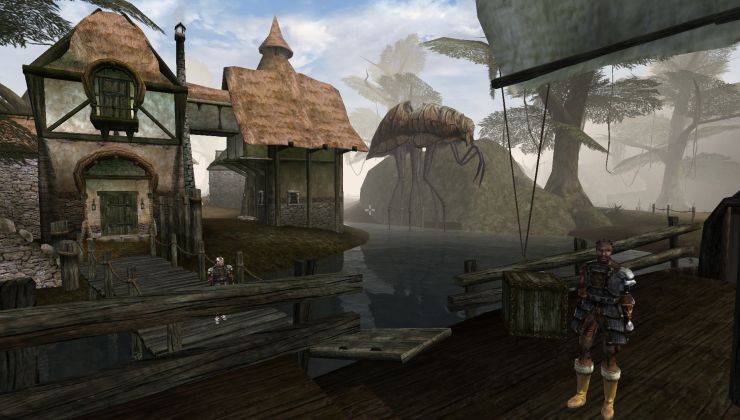 How to setup OpenMW for modern Morrowind on Linux / SteamOS and Steam Deck
 How to install Hollow Knight: Silksong mods on Linux, SteamOS and Steam Deck
- The Great Android lockdown of 2026.
- mr-victory - What's bad about generative AI on the Internet and beyond, exactl…
- GustyGhost - The value of ecosystem.
- LoudTechie - Lutris alternatives
- Tulon - Terminal trick - progress indicator in the task manager…
- Shmerl - See more posts