 Support us on Patreon
 PayPal
Latest Comments by ObsidianBlk
Spacebase Startopia confirmed for launch on October 23
29 May 2020 at 12:38 pm UTC
29 May 2020 at 12:38 pm UTC
Loved the original. I hope they add some good stuff to the already enjoyable formula of the original!
Psyonix are ending support for Rocket League on both Linux and macOS (updated)
25 Jan 2020 at 3:29 am UTC Likes: 1
Secondly, these developers released a Linux (and Mac) client. To do so, they should have (and should be EXPECTED TO HAVE) done their research. They should KNOW the relative user bases for all supported platforms, the limitations of those platforms based on the tech available to them, and stick with their decisions. To then try to excuse their pull out by stating the user base means this company is either REALLY stupid for not doing their due diligence (and question what else they could have skimmed over and be f'ing up long term) or they think WE'RE really stupid (in which case, f' them).
As for whether they would have continued to support linux (and/or Mac) regardless of WINE... can you prove they wouldn't have? You might be right, but unless you know for a fact WINE had absolutely no sway at all in their decision, then my argument is still valid. At the very least I can see someone saying... "hey, they can still play using that WINE thing, so if anyone tries anything legally we can say they can still play it through that, so... it's not like we REALLY took it away."
Also... why wouldn't WINE be part of any sort of decision as such? Steam is basically making it a core advertising strategy on the Linux side of their store, so if it's visible to us, the consumer, it's definitely visible to the developers and publishers even contemplating our platform, so why wouldn't a company (whether they "really" had to or not) use that to their perceived advantage. Again, I'm not knocking WINE or any associated project. It's not really their fault if and when this does happen, but to pretend there aren't those that WILL use it as such is sticking your head in the damn sand and allowing companies a pass.
25 Jan 2020 at 3:29 am UTC Likes: 1
Quoting: SalvatosFirst, breaking connection to their server is still, effectively, the same. They are renegging on how they presented and put forth the product to their customers at the time those customers bought the software. Given that the servers themselves are not defunct (rendering the software unavailable to all), then they still have effectively lied to their customer base. The fact that current law doesn't see this as a problem does not mean this is not a problem.Quoting: ObsidianBlkOnce "released", honestly, I do not feel software should be "patched" beyond stability and security, otherwise, I feel, companies can (and do) break their own promises.Well see, effectively this is what they’re doing. Your client will still be yours and playable on the systems it was designed for, but you won’t be able to connect to their matchmaking servers because your version won’t match theirs. And so, ironically, it’s precisely because they won’t be patching your OS’s version anymore that you won’t be able to connect.
(...)
I mean, honestly, when we used to buy software, there was never... NEVER any risk that it would suddenly stop working on the systems it was written to work for. Now these games can just be snatched away from us on the whim of the company that makes it... effectively stealing our products from us.
Quoting: ObsidianBlk... and, yes, WINE does, in fact, give these lazy, pathetic companies an excuse to pull back on a promise. It's not WINE's fault, but, none-the-less, it is true.Do you seriously think they would have kept supporting Linux if not for the existence of a potential workaround? They don’t care either way, their decision is made, they just suggest it to alleviate the frustration.
Secondly, these developers released a Linux (and Mac) client. To do so, they should have (and should be EXPECTED TO HAVE) done their research. They should KNOW the relative user bases for all supported platforms, the limitations of those platforms based on the tech available to them, and stick with their decisions. To then try to excuse their pull out by stating the user base means this company is either REALLY stupid for not doing their due diligence (and question what else they could have skimmed over and be f'ing up long term) or they think WE'RE really stupid (in which case, f' them).
As for whether they would have continued to support linux (and/or Mac) regardless of WINE... can you prove they wouldn't have? You might be right, but unless you know for a fact WINE had absolutely no sway at all in their decision, then my argument is still valid. At the very least I can see someone saying... "hey, they can still play using that WINE thing, so if anyone tries anything legally we can say they can still play it through that, so... it's not like we REALLY took it away."
Also... why wouldn't WINE be part of any sort of decision as such? Steam is basically making it a core advertising strategy on the Linux side of their store, so if it's visible to us, the consumer, it's definitely visible to the developers and publishers even contemplating our platform, so why wouldn't a company (whether they "really" had to or not) use that to their perceived advantage. Again, I'm not knocking WINE or any associated project. It's not really their fault if and when this does happen, but to pretend there aren't those that WILL use it as such is sticking your head in the damn sand and allowing companies a pass.
Psyonix are ending support for Rocket League on both Linux and macOS (updated)
25 Jan 2020 at 1:56 am UTC Likes: 1
It's a completely different story if a gamer were using WINE to run Witcher 3, or Assassins Creed, or some other such game that never promised any sort of Linux support to being with, but when you have a developer/publisher that originally promised a platform was going to be directly supported, then pull that support because the "users compromise only 0.3% of the total player base" means they're lazy. Not only that, but they f&^%ing suck at a core responsibility of a developer/publisher releasing a product, which would be RESEARCH into the platform they're releasing to. These companies should have been WELL AWARE of the relative player base between platforms BEFORE promising to support them in the first place. There is NO EXCUSE for these companies to pull platform support. And it should be illegal...
... and, yes, WINE does, in fact, give these lazy, pathetic companies an excuse to pull back on a promise. It's not WINE's fault, but, none-the-less, it is true.
25 Jan 2020 at 1:56 am UTC Likes: 1
Quoting: lectrodeYes, WINE is giving people more reason to switch (sort of), and, yes, we shouldn't blame them for their work. That said, you can't brush away the fact that these bridges are also enabling companies to simply pull support for platforms they once promised they'd support.Quoting: GustyGhostThe issue is not the existence of a translation layer. The issue is lack of market share. They specifically said that Mac and Linux users comprised "0.3%" of their total player base (that's likely all platforms, not just PC) - not enough to merit the costs behind supporting those platforms....of the active total and when "viable workarounds exist" with Wine being mentioned.[...]
"Wine is not harmful to Linux gaming"
Have we learned our lesson yet?
The developers of Wine/Proton/Dxvk and other translation layers are actively giving people more reason to switch to Linux from windows. You're blaming the very technologies that provide a bridge for more people to start using Linux.
It's a completely different story if a gamer were using WINE to run Witcher 3, or Assassins Creed, or some other such game that never promised any sort of Linux support to being with, but when you have a developer/publisher that originally promised a platform was going to be directly supported, then pull that support because the "users compromise only 0.3% of the total player base" means they're lazy. Not only that, but they f&^%ing suck at a core responsibility of a developer/publisher releasing a product, which would be RESEARCH into the platform they're releasing to. These companies should have been WELL AWARE of the relative player base between platforms BEFORE promising to support them in the first place. There is NO EXCUSE for these companies to pull platform support. And it should be illegal...
... and, yes, WINE does, in fact, give these lazy, pathetic companies an excuse to pull back on a promise. It's not WINE's fault, but, none-the-less, it is true.
Psyonix are ending support for Rocket League on both Linux and macOS (updated)
25 Jan 2020 at 12:08 am UTC Likes: 2
25 Jan 2020 at 12:08 am UTC Likes: 2
I look forward to that point in time where laws catch up to this practice and deem such things illegal. Once "released", honestly, I do not feel software should be "patched" beyond stability and security, otherwise, I feel, companies can (and do) break their own promises.
If the package says "Windows", "Mac", "Linux", then you take two of three of those away, then you now have effectively created misleading advertising based on material available at the point of purchase. As far as I have ever seen, there has never been (in "released" software) any warning about "Platform availability subject to change"
I mean, honestly, when we used to buy software, there was never... NEVER any risk that it would suddenly stop working on the systems it was written to work for. Now these games can just be snatched away from us on the whim of the company that makes it... effectively stealing our products from us. Refunds are NOT OK as an answer to this. What if someone doesn't WANT a refund? They just want to play the damn game they bought (and for many, bought YEARS ago).
If the package says "Windows", "Mac", "Linux", then you take two of three of those away, then you now have effectively created misleading advertising based on material available at the point of purchase. As far as I have ever seen, there has never been (in "released" software) any warning about "Platform availability subject to change"
I mean, honestly, when we used to buy software, there was never... NEVER any risk that it would suddenly stop working on the systems it was written to work for. Now these games can just be snatched away from us on the whim of the company that makes it... effectively stealing our products from us. Refunds are NOT OK as an answer to this. What if someone doesn't WANT a refund? They just want to play the damn game they bought (and for many, bought YEARS ago).
The Children's Commissioner in England has called on the government to class loot boxes as gambling
22 Oct 2019 at 4:41 pm UTC Likes: 5
What makes this rating rather damning is, on a very technical level (the kind of technical level that gives the finger to the spirit of a law and bowls people over with the letter of the law instead), lootboxes and other MTX strategies are not gambling, which leaves the loophole open for games that should be for all ages (like, for kids as much as anyone else) to have predatory gambling (like) transactions designed purely to con gamers (especially kids and others susceptible to gambling-like behaviors) into spending money... all while mom and dad are none the wiser until they suddenly see their child racked up a bill of over $1000 in a game with a rating that suggests it's a perfectly innocent game.
22 Oct 2019 at 4:41 pm UTC Likes: 5
Quoting: fagnerlnHERE WE GO AGAIN...You know, if you're talking about parents moderating whether their kids are playing a mature game, sure! However, let's look at a game like Fifa, which has a HUGE number of MTX... I just looked it up... all of the game that I saw were rated 'Everyone' (US - ESRB). Why would parents assume they have to monitor and/or moderate their child's use of a game that a recognized ratings board deemed appropriate for... EVERYONE?! Your statement also assumes parents are even aware of the issues going on with Lootboxes and other aggressive MTX strategies. Most aren't. So when they see a game is rated for Everyone, they're going to assume that their little Jane or Johnny is fine.
We don't need the government controlling even more our lives, the parents should moderate what their children are using.
What makes this rating rather damning is, on a very technical level (the kind of technical level that gives the finger to the spirit of a law and bowls people over with the letter of the law instead), lootboxes and other MTX strategies are not gambling, which leaves the loophole open for games that should be for all ages (like, for kids as much as anyone else) to have predatory gambling (like) transactions designed purely to con gamers (especially kids and others susceptible to gambling-like behaviors) into spending money... all while mom and dad are none the wiser until they suddenly see their child racked up a bill of over $1000 in a game with a rating that suggests it's a perfectly innocent game.
A French court has ruled that Valve should allow people to re-sell their digital games
22 Sep 2019 at 1:49 pm UTC
In fact, my original post said very similar things as yours. I had say that (while I strongly doubt it would ever really happen) I hoped physical distribution would come back... and that just lead a few (including myself) into a debate over the merits of optical disc storage vs hard drive storage. :)
22 Sep 2019 at 1:49 pm UTC
Quoting: ZeroPointEnergyI very much agree with you!Quoting: ObsidianBlkWhy shouldn't my 20 year old disks count? I have several dozen optical disks, and, as said, I have yet to see a single one as unreadable and decades.Also, let's assume for a moment we really have a physical storage medium that hardly has any wear. I don't know, maybe some holographic wireless storage that can't corrupt and has no contacts that can corrode.
Would anyone argue, that just because the physical product you bought doesn't get destroyed with time you should not have the right to sell it?
I think the issue we are discussing here is one of ownership. I can't understand why people are so willing to play along and just completely accept that things you buy and are by all means presented as if you buy them are not your property.
And sure, this will cause some headache for the game industry, but in the end they will adapt and hopefully not in the bad way in that they try again with such tricks to prevent us from owning the products they sell us.
Also, coming back to physical copies. They don't just deteriorate and are gone. Some of those products even gain in value over time. If you have even a semi old collection of games, it will not be hard to find at least one product people will pay vastly more for than you actually payed originally. You don't get that with digital copies, and that is a pretty good compensation for the fact that it doesn't deteriorates. Still, it should be something we own if we payed for this product.
In fact, my original post said very similar things as yours. I had say that (while I strongly doubt it would ever really happen) I hoped physical distribution would come back... and that just lead a few (including myself) into a debate over the merits of optical disc storage vs hard drive storage. :)
A French court has ruled that Valve should allow people to re-sell their digital games
22 Sep 2019 at 4:10 am UTC
That said, look up the average life span of a hard drive...
https://www.prosofteng.com/blog/how-long-do-hard-drives-last/ [External Link]
https://www.recordnations.com/articles/hard-drive-lifespan/ [External Link]
These were quick google searches for "average life span of hard drives".
The TL;DR of it is, hard drive have an average life span of 3 to 5 years. If the alternative to optical disks is a NAS, which utilizes hard drives, I'm honestly not seeing what makes HDDs that much better. For a solid backup you would want a RAID setup (minimum of two drives). If one of those fails, you still have to buy a new HDD to reconstruct the RAID before the other HDD fails.
Now, let's take a quick look at optical media...
https://www.clir.org/pubs/reports/pub121/sec4/ [External Link]
https://www.researchgate.net/publication/246856696_Optical_Disc_Life_Expectancy_A_Field_Report [External Link]
Again, these were quick google searches for "average life span optical discs"
The TL;DR here says +R, +RW, etc, etc discs have an average life expectancy of 20+ years, while regular, factory pressed CD/DVD disks have an estimated average life span between 25 to 100 years (some estimates suggest upwards of 200 years). This even with Disc Rot as a possibility.
Finally... let's even agree with each other. DVD/CDs AND HDDs are less than ideal for long term storage... create a new physical distribution media. One of my original posts on this thread suggested an SD card-esk physical media (at least in form factor). Much smaller than an optical disk, and no moving parts like a hard drive... hell... that's pretty much the distribution model of DS games.
((NOTE: I say "google search", but I use Duck Duck Go as my search engine... if that matters to anyone))
22 Sep 2019 at 4:10 am UTC
Quoting: subWhy shouldn't my 20 year old disks count? I have several dozen optical disks, and, as said, I have yet to see a single one as unreadable and decades. I see the wiki article supplied by Shmerl, and I acknowledge it, but in it's own description... "The causes include oxidation of the reflective layer, physical scuffing and abrasion of disc, reactions with contaminants, ultra-violet light damage, and de-bonding of the adhesive used to adhere the layers of the disc together" ... so, basically normal wear and tear. That reflective layer isn't exposed to oxygen until it's outer layer is damaged, and that shouldn't happen if the disk is kept safe. Sure... shiz happens... and (to quote a quote from an article I'll supply shortly), "On a long enough timeline, the survival rate for everything drops to zero.", Chuck Palahniuk, Fight Club... but, again, my collection has still readable disks over 20 years old. Not a single one of them has ever rotted on me (again, I just jewel case them, so no special protections). That's a LOT of evidence for me that while Disc Rot exists, it's not like suddenly, tomorrow, BAM! scores upon scores of my discs will suddenly all have Disc Rot, so long as I don't start leaving them out of there cases, or using them like coasters.Quoting: ObsidianBlkDoesn't matter if your discs all still work.Quoting: ShmerlI'm not sure how you treat your optical media, but all I do is keep them in their cases, on a shelf, and they all still work for me. In fact, I don't think there's a single CD/DVD I've attempted to use in recent years that failed to read. No media is 100% fool proof... especially if treated roughly... but, yeah, I do not see how you think optical media is worse than hard drives. I've rarely heard of a drive lasting much longer than a decade (and, that's actually a pretty solid amount of time).Quoting: ObsidianBlkI get this... and I'm not saying I don't have digital games myself, but still... I have CDs I bought in the early 90s that I can still read data off of. How many hard drives can you say the same for?Consider yourself lucky, but don't think it's a reliable method of storage. Optical discs deteriorate with time, and are a lot more error prone than hard drives which in contrast are built to last for many years.
Shmerl is right.
CDs and DVDs printed detoriate and should never be used as backup media.
In case of printed CDs/DVDs it's the reflection layer that detoriates.
For writable discs it's even more problematic due to the dye layer.
This is called "Disc rot".
https://en.wikipedia.org/wiki/Disc_rot [External Link]
That said, look up the average life span of a hard drive...
https://www.prosofteng.com/blog/how-long-do-hard-drives-last/ [External Link]
https://www.recordnations.com/articles/hard-drive-lifespan/ [External Link]
These were quick google searches for "average life span of hard drives".
The TL;DR of it is, hard drive have an average life span of 3 to 5 years. If the alternative to optical disks is a NAS, which utilizes hard drives, I'm honestly not seeing what makes HDDs that much better. For a solid backup you would want a RAID setup (minimum of two drives). If one of those fails, you still have to buy a new HDD to reconstruct the RAID before the other HDD fails.
Now, let's take a quick look at optical media...
https://www.clir.org/pubs/reports/pub121/sec4/ [External Link]
https://www.researchgate.net/publication/246856696_Optical_Disc_Life_Expectancy_A_Field_Report [External Link]
Again, these were quick google searches for "average life span optical discs"
The TL;DR here says +R, +RW, etc, etc discs have an average life expectancy of 20+ years, while regular, factory pressed CD/DVD disks have an estimated average life span between 25 to 100 years (some estimates suggest upwards of 200 years). This even with Disc Rot as a possibility.
Finally... let's even agree with each other. DVD/CDs AND HDDs are less than ideal for long term storage... create a new physical distribution media. One of my original posts on this thread suggested an SD card-esk physical media (at least in form factor). Much smaller than an optical disk, and no moving parts like a hard drive... hell... that's pretty much the distribution model of DS games.
((NOTE: I say "google search", but I use Duck Duck Go as my search engine... if that matters to anyone))
A French court has ruled that Valve should allow people to re-sell their digital games
21 Sep 2019 at 2:00 pm UTC
Your side has the downside of having to purchase the hard drives (let's go with $200 a piece) and the NAS (not always a cheap option in and of itself). Those have moving parts (unless you do SSD, but then you're driving up the cost of the drive) which I can virtually guarantee will fail at some point and then you'll need to buy replacements to get things up and running again. Furthermore, even with low power components, you are still paying money just to keep that NAS going. Not everyone has the money to run and maintain that sort of equipment. If you can, wonderful! But a solid NAS is not an inexpensive item even without hard drives, if you want it to be fast, reliable, and not need maintenance every couple of years.
My side does have the downfall of having to maintain physical objects... and if each and every one of my games were physical, that would be 150+ optical discs to have to manage. Yes, cumbersome. But my greatest expense for maintaining them is perhaps a $200 book/display case (if I want to get really fancy). Again, I have not encountered an optical disk to date that (barring it having been manhandled by children or used as a coaster) failed to read for me, including, but not limited to, a 1995 copy of Doom II for Windows 95 (23 years and still going. Not bad).
To bring this back to the original topic of this whole thread being the ability to resell your games... digital media nearly strips you of that right. You will either have to relinquish ANY chance of even being able to use that NAS for storing your games and only sell them (the license to use them, anyway) on the storefront in which you purchased them, or you will be allowed to "back them up" as encrypted data blobs which can only be unencrypted by the store front you backed them up from. Going to the argument that these storefronts can take your games away from you as they see fit (See PT), there's no guarantee that even if you backed up your game in an encrypted file, the service would allow you to unencrypt it to play again or sell if *they* no longer "have" the game. With optical media there's no such worry. Buy a game. Play it. Give it to your friend and/or sell it. It is now *YOURS* to do with as you please. The storefront, developers, publishers, etc have no control over what you do with your physical media! (BTW... yes, piracy, but that's ever present, so I'm only arguing purely legal situations).
One last thing... This is all about being able to control what you put your money into. Digital distribution is extremely convenient (and, again, I use it just as heavily as the next gamer), but you own nothing! You're not buying anything! You have no control! You can't trade it. You can't resell it. Your money goes into a hole.
And let me be clear... games are *NOT* a service! You're not renting your copy of Monopoly. You're not being told what to do with your copy of Settlers of Catan, or Magic the Gathering... why should we allow publishers to dictate that video games are really any different?
Physical games (that're not just glorified download codes) can be traded. They can be resold. There is a chance with physical media that the value (when reselling) could remain or even go up as they age (don't bank on it, but it's far more possible with physical media than digital only)!
21 Sep 2019 at 2:00 pm UTC
Quoting: ShmerlI'm not sure how you treat your optical media, but all I do is keep them in their cases, on a shelf, and they all still work for me. In fact, I don't think there's a single CD/DVD I've attempted to use in recent years that failed to read. No media is 100% fool proof... especially if treated roughly... but, yeah, I do not see how you think optical media is worse than hard drives. I've rarely heard of a drive lasting much longer than a decade (and, that's actually a pretty solid amount of time).Quoting: ObsidianBlkI get this... and I'm not saying I don't have digital games myself, but still... I have CDs I bought in the early 90s that I can still read data off of. How many hard drives can you say the same for?Consider yourself lucky, but don't think it's a reliable method of storage. Optical discs deteriorate with time, and are a lot more error prone than hard drives which in contrast are built to last for many years.
Quoting: ShmerlTo each their own.Quoting: ObsidianBlkAlso, depending on the size of your collection (and the size of the games within your collection), that huge hard drive may still only store about a hundred or so (thinking ~50gb sized games these days).Not all games are 50 GB. But let's say they are and let's say you have 8 TB hard drive (around $200 these days). That will fit 160 of such games? If you need more, you can get even bigger hard drives (14 TB for example), or get several. Still a lot easier than managing a whole pile of optical disks to hold the same amount of data. If you need backups, get a NAS.
So no, you don't need to give up on actual ownership. You should just use the right tools for it.
Your side has the downside of having to purchase the hard drives (let's go with $200 a piece) and the NAS (not always a cheap option in and of itself). Those have moving parts (unless you do SSD, but then you're driving up the cost of the drive) which I can virtually guarantee will fail at some point and then you'll need to buy replacements to get things up and running again. Furthermore, even with low power components, you are still paying money just to keep that NAS going. Not everyone has the money to run and maintain that sort of equipment. If you can, wonderful! But a solid NAS is not an inexpensive item even without hard drives, if you want it to be fast, reliable, and not need maintenance every couple of years.
My side does have the downfall of having to maintain physical objects... and if each and every one of my games were physical, that would be 150+ optical discs to have to manage. Yes, cumbersome. But my greatest expense for maintaining them is perhaps a $200 book/display case (if I want to get really fancy). Again, I have not encountered an optical disk to date that (barring it having been manhandled by children or used as a coaster) failed to read for me, including, but not limited to, a 1995 copy of Doom II for Windows 95 (23 years and still going. Not bad).
To bring this back to the original topic of this whole thread being the ability to resell your games... digital media nearly strips you of that right. You will either have to relinquish ANY chance of even being able to use that NAS for storing your games and only sell them (the license to use them, anyway) on the storefront in which you purchased them, or you will be allowed to "back them up" as encrypted data blobs which can only be unencrypted by the store front you backed them up from. Going to the argument that these storefronts can take your games away from you as they see fit (See PT), there's no guarantee that even if you backed up your game in an encrypted file, the service would allow you to unencrypt it to play again or sell if *they* no longer "have" the game. With optical media there's no such worry. Buy a game. Play it. Give it to your friend and/or sell it. It is now *YOURS* to do with as you please. The storefront, developers, publishers, etc have no control over what you do with your physical media! (BTW... yes, piracy, but that's ever present, so I'm only arguing purely legal situations).
One last thing... This is all about being able to control what you put your money into. Digital distribution is extremely convenient (and, again, I use it just as heavily as the next gamer), but you own nothing! You're not buying anything! You have no control! You can't trade it. You can't resell it. Your money goes into a hole.
And let me be clear... games are *NOT* a service! You're not renting your copy of Monopoly. You're not being told what to do with your copy of Settlers of Catan, or Magic the Gathering... why should we allow publishers to dictate that video games are really any different?
Physical games (that're not just glorified download codes) can be traded. They can be resold. There is a chance with physical media that the value (when reselling) could remain or even go up as they age (don't bank on it, but it's far more possible with physical media than digital only)!
A French court has ruled that Valve should allow people to re-sell their digital games
20 Sep 2019 at 7:56 pm UTC
Honestly... I get why digital distribution is king. I really do. Its instant gratification, automatic patching, and you can reduce the amount of physical space needed to store your games. Yes... but you give up your actual ownership, and there is no way you can be sure your game won't be simply taken from you because of some IP dispute between two companies that could honestly care less that you put your hard earned money into their product. Does this happen often? Right now, not really, but it ~~*does*~~ happen.
20 Sep 2019 at 7:56 pm UTC
Quoting: ShmerlI get this... and I'm not saying I don't have digital games myself, but still... I have CDs I bought in the early 90s that I can still read data off of. How many hard drives can you say the same for? Also, depending on the size of your collection (and the size of the games within your collection), that huge hard drive may still only store about a hundred or so (thinking ~50gb sized games these days). My Linux specific game library on Steam is 157 games. Ok... so let's say you store all of that on a SINGLE hard drive. Great. You didn't really, though. If you're worried about integrity of your data, you'll probably want to put them in RAID... so, at minimum you need two hard drives. Might at well offload those files to a third part data storage service... but that brings us back to controlling the purchases you make because you can't guarantee those services will remain, or that, if they do go under, that give you enough warning they're doing so for you to rescue your files. At least if I backed up my physical game to a hard drive and the same event happens, my physical copy is still in my hands.Quoting: ObsidianBlkAgain, I highly doubt any of this will really happen... But, call me old if you'd like, but I do like physically owning my games.Hard drive is physical, and can hold a ton of your backed up games, without requiring any individual physical media. Buy the game on GOG, back it up, use it and you are set. No need to sell it on physical disks or cards. They don't offer anything useful if you can download it.
Honestly... I get why digital distribution is king. I really do. Its instant gratification, automatic patching, and you can reduce the amount of physical space needed to store your games. Yes... but you give up your actual ownership, and there is no way you can be sure your game won't be simply taken from you because of some IP dispute between two companies that could honestly care less that you put your hard earned money into their product. Does this happen often? Right now, not really, but it ~~*does*~~ happen.
A French court has ruled that Valve should allow people to re-sell their digital games
20 Sep 2019 at 1:11 pm UTC Likes: 3
Also... Maybe not a concern for the younger generation, or casual players, but I still have a lot of my games from a decade or more ago, and I still go back a play a large number of them. It's nice to know they're still accessible.
Someone else mentioned how DVDs may become obsolete (and it's possible), but then the distribution media will change. Regardless, enthusiasts will always keep games alive. I'm still able to load and play old 8bit games (nes, c64, etc, etc), so the games will always be around if they are in user hands.
Again, I highly doubt any of this will really happen... But, call me old if you'd like, but I do like physically owning my games.
20 Sep 2019 at 1:11 pm UTC Likes: 3
Quoting: ShmerlWhy would you want to go back to physical distribution? It's surely step backwards.The ability to actually physically have in your hands the product you pay for? Sure, they take up physical space, but that could be mitagated by using smaller distribution media (SD cards, instead of CDs). Then again, even digital content has its own issues in that, if you want to track all of the games yourself, you use a lot of storage space.
Also... Maybe not a concern for the younger generation, or casual players, but I still have a lot of my games from a decade or more ago, and I still go back a play a large number of them. It's nice to know they're still accessible.
Someone else mentioned how DVDs may become obsolete (and it's possible), but then the distribution media will change. Regardless, enthusiasts will always keep games alive. I'm still able to load and play old 8bit games (nes, c64, etc, etc), so the games will always be around if they are in user hands.
Again, I highly doubt any of this will really happen... But, call me old if you'd like, but I do like physically owning my games.
- Valve announce a reservation system for the new Steam Controller
- Civilization VII "Test of Time" update lands May 19, finally letting you play entirely as one civ
- Proton Experimental gets fixes for Rocket League, Crimson Desert, Helldivers 2 and more
- Linux security flaws Dirty Frag and Copy Fail are a good reminder to stay up to date
- SteamOS 3.8.4 Beta brings further Steam Machine support and fixes for experimental nested desktop mode
- > See more over 30 days here
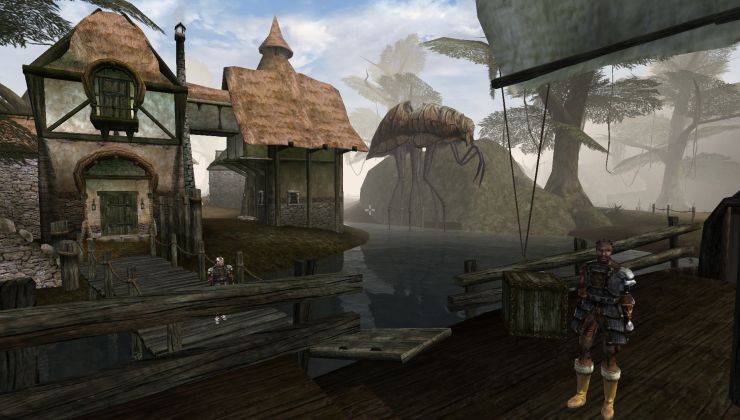 How to setup OpenMW for modern Morrowind on Linux / SteamOS and Steam Deck
 How to install Hollow Knight: Silksong mods on Linux, SteamOS and Steam Deck
- The Great Android lockdown of 2026.
- mr-victory - What's bad about generative AI on the Internet and beyond, exactl…
- GustyGhost - The value of ecosystem.
- LoudTechie - Lutris alternatives
- Tulon - Terminal trick - progress indicator in the task manager…
- Shmerl - See more posts