 Support us on Patreon
 PayPal
Latest Comments by CFWhitman
Lenovo adding Ubuntu & Red Hat on their entire ThinkStation and ThinkPad P lines
3 Jun 2020 at 4:35 am UTC Likes: 1
3 Jun 2020 at 4:35 am UTC Likes: 1
Quoting: JuliusSo Microsoft finally stopped the vendor strongarming, or at least Lenovo must feel big enough for them to take the risk.The anti-trust cases pretty much ended direct strongarming (exclusive Microsoft contracts or nothing) a long time ago. More recently, they've shifted to deals that require Windows recommendations be on every page of your Web site for discounts on Windows licensing, which tends to make the vendors not bother to sell anything else, so it's just a milder form of strongarming.
Lenovo adding Ubuntu & Red Hat on their entire ThinkStation and ThinkPad P lines
3 Jun 2020 at 4:27 am UTC
3 Jun 2020 at 4:27 am UTC
Many Thinkpads and ThinkStations have had Red Hat certification for a while, but you did have to check if you wanted to be sure. In my experience, the ones that had Red Hat certification always seemed to work well with Ubuntu and Debian variations as well. I'd guess they would work well with just about any x86/AMD64 distribution.
Raspberry Pi 4 goes 8GB, plus new 64bit OS
3 Jun 2020 at 4:20 am UTC
3 Jun 2020 at 4:20 am UTC
Quoting: DuncThat's correct; it's not in the repositories. However, there is a binary of the latest stable version for the Raspberry Pi on the ZEsarUX GitHub site in the download section (the latest beta doesn't have a Raspberry Pi build; of course you could build it yourself if you are familiar with compiling software). It's just a zip, but I think it can just be unzipped and run from the resulting directory. I haven't downloaded it and tried it, though. There's probably a README with more information in the archive.Quoting: CFWhitmanYes, I came to much the same conclusion. I usually use ZEsarUX elsewhere, but it's not in the RPiOS repos (at least, not last time I checked).Quoting: DuncI haven't tried emulating the ZX Spectrum on a Rapberry Pi. If FUSE doesn't work well, I would speculate that it's really not optimized for the hardware at all and is depending on it just being such an easy system to emulate. There is also ZEsarUX [External Link] for the Pi and even ZXBaremulator [External Link] if you want to try running an emulator directly on the hardware (with no Linux in between), but I haven't tried them.Quoting: CFWhitmanIn my experience, the Raspberry Pi 2 and up work well for PS1 emulation as long as you use the right emulator (PCSX ReArmed), and you are not using all the memory for other stuff at the same time.Yep. What I can't understand is why it still struggles with the ZX Spectrum, at least using the build of FUSE in theRaspbianRaspberry Pi OS repos. I'm pretty sure there's a homebrew Spectrum emulator for the PS1. There's no way a modern ARM device should have trouble with such a bare-bones Z80 machine.
The Linux market share still appears to be rising
3 Jun 2020 at 4:10 am UTC Likes: 1
3 Jun 2020 at 4:10 am UTC Likes: 1
One thing that I have noticed in the past is that Linux on the desktop is often a product of the secondary computer. That is, people have a new machine that is Windows, but with their secondary computer, they are more likely to move to Linux because it tends to work well for cleaning up crufty Windows installs.
For a while, it seemed like the secondary computer in the house was losing popularity because of phones and tablets. However, tablets have started to fade a bit, and that combined with people being stuck at home seems to have revived the secondary computer to some extent, which in turn would push desktop usage of Linux up a bit.
Still, I've never really trusted NetMarketShare numbers because they seem to survey sites that are more likely to be visited by Windows users than users of other systems. Historically, their numbers for Linux market share were lower than other sites that tracked Web hits by operating system. Lately, though it's been hard to find any numbers that seem consistent over time.
For a while, it seemed like the secondary computer in the house was losing popularity because of phones and tablets. However, tablets have started to fade a bit, and that combined with people being stuck at home seems to have revived the secondary computer to some extent, which in turn would push desktop usage of Linux up a bit.
Still, I've never really trusted NetMarketShare numbers because they seem to survey sites that are more likely to be visited by Windows users than users of other systems. Historically, their numbers for Linux market share were lower than other sites that tracked Web hits by operating system. Lately, though it's been hard to find any numbers that seem consistent over time.
Raspberry Pi 4 goes 8GB, plus new 64bit OS
2 Jun 2020 at 1:11 am UTC
2 Jun 2020 at 1:11 am UTC
Quoting: DuncI haven't tried emulating the ZX Spectrum on a Rapberry Pi. If FUSE doesn't work well, I would speculate that it's really not optimized for the hardware at all and is depending on it just being such an easy system to emulate. There is also ZEsarUX [External Link] for the Pi and even ZXBaremulator [External Link] if you want to try running an emulator directly on the hardware (with no Linux in between), but I haven't tried them.Quoting: CFWhitmanIn my experience, the Raspberry Pi 2 and up work well for PS1 emulation as long as you use the right emulator (PCSX ReArmed), and you are not using all the memory for other stuff at the same time.Yep. What I can't understand is why it still struggles with the ZX Spectrum, at least using the build of FUSE in theRaspbianRaspberry Pi OS repos. I'm pretty sure there's a homebrew Spectrum emulator for the PS1. There's no way a modern ARM device should have trouble with such a bare-bones Z80 machine.
Raspberry Pi 4 goes 8GB, plus new 64bit OS
1 Jun 2020 at 3:25 am UTC
1 Jun 2020 at 3:25 am UTC
In my experience, the Raspberry Pi 2 and up work well for PS1 emulation as long as you use the right emulator (PCSX ReArmed), and you are not using all the memory for other stuff at the same time.
On the Raspberry Pi models I'm familiar with, the 3.5 mm audio output is pretty bad. A USB DAC can do better; audio through the HDMI* is very good, as is audio through a good HAT.
Also, a Raspberry Pi 2 or higher will handle 1080p video well as long as the player is dedicated and optimized correctly and the network is not choking the stream, but not inside a browser.**
*(For example: Playing music through Kodi, routed through the TV via either S/PDIF or ARC to a stereo/surround setup; surround output is lossy (though high quality lossy), but stereo output is not.)
**(Again, I can enjoy 1080p Blu-Ray rips streaming from my server over a 2.4 GHz N wireless or better network connection with 5.1 channel surround sound through Kodi running on a Raspberry Pi 2 or newer.)
On the Raspberry Pi models I'm familiar with, the 3.5 mm audio output is pretty bad. A USB DAC can do better; audio through the HDMI* is very good, as is audio through a good HAT.
Also, a Raspberry Pi 2 or higher will handle 1080p video well as long as the player is dedicated and optimized correctly and the network is not choking the stream, but not inside a browser.**
*(For example: Playing music through Kodi, routed through the TV via either S/PDIF or ARC to a stereo/surround setup; surround output is lossy (though high quality lossy), but stereo output is not.)
**(Again, I can enjoy 1080p Blu-Ray rips streaming from my server over a 2.4 GHz N wireless or better network connection with 5.1 channel surround sound through Kodi running on a Raspberry Pi 2 or newer.)
Editorial - Linux Gaming's Ticking Clock
30 May 2020 at 8:35 pm UTC Likes: 1
30 May 2020 at 8:35 pm UTC Likes: 1
Historically, when it comes to computer operating systems, video gaming has very little affect on adoption.
That is, there are not a significant number of people who begin to adopt a computer operating system because of the games available on it. Instead, the more people that adopt a computer operating system overall, the more that game development for that platform increases.
If games led the way to computer operating system / computer platform adoption, it would have been the Commodore Amiga (it originally had the best games and graphics performance) rather than the IBM PC that began to dominate by the end of the 1980s. It's true that the dynamics of the market have changed some since then, but not that much. If we see more games on Linux, it will be because there are more Linux users rather than the other way around.
That is, there are not a significant number of people who begin to adopt a computer operating system because of the games available on it. Instead, the more people that adopt a computer operating system overall, the more that game development for that platform increases.
If games led the way to computer operating system / computer platform adoption, it would have been the Commodore Amiga (it originally had the best games and graphics performance) rather than the IBM PC that began to dominate by the end of the 1980s. It's true that the dynamics of the market have changed some since then, but not that much. If we see more games on Linux, it will be because there are more Linux users rather than the other way around.
Editorial - Linux Gaming's Ticking Clock
22 May 2020 at 4:35 am UTC Likes: 1
22 May 2020 at 4:35 am UTC Likes: 1
Proton being better for old game compatibility than new versions of Windows is no surprise. That has been the case for Wine in general for a long time.
One thing going for Vulkan over DirectX 12 is the rise of cross platform game titles. DirectX is Windows and Xbox only, while Vulkan could appear on any platform. That didn't used to matter much, but so many titles are released for multiple platforms these days that Vulkan is looking like a more inviting approach.
The thing that kept OpenGL alive, but not really a competition for Direct3D in the gaming market, was that it was still commonly used in CAD applications the entire time. Of course that not only reduced interest in its development compared to Direct3D, but influenced the development that did take place to focus on things that were a boon for CAD more than things that were a boon for gaming.
Personally, I haven't taken advantage of Proton so far. This is mostly because I have enough native Linux games to more than take up the little time I have for gaming these days.
One thing going for Vulkan over DirectX 12 is the rise of cross platform game titles. DirectX is Windows and Xbox only, while Vulkan could appear on any platform. That didn't used to matter much, but so many titles are released for multiple platforms these days that Vulkan is looking like a more inviting approach.
The thing that kept OpenGL alive, but not really a competition for Direct3D in the gaming market, was that it was still commonly used in CAD applications the entire time. Of course that not only reduced interest in its development compared to Direct3D, but influenced the development that did take place to focus on things that were a boon for CAD more than things that were a boon for gaming.
Personally, I haven't taken advantage of Proton so far. This is mostly because I have enough native Linux games to more than take up the little time I have for gaming these days.
AMD detail future plans for socket AM4 and Zen 3 compatibility, no Zen 3 for older chipsets
9 May 2020 at 1:22 am UTC
9 May 2020 at 1:22 am UTC
I have a 3700X running on an X370 motherboard (Asrock X370 Gaming X), though I did have to upgrade the firmware. The first upgrade had the RDRAND bug, but a later update fixed it. When I got the processor, the bug had already been fixed in the newest firmware, though the notes left something to be desired about properly explaining this. There has been another firmware update since. It seems to run pretty well at this point.
The original Half-Life games are now free to play until Half-Life: Alyx launches
22 Jan 2020 at 7:40 pm UTC
22 Jan 2020 at 7:40 pm UTC
Unfortunately (well, not really), I purchased Half-Life: Game of the Year Edition and played through it in 1999. I pre-ordered Half-Life 2 when that came out (was it 2004?), and I got Episode 1 and 2 along with a bunch of other Valve stuff during some Steam sale a little while back. My purchase of Half-Life 2 also marked the creation of my Steam account. Some time later I added my original Half-Life license to my Steam account.
Though I used Linux and even played games on it by 1999 I actually played Half-Life and Half-Life 2 on Windows when I first played them; I didn't wait for them to run correctly through Wine. These days I don't generally bother with games I can't play on Linux though.
Though I used Linux and even played games on it by 1999 I actually played Half-Life and Half-Life 2 on Windows when I first played them; I didn't wait for them to run correctly through Wine. These days I don't generally bother with games I can't play on Linux though.
- New US Congress bill proposal requires all operating system providers to verify ages [updated]
- Mozilla announced "Thunderbolt", their open-source and self-hostable AI client
- US operating system age verification bill "Parents Decide Act" gets published
- Dune: Awakening to get self-hosted servers, plus they're splitting PvE and PvP
- Amazon Luna rips out game stores, game purchases and third-party subscriptions
- > See more over 30 days here
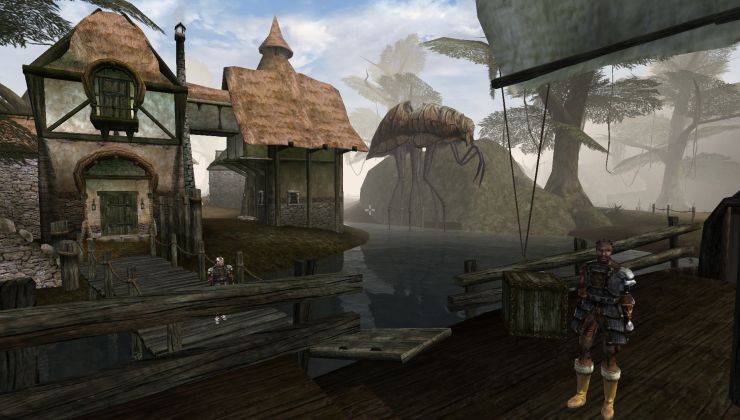 How to setup OpenMW for modern Morrowind on Linux / SteamOS and Steam Deck
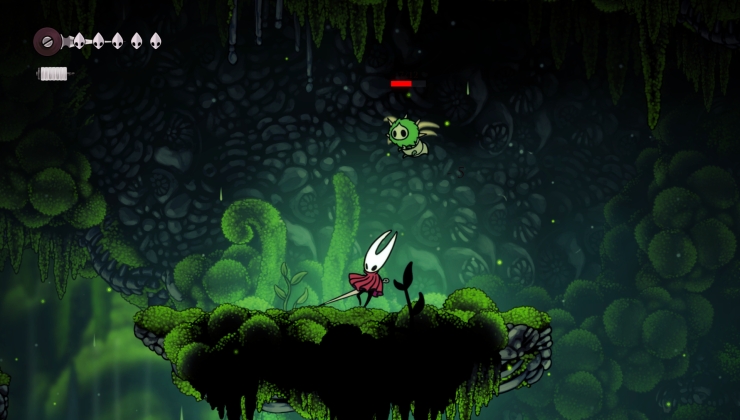 How to install Hollow Knight: Silksong mods on Linux, SteamOS and Steam Deck
Recently Updated
- Away all of next week
- Caldathras - Testing the VRAM valve patch
- Koopa - New Desktop Screenshot Thread
- tmtvl - Shop Crush - Psychological Horror Thrift Sim with Literal Illusio…
- hollowlimb - Proton/Wine Games Locking Up
- Caldathras - See more posts