 Support us on Patreon
 PayPal
Latest Comments by Linuxwarper
Cyberpunk 2077 confirmed for Stadia on November 19
18 Oct 2020 at 7:15 pm UTC Likes: 4
18 Oct 2020 at 7:15 pm UTC Likes: 4
I rather wait to buy the game through Steam instead of giving cash to Google. At least Valve is doing things for Linux. And please don't bring up all contributions Google has done for Linux, as of yet there has been very little contributions from them for gaming. If they somehow have made things better on Linux it would seem like a side effect of tech they have used, like how they use Vulkan.
Google announces another three games confirmed for Stadia
12 Oct 2020 at 11:18 pm UTC
It's certainly interesting to follow Stadia developments and it's side effects on desktop Linux ecosystem.
12 Oct 2020 at 11:18 pm UTC
Quoting: AnzaEspecially in that kind of scenario things are easier for Google if games are run on Linux.Define Linux in this context. Debian? Any of the major Linux distributions? Or Google's fork of Debian? And if it runs on Google's Stadia customized Debian, there is little to no guarantee the game will run on Linux. Google could also diverge on the path of Debian further to point that their Debian may become so different to vanilla Debian that porting games would be cumbersome.
Quoting: AnzaSo in short is that Google might not see Steam as big enough threat for Stadia that they would have paid attention what ChromeOS team is doing. Besides more users playing games on Linux means developers are more interested in making native Linux ports, which in turn makes it easier for developers to port their games to Stadia and that in turn makes it more likely to developers notice the exclusive Stadia features.It seems to be a conscious decision to use Steam to build momentum for Stadia. I don't think Stadia team isn't working closely with ChromeOS team. It would seem like a obvious thing that these two work together so that gaming on Chromebooks become larger than it is, whether that be through Stadia or not.
It's certainly interesting to follow Stadia developments and it's side effects on desktop Linux ecosystem.
Google announces another three games confirmed for Stadia
11 Oct 2020 at 1:54 pm UTC
11 Oct 2020 at 1:54 pm UTC
Quoting: GuestI doubt Google cares about porting games to desktop GNU/Linux. They likely wouldn't mind it too much, if it means an easier development time should the title want to arrive on Stadia one day; they're not actively against it, but aren't pushing for it either. Desktop simply isn't their market area.There is no doubt, they don't want to port games to Linux. I am not trying to make a big point out of all this but if Google's market is streaming, why are they working on Steam support for ChromeOS? One can easily understand why, they are creating momentum for gaming on Chromebooks which at one point will be steered to strictly streaming.
Google announces another three games confirmed for Stadia
4 Oct 2020 at 4:07 pm UTC
4 Oct 2020 at 4:07 pm UTC
I'd argue that even if Linux had 5% marketshare, Google would be opposed to the companies porting their games to Linux as well. So Stadia isn't only anti local play but also anti Linux. Linux is largely about choice, just because Stadia gives you a choice today doesn't mean in future it won't take one away. I wish I could say otherwise, but honestly that's what the end game seems to be with Stadia.
The Steam Play Proton compatibility layer turns two years old
22 Aug 2020 at 11:52 pm UTC
22 Aug 2020 at 11:52 pm UTC
Quoting: slaapliedjeHa, well at least I wasn't labeled an 'influencer'.I haven't used emulation with Steam but why don't you use RetroArch?
Now we just need a better way to get emulation within Big Picture mode. Like work with libretro. *hint hint at Valve*
The Steam Play Proton compatibility layer turns two years old
21 Aug 2020 at 8:50 pm UTC Likes: 2
21 Aug 2020 at 8:50 pm UTC Likes: 2
Quoting: slaapliedjeTo be fair, I had posted a few times that it'd be awesome if Valve integrated Wine within Steam before Proton became a thing. Whether or not I had any influence on that decision is doubtful, but hey, I was there before it was a thing asking it to be a thingDo tell us what will happen next oh holy prophet:tongue:
The Steam Play Proton compatibility layer turns two years old
21 Aug 2020 at 7:32 pm UTC
Valve's next venture will be hardware. They have begun with Index and it will go from there.
21 Aug 2020 at 7:32 pm UTC
Quoting: Purple Library GuyYou may well be right but I'll be kind of disappointed if so. I keep hoping they've got some kind of Big Plan that will eventually, when the stars align properly, usher in the forever-awaitedI am confident they have a plan. Stadia, Xbox (XGP, XCLOUD, console), EGS and other stores are threatening Steam as a business. Even UPlay is doing good.
Year of the Linux Desktop (TM)
Valve's next venture will be hardware. They have begun with Index and it will go from there.
The Steam Play Proton compatibility layer turns two years old
21 Aug 2020 at 1:42 am UTC Likes: 2
21 Aug 2020 at 1:42 am UTC Likes: 2
Gabe did mention he admired Nintendo for how they handle both hardware and software. The groundwork they are laying could be very well for a relaunch of Steam device. In Steamworks Development (2019 year in review) there was this quote at end, after bunch of plans were listed:
And of course we expect to release lots of improvements to Steam TV, Chat, the Library, the Store, and other existing features.
There are more projects that we're not quite ready to talk about just yet. Interested in helping out? Please send us your feedback on what's important to you, and if you want to join us in the trenches, we're always hiring.
NVIDIA GeForce NOW adds Chromebook support, so you can run it on Linux too
20 Aug 2020 at 2:23 pm UTC Likes: 1
Stadia could become a detriment in that if it becomes dominant it can undermine local releases of games. Not to forget they are already doing a bad thing, exclusivity. There are other concerns too. Stadia does have potential to be successful by leveraging cloud servers, such as the features they have and are working on. Yet even at this early stage they have resorted to one bad tactic already.
Geforce Now unlike Stadia is using Windows servers. This is negative for gaming on Linux. With Stadia improvements are made that will be of benefit for proper Linux (desktop distributions). Most obvious thing is that it uses Vulkan, and that will be a very important for native game development on Linux.
I take issue with your comment. If you view posts made about Steam Remote Play or/and Play Together you will find many positive comments. And those two features are streaming using your own computers. Should everyone dig a hole in ground and stick their heads into it like a ostrich? These "nice things" (Stadia and Geforce) aren't as nice as you make them out to be. If they were you'd see overwhelming support for them.
20 Aug 2020 at 2:23 pm UTC Likes: 1
Quoting: mao_dze_dunOnce again, I read the comments on something "controversial" like cloud gaming and remember why we can't have nice things on Linux...People comments is a reflection of the issues with these streaming services.
Stadia could become a detriment in that if it becomes dominant it can undermine local releases of games. Not to forget they are already doing a bad thing, exclusivity. There are other concerns too. Stadia does have potential to be successful by leveraging cloud servers, such as the features they have and are working on. Yet even at this early stage they have resorted to one bad tactic already.
Geforce Now unlike Stadia is using Windows servers. This is negative for gaming on Linux. With Stadia improvements are made that will be of benefit for proper Linux (desktop distributions). Most obvious thing is that it uses Vulkan, and that will be a very important for native game development on Linux.
I take issue with your comment. If you view posts made about Steam Remote Play or/and Play Together you will find many positive comments. And those two features are streaming using your own computers. Should everyone dig a hole in ground and stick their heads into it like a ostrich? These "nice things" (Stadia and Geforce) aren't as nice as you make them out to be. If they were you'd see overwhelming support for them.
NVIDIA GeForce NOW adds Chromebook support, so you can run it on Linux too
19 Aug 2020 at 10:40 pm UTC
It seems like a smokescreen whenever someone wants to tell people that they don't own games on Steam as much as you think you do. First thing that's mentioned is "You're buying a lincense", and it's almost always brought up in context of a service or platform that isn't DRM free or threatens the freedoms a DRM lincense provides.
19 Aug 2020 at 10:40 pm UTC
Quoting: GrazenYou *own* the games as much on Stadia as you do on Steam - in fact the licenses are similar across Steam / PlayStation / Xbox etcetera. People in the Linux community seem to be confused about what "owning" a game means... users are licensing games... big difference. The fact that you can't store every game that you license locally on Stadia is a different issue - but then I don't store every game I license via Steam or any other platform locally either. TO do so would be a tad... anal.License or game, whatever. You can make backups of games that are DRM free on GOG and Steam. You can't do that on many other stores/platforms, so I disagree with you that you own games on Stadia as much as you do on Steam.
It seems like a smokescreen whenever someone wants to tell people that they don't own games on Steam as much as you think you do. First thing that's mentioned is "You're buying a lincense", and it's almost always brought up in context of a service or platform that isn't DRM free or threatens the freedoms a DRM lincense provides.
- Legendary, the free and open source Epic Games Launcher, has moved to a new organisation
- Godot gets a funding boost from Slay the Spire 2 devs Mega Crit
- Bazzite Linux gets some major upgrades for the April 2026 Update
- Valve dev fixes up VRAM management on AMD GPUs to improve performance
- Proton Experimental brings fixes for classic Resident Evil 1 & 2, Dino Crisis 1 & 2 and more
- > See more over 30 days here
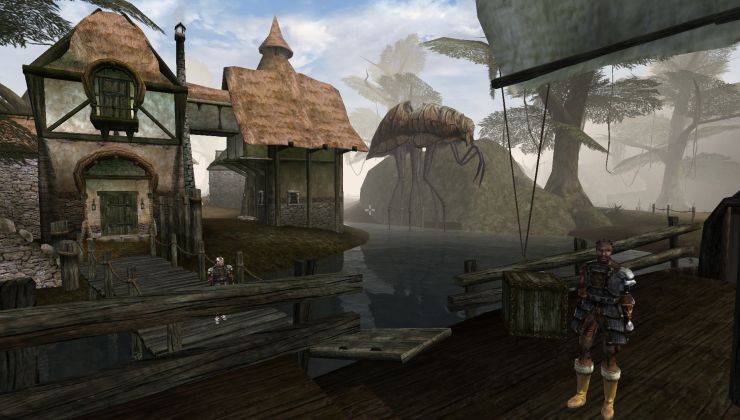 How to setup OpenMW for modern Morrowind on Linux / SteamOS and Steam Deck
 How to install Hollow Knight: Silksong mods on Linux, SteamOS and Steam Deck
- To wait or not to wait
- GustyGhost - Proton/Wine Games Locking Up
- tuubi - The Great Android lockdown of 2026.
- LoudTechie - Introduce Yourself!
- LoudTechie - Shop Crush - Psychological Horror Thrift Sim with Literal Illusio…
- hollowlimb - See more posts