Latest Comments by gradyvuckovic
Steam Play Proton 5.0-8 has released (update: 5.0-9 too)
12 Jun 2020 at 2:15 am UTC
12 Jun 2020 at 2:15 am UTC
Loving these quick updates to get little issues sorted out as fast as possible.
Steam Play Proton 5.0-8 has released (update: 5.0-9 too)
6 Jun 2020 at 8:56 am UTC Likes: 5
6 Jun 2020 at 8:56 am UTC Likes: 5
Woohoo!
Regarding when Proton will update to a newer version of Wine, I imagine Valve are waiting until the regressions are sorted out in upstream Wine, we'll probably see another major update for Proton soon as they are.
Which is logical, Proton represents the "stable" solution, it should be the most reliable choice for most.
It's a really hard problem too, because with Wine/Proton, there's no "Stable" in the traditional sense for software. Because Wine is incapable of running all Windows software flawlessly and likely will never be capable of doing so.
I like that Valve is trying to maintain a great UX here for each type of user and the different degree of 'stable' they would want.
Zero-Click Users: Users who want the most out of the box experience possible don't have to do any additional work. Valve maintains a whitelist of games that run reliably via Proton. Just click install and play like normal if the game is compatible. If a game is not whitelisted, wait until it is or play it on Windows. Here stable means "you don't ever experience errors".
One-Click Users: Users who want to go a step beyond can enable all titles, just continue to use the latest version of Proton, try out which games work and don't work, and form their own list of compatible games. Little bit of extra work but it opens up the door for more games to be played without needing Windows. Here stable means "if you can get a game to work, then it won't break with a future Proton update" because Valve is trying to prevent regressions in Proton.
Bleeding Edge Users: Users can test out the beta of Proton updates before they're released, giving them an opportunity to identify problems before release and report them so they're fixed. Users can run their very own custom versions of Proton using the latest version of Wine and other tweaks to get the highest level of compatibility they can achieve through trial and experimenting. Here stable means "you can experiment as much as you like, but you have sane defaults to revert back to if you have any problems".
It's a great approach, it offers the best experience possible for each type of user and any additional burden is taken on by a user choosing to accept it, rather than that burden being forced on them. It makes experimenting with Proton 'fun' more than tedious.
Regarding when Proton will update to a newer version of Wine, I imagine Valve are waiting until the regressions are sorted out in upstream Wine, we'll probably see another major update for Proton soon as they are.
Which is logical, Proton represents the "stable" solution, it should be the most reliable choice for most.
It's a really hard problem too, because with Wine/Proton, there's no "Stable" in the traditional sense for software. Because Wine is incapable of running all Windows software flawlessly and likely will never be capable of doing so.
I like that Valve is trying to maintain a great UX here for each type of user and the different degree of 'stable' they would want.
Zero-Click Users: Users who want the most out of the box experience possible don't have to do any additional work. Valve maintains a whitelist of games that run reliably via Proton. Just click install and play like normal if the game is compatible. If a game is not whitelisted, wait until it is or play it on Windows. Here stable means "you don't ever experience errors".
One-Click Users: Users who want to go a step beyond can enable all titles, just continue to use the latest version of Proton, try out which games work and don't work, and form their own list of compatible games. Little bit of extra work but it opens up the door for more games to be played without needing Windows. Here stable means "if you can get a game to work, then it won't break with a future Proton update" because Valve is trying to prevent regressions in Proton.
Bleeding Edge Users: Users can test out the beta of Proton updates before they're released, giving them an opportunity to identify problems before release and report them so they're fixed. Users can run their very own custom versions of Proton using the latest version of Wine and other tweaks to get the highest level of compatibility they can achieve through trial and experimenting. Here stable means "you can experiment as much as you like, but you have sane defaults to revert back to if you have any problems".
It's a great approach, it offers the best experience possible for each type of user and any additional burden is taken on by a user choosing to accept it, rather than that burden being forced on them. It makes experimenting with Proton 'fun' more than tedious.
Wine 5.10 out with more WineD3D Vulkan work and anti-cheat improvements
6 Jun 2020 at 8:29 am UTC
6 Jun 2020 at 8:29 am UTC
I'm loving it.
Super excited about any work done to improve anticheat compatibility and it's great to see the progress.
It's going to be a slow process I imagine, but they're getting there, building it brick by brick. Anticheat is definitely one of the 'hard problems' for Wine, so I imagine once it's fixed there will be flow on benefits to other areas too.
The only thing I don't like about Wine updates is waiting for them, they're so good. Someone put me to sleep so I can wait up next year and binge read all the update changelogs!
Super excited about any work done to improve anticheat compatibility and it's great to see the progress.
It's going to be a slow process I imagine, but they're getting there, building it brick by brick. Anticheat is definitely one of the 'hard problems' for Wine, so I imagine once it's fixed there will be flow on benefits to other areas too.
The only thing I don't like about Wine updates is waiting for them, they're so good. Someone put me to sleep so I can wait up next year and binge read all the update changelogs!
AMD Wattman-like open source app CoreCtrl adds NAVI support
4 Jun 2020 at 1:08 pm UTC Likes: 2
4 Jun 2020 at 1:08 pm UTC Likes: 2
This is exactly the kind of thing Linux needs to encourage more gamers to make the switch to Linux.
Next we just need a universal app for managing your devices, like headsets, keyboards, mice, for changing hotkey mappings, RGB lighting, DPI settings, etc.
Next we just need a universal app for managing your devices, like headsets, keyboards, mice, for changing hotkey mappings, RGB lighting, DPI settings, etc.
Blender 2.83 is out as the first ever LTS, gains initial VR support
4 Jun 2020 at 1:03 pm UTC
4 Jun 2020 at 1:03 pm UTC
Quoting: rustybroomhandleIt's just a reference to the virgin vs chad meme. No MRA reference or whatever.Quoting: gradyvuckovicBlender, the chad open source software.This is the second time in a week I'm seeing someone on here using MRA/incel terminology. What the heck is going on?
Blender 2.83 is out as the first ever LTS, gains initial VR support
4 Jun 2020 at 10:23 am UTC Likes: 7
4 Jun 2020 at 10:23 am UTC Likes: 7
Blender, the chad open source software.
Blender is easily as good as Maya or 3ds Max and even leaves them in the dust in some areas. Eevee? Grease Pencil? Cloth sculpting brush? Autodesk doesn't have anything to match those features.
The difference is.. Maya costs $205 per month.
Blender is free and open source.
Autodesk should be very worried.
Blender is easily as good as Maya or 3ds Max and even leaves them in the dust in some areas. Eevee? Grease Pencil? Cloth sculpting brush? Autodesk doesn't have anything to match those features.
The difference is.. Maya costs $205 per month.
Blender is free and open source.
Autodesk should be very worried.
The Linux market share still appears to be rising
3 Jun 2020 at 7:44 am UTC Likes: 2
3 Jun 2020 at 7:44 am UTC Likes: 2
The thing which gives me hope every time I see Linux marketshare go up, is the thought that more marketshare makes further growth even easier.
It's hard to gain marketshare when your platform has no organic third party support. But if you can achieve it, and bring users to your platform, then organic third party support will always follow. Developers and manufacturers of software and hardware always follow users. So if we get more users, we get more support.
At 0.91%, we're not exactly commanding a noticeable portion of the marketshare yet. But every little bit of growth means a bit more organic third party support. Which only makes it easier for more users to make the switch to Linux, as more of the stuff they want is already here.
It's really a feedback loop in both ways. No users means no developers. No developers means no users. The chicken and egg problem that has haunted Linux for years. But it goes the other way too, more users means more developers. More developers means more users.
I really feel like Wine/Proton has short circuited the chicken and egg problem. Which is the second thing which gives me hope. Proton is really only partially complete in a sense, it's missing what I consider to be more or less 'the final piece of the puzzle', ie; anticheat support.
It feels like we're getting closer to the point where something is going to happen on that front. When it does, that's going to make even more games playable on Linux that aren't currently. Which will just bring more users to Linux, even faster.
At some threshold, between where Linux is now, and where MacOS is today, is the level of threshold which makes a company decide to support an OS. Origin has a Windows and MacOS client, but no Linux. Same with Battle.net. Same with EGS. Same with GOG.
We're not far from that threshold, if we can keep getting steady rises, plus anticheat support, we could reach that threshold for at least one of those platforms, which will see even more gamers come to Linux as a result.
We just gotta keep pushing, keep improving the experience of gaming on Linux in every way possible and keep our eyes on whatever roadblocks exist that are keeping Windows gamers from making the switch, while ensuring those who do stick around. As long as we have a better retention rate than Windows, we'll keep gaining ground.
It's hard to gain marketshare when your platform has no organic third party support. But if you can achieve it, and bring users to your platform, then organic third party support will always follow. Developers and manufacturers of software and hardware always follow users. So if we get more users, we get more support.
At 0.91%, we're not exactly commanding a noticeable portion of the marketshare yet. But every little bit of growth means a bit more organic third party support. Which only makes it easier for more users to make the switch to Linux, as more of the stuff they want is already here.
It's really a feedback loop in both ways. No users means no developers. No developers means no users. The chicken and egg problem that has haunted Linux for years. But it goes the other way too, more users means more developers. More developers means more users.
I really feel like Wine/Proton has short circuited the chicken and egg problem. Which is the second thing which gives me hope. Proton is really only partially complete in a sense, it's missing what I consider to be more or less 'the final piece of the puzzle', ie; anticheat support.
It feels like we're getting closer to the point where something is going to happen on that front. When it does, that's going to make even more games playable on Linux that aren't currently. Which will just bring more users to Linux, even faster.
At some threshold, between where Linux is now, and where MacOS is today, is the level of threshold which makes a company decide to support an OS. Origin has a Windows and MacOS client, but no Linux. Same with Battle.net. Same with EGS. Same with GOG.
We're not far from that threshold, if we can keep getting steady rises, plus anticheat support, we could reach that threshold for at least one of those platforms, which will see even more gamers come to Linux as a result.
We just gotta keep pushing, keep improving the experience of gaming on Linux in every way possible and keep our eyes on whatever roadblocks exist that are keeping Windows gamers from making the switch, while ensuring those who do stick around. As long as we have a better retention rate than Windows, we'll keep gaining ground.
Editorial - Linux Gaming's Ticking Clock
29 May 2020 at 12:45 am UTC Likes: 4
Valve is no angel, they want to make money too, but in this case, I think Valve's interests so closely align with ours and with 'software freedom' in general, that Valve is without a doubt our best friend right now. So I want them to succeed, because what works for Valve right now, works VERY well for us.
29 May 2020 at 12:45 am UTC Likes: 4
Quoting: SonataWasn't sure if I was gonna post or not as someone who has come to Linux somewhat recently (now that i think of it, it's almost a year now o.O) after randomly stumbling about how much easier Valve made gaming on this wonderful platform by integrating Proton and realising that most my games actually work.That's pretty much exactly how I read it. It's not because "Microsoft is evil, they're satan!" it's just basic common sense, all companies that control a platform want a more locked down platform, because that makes them more money. If Valve didn't exist and Microsoft had free reign over the PC gaming market, they would absolutely lock it down as tight as they can to eliminate any possibility of Windows games spreading to other OSes. They have shareholders to please, profits to make, and that's how you make money.
True is that I always hated Windows for it's lack or privacy and security and I know I'm the minority in that case, as I notice whenever i bring those topics up and get the same redundant/stupid answers like "Well, i got nothing to hide anyway" etc.
One of the main problems I see with the lack of widespread linux adoption is so many companies being locked into windows and microsoft's office suite or other windows-only programs like adobe for instance as well as that the "common person" as in not really tech-savy, often don't know that there ARE alternatives. Maybe they know about MacOs, if at all.
I recently brought my mother over to Linux Mint for her work-related stuff - and thinking about if I hadn't done the switch myself and told her about it, she would still be complaining about how shitty Windows 10 is (aka forced updates during Webinars and all that fun), because she wouldn't know that there was a viable alternative and Desktop Linux in many aspects has become viable for the common user. (as in browsing and light office-like work)
Gaming for me was always what kept me using Windows and I hated that situation (as already stated) and with every blunder MS does, as they seem to not have any QA for their operating system by the looks of past updates, we can get minor adoption with tools like Proton and the likes.
Still. What we need is a big player supporting the platform.
Valve is kinda doing that, which i commend them for but the reason is fairly obvious:
They're afraid of Microsoft trying to take over the gaming market as their marketshare on windows is already that big and this is exactly what we're seeing currently:
MS pushing Game Pass and UWP trying to lock-in the market on their platform.
If Valve doesn't push Linux adoption harder, we might see this end up happening: That gaming will end up (mostly) being bound to windows with games being locked into the windows store itself or maybe steam even being forced to pay some kind of share. (as in MS trying to create a more google playstore like platform)
I really hope I'm reading this whole situation wrong.
Valve is no angel, they want to make money too, but in this case, I think Valve's interests so closely align with ours and with 'software freedom' in general, that Valve is without a doubt our best friend right now. So I want them to succeed, because what works for Valve right now, works VERY well for us.
Steam Cloud Gaming confirmed with Steam Cloud Play
28 May 2020 at 1:32 pm UTC Likes: 2
It can be solved with streaming, but you just need to stream more than just the raw image that's going to the headset.
You'd need to stream a 360 degree image instead. It would need to be a large resolution to compensate of course. As a performance optimisation however, you could broadcast the video with varying pixel density resolution. And put the most pixel density in the direction the user is looking, and gradually taper off the pixel density to a lower level for the parts of the image behind the user.
To make it really work well, you'd need to also stream a depth buffer stream as well. Using that, you could reproject the 360 degree video stream, to adjust for the user's local current headset rotation and position.
This could actually result in LESS latency than current VR, because the local machine wouldn't need to do any complex rendering of a large environment, just reprojecting an image.
Unfortunately it would do nothing for the latency between moving your hands and the virtual hands moving. But with the depth image of the 360 degree image, you could just render the hands separately and mix it with the video stream. You can do that when you got a depth buffer. It's just like the old PS1 games with their prerendered backgrounds.
There's ways in theory to make VR work via game streaming.
28 May 2020 at 1:32 pm UTC Likes: 2
Quoting: kuhpunktThis isn't actually entirely unsolvable..Quoting: tmtvlThe FPS aren't the problem, but the input delay, If the image is processed at a server far away it needs to reach your home without any delay. If you add just 10ms to what's already there, it might cause problems.Quoting: PatolaI wonder if we will eventually be able to get VR through streaming, since Valve is so invested on it now?For VR to be bearable for the average person they need a high framerate (I forget what the minimum comfortable level was), but trying to stream, say, 144FPS with current infrastructure is hard to achieve. It's an interesting technical challenge that may require creating of a new data transfer protocol, various new types of hardware,...
It can be solved with streaming, but you just need to stream more than just the raw image that's going to the headset.
You'd need to stream a 360 degree image instead. It would need to be a large resolution to compensate of course. As a performance optimisation however, you could broadcast the video with varying pixel density resolution. And put the most pixel density in the direction the user is looking, and gradually taper off the pixel density to a lower level for the parts of the image behind the user.
To make it really work well, you'd need to also stream a depth buffer stream as well. Using that, you could reproject the 360 degree video stream, to adjust for the user's local current headset rotation and position.
This could actually result in LESS latency than current VR, because the local machine wouldn't need to do any complex rendering of a large environment, just reprojecting an image.
Unfortunately it would do nothing for the latency between moving your hands and the virtual hands moving. But with the depth image of the 360 degree image, you could just render the hands separately and mix it with the video stream. You can do that when you got a depth buffer. It's just like the old PS1 games with their prerendered backgrounds.
There's ways in theory to make VR work via game streaming.
Steam Cloud Gaming confirmed with Steam Cloud Play
28 May 2020 at 10:06 am UTC
28 May 2020 at 10:06 am UTC
I'd hold ya breaths until we see a formal announcement for what this means for users. I'm really curious to see what Valve does with this. I think it'll be big.
- Blender change the Anthropic AI funding deal, with discussions planned for AI Policies
- Steam Survey for April 2026 shows Linux still trending well
- Steam Controller more popular than Valve expected - they're working on stock issues
- Expanded AMD HDMI 2.1 support is coming to Linux
- Wine 11.8 brings updates for Mono, MSXML, VBScript and more
- > See more over 30 days here
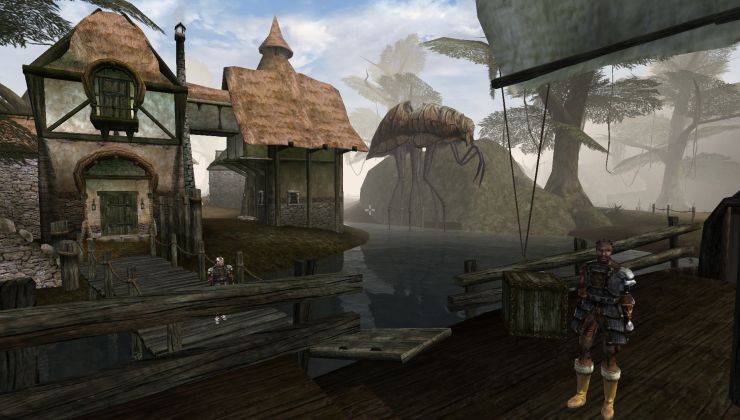 How to setup OpenMW for modern Morrowind on Linux / SteamOS and Steam Deck
 How to install Hollow Knight: Silksong mods on Linux, SteamOS and Steam Deck
Recently Updated
- Feedback needed - future website updates
- Liam Dawe - Steam Deck desktop mode localization
- on_en_a_gros - Why most people are approaching the xz-attack wrong.
- LoudTechie - Lutris alternatives
- sourpuz - Welcome back to the GamingOnLinux Forum
- sourpuz - See more posts