Latest Comments by gradyvuckovic
Editorial - Linux Gaming's Ticking Clock
24 May 2020 at 8:35 am UTC Likes: 2
The problem is, all the traditional means of driving adoption that spring to mind are more or less the anti-thesis of everything 'free and open source software' stands for and probably beyond the scope of what we could achieve anyway. It's not like the Linux community is going to suddenly start pumping out 2 or 3 AAA Linux exclusive games a year, or sign third party exclusivity contracts with publishers, or do weekly game giveaways.
Linux as a platform for gaming, can of course add convenient features to make life easier, but then we quickly enter a 'everything you can do, I can do better!' song and dance with the other platforms, where they adopt any new features we come up with shortly after we create them. Same has happened with Windows for years, every time Linux desktops gain a new feature, eventually it comes to Windows (eg: multiple virtual desktops).
I've spent some time thinking about if and if I had to come up with a list of 'Reasons to Game on Linux', this would be it:
Those are things which come to mind when I try to think of reasons to use Linux instead of Windows.
24 May 2020 at 8:35 am UTC Likes: 2
Quoting: Purple Library GuyCouldn't agree more.Quoting: LinuxwarperYou speak of Proton as if it's complete when reality is it's not. It still lacks support for anticheat, and VK3D is still not mature. How can Proton make a significant impact when it's still lacking? I am certain a completed Proton will drive adoption.I'm afraid you missed my whole point. Proton, whether incomplete or complete, is a thing which reduces barriers to adoption. It cannot in itself drive adoption. With Proton, you can potentially say "If I switch to Linux, I can still have my Windows games." But people who stay with Windows can already have their Windows games--that's not a reason to switch.
If barriers are high, there can be drivers of adoption and people still won't switch--they'll say "I'd like to switch, but I wouldn't be able to play my Windows games." So something like Proton is important in its own way. But it is not in itself a driver of adoption, just an enabler if such drivers exist.
For people to switch, there need to be both few and low barriers to switching, and positive drivers, actual reasons why you get something out of switching. My point was that Linux people have tended to work very hard to reduce barriers, but have not put as much effort into creating actual incentives--and Proton is in the former category, not the latter.
The problem is, all the traditional means of driving adoption that spring to mind are more or less the anti-thesis of everything 'free and open source software' stands for and probably beyond the scope of what we could achieve anyway. It's not like the Linux community is going to suddenly start pumping out 2 or 3 AAA Linux exclusive games a year, or sign third party exclusivity contracts with publishers, or do weekly game giveaways.
Linux as a platform for gaming, can of course add convenient features to make life easier, but then we quickly enter a 'everything you can do, I can do better!' song and dance with the other platforms, where they adopt any new features we come up with shortly after we create them. Same has happened with Windows for years, every time Linux desktops gain a new feature, eventually it comes to Windows (eg: multiple virtual desktops).
I've spent some time thinking about if and if I had to come up with a list of 'Reasons to Game on Linux', this would be it:
- Linux is free and open source, this isn't just an ideological benefit, this is also a practical benefit. Keeping track of Windows licenses or paying for them is one less thing to worry about on Linux. If you ever need a copy of a Linux distro you can just jump on the distro website and download it. Super convenient.
- Better graphics stack. I can't explain it nor do I understand it, but in my opinion, rendering graphics on Linux is faster. For example, you can see as much as 30% faster rendering with Blender. I have no idea why this is, but it's definitely something I've observed. Of course this doesn't translate to faster graphics in every situation, such as lazy ports or running Windows games on Linux. But even then, sometimes Windows games have run faster on Linux in certain circumstances, which is a testament to just how much faster Linux generally is than Windows for graphics rendering.
- Superior update UX. Not only on Windows do you have to deal with the annoyance of the now infamous forced updates, but the UX of updates on Windows is quite bizarre. Windows communicates very poorly when it's checking for updates, what updates it's performing and what even is being updated. Not only that but usually software is updated separately to the OS. On Windows, it's very common for software to have it's own 'updater' service that runs in the background, consuming memory and CPU cycles just to constantly check for updates. Contrast that to Linux, there's usually very well made update utilities that allow you to update when you feel like, tell you what's being updated, and update both your OS and your software at the same time. Linux in my opinion has a cleaner UX here.
- Another Windows annoyance to avoid, the incoherent mess of UIs for Settings/Control Panel in Windows 10, especially for things like changing filetype associations. It's one of the few areas where I can say with confidence Linux is definitely offering a better UX, almost all the popular Linux distros have a better UX here. OS settings on Linux are usually offered via a single global settings UI, and actually easier to follow than what you usually get on Windows. I don't know how Microsoft has screwed this up so much but they definitely dropped the ball here, but their loss is our gain.
- Generally speaking there's no need to install drivers on Linux any more as long as your hardware is supported. It's still common on Windows to need to install manually drivers for things like printers and wifi cards and monitors, etc, it's common for these things to come with instructions telling you to go to a website and download & install some annoying little application that will live in your system tray forever. It's usually one of the first things you need to do with a new Windows installation, and at the very least you need to go grab the GPU driver. These days most Linux distros are actually coming with GPU drivers out of the box or install them at the same time as OS.
Those are things which come to mind when I try to think of reasons to use Linux instead of Windows.
Editorial - Linux Gaming's Ticking Clock
22 May 2020 at 6:36 am UTC Likes: 8
22 May 2020 at 6:36 am UTC Likes: 8
To parapharse a recent comment of my own, regarding 'DirectX <3 Linux' and the comparison to DXVK..
Proton(/Wine): The negative side effect is that we see Windows software running fairly reliably on Linux now, with great performance. The positive side effect, is that it's bringing more users away from Windows and to an OS where Windows software isn't running natively, Windows software is a second class citizen, something that is being supported with basically a compatibility solution to help users phase out Windows from their lives, not to endlessly keep using Windows software.
So effectively, Proton neuters the disadvantage of Windows platform lockin, by taking away one of Window's benefits, the Windows game library. But it does so at the cost of making Windows software more universal. This in theory reduces the incentive for Linux native game development.
However the catch is.. Right now there isn't enough incentive for Linux native game development anyway. That's exactly the problem we face. Because there aren't enough gamers on Linux, there's not enough incentive.
Now that could change, in theory there could come a time when there are more than enough gamers on Linux to incentive Linux native game development, but due to Proton's availability and effectiveness, we could see those native games not happen.
However!
In my opinion, that won't happen, and here's why:
Right now Proton is a benefit due to the lack of Linux native game development. This is because of the lack of Linux gamers. The only reason why there'd be incentive for Linux native game development is if the number of Linux gamers increased.
If the number of Linux gamers increased, say to 5% of the market, game developers would have more, not less, incentive to ensure their games run on Linux. Whether that is via Proton or a native game, the game developers would choose which method is most cost effective, but regardless of which they choose, the requirement is the same: The game has to run on Linux.
That being the case, you'd see more games running more reliably on Linux. More games running more reliably on Linux means more Linux gamers. More Linux gamers means more incentive for game developers to ensure their games not only run on Linux, but run well.
Proton is, and always will be, in my opinion, an imperfect compatibility solution. It will never produce optimal results. I could foresee a time when game developers may invest small amounts of effort into ensuring their game runs "Semi reliably" via Proton to maximise their sales, but if Linux marketshare reached the point where the cost/benefit analysis of Linux support equates strongly to profit, that would mean game developers would want to upgrade to "Strong reliability".
Proton is a complex machine with lots of moving parts, it changes regularly, and so does Windows, leaving it up to Proton to provide your game support is a risky move and would not result in the 'Strong reliability' that developers would want to maximise their sales.
Bottom Line: It would be far easier to debug a native Linux game on Linux, than to debug a Windows game running via Proton on Linux.
So Proton is in my opinion a winning ticket and will have a net positive impact for years to come.
The question is really, is it enough?
Reading over everything you wrote Liam about the different platforms competing, I don't think there should be any doubt that the way every major player in this market is competing right now, is with a strategy of platform lockin.
It's the name of the game. Every platform wants exclusives, or a subscription model, or at the very least to lock players into their platform with huge libraries of games, or a sense of dependency on a particular feature set, or 'something'.
And that's common sense. Think about trying to convince someone to switch from one platform to another. What's the first response you get from the person you're trying to sway?
"Why?"
Each platform needs a reason to convert people to it, each platform needs a reason to keep people on it.
Even retail shops selling clothes have customer loyalty programs, because they don't want a customer to come into their store to buy just one pair of pants. They want the customer to come back every month to buy something else.
Sure you can compete on price and quality, but when you got 40 clothes stores in one supermarket alone, and you're all importing your clothes from the same overseas countries anyway, there's only so much you can do to compete on price and quality.
That's business, and whether we as the 'Linux gaming community' wish to acknowledge that reality or not, when we're trying to get more gamers to come to Linux, we're competing in a market full of very large and aggressive companies and corporations, and that is how this 'game' is played. It's a dirty fight that doesn't respect software freedom.
Linux, by it's nature, as a gaming platform, is the only platform that isn't fighting dirty. Our way of competing is to 'open all the things'.
Look at how we compete:
- Improve Linux Desktop UX
- Pro-consumer behaviour
- Wine
- Proton
- DXVK
- Vulkan
- Godot
- Lutris
- Flatpak
Everything we do is all about breaking down the walls others have erected, or genuinely improving Linux to make it a better platform those who might come use it.
Now look at how Microsoft competes:
- UWP
- Exclusive Games
- DirectX
- Buying game studios
We can, and do, work all day until the cows come home, trying to 'open all the things' to neutralise the 'platform lockin' tactics used by those fighting dirty. We can improve Wine, improve DXVK, promote pro-consumer buying activity to encourage developers to support Linux, we can build emulators for console games, open source PS4 remote play clients, etc etc..
At the end of the day, that's like a clothes store honouring the loyalty program of another store, it neutralises the advantage the other store might have.. but it's not actually creating an incentive to come to 'our shop' is it?
What I'm saying is: We're playing strong defense, but we got no offense.
These are all 'reactive' responses to the disadvantages as they emerge and they often take a lot of time too, meaning we're always years behind the actions of our competitors. The early bird gets the worm, gamers want stuff now, not in 4 years. Yes we'll eventually get DX12 to work on Linux 'almost perfectly'. But will every DX12 game work on Linux on day 1? ... No.
So looking forward, the biggest question in my opinion is, how do we get ahead of the curve?
We can 'open all the things' all day long, but what can we do that creates an incentive for either developers to target Linux, or for gamers to switch to Linux?
Arguably we have one constant incentive that works in our favour: Linux is free.
That's good! No other competitor in our market has the ability to say that, this is a good and proper incentive to bring people to Linux. (Microsoft neutralised that advantage for this very reason, when they made W10 free for several years.)
That's one incentive. We need more than that.
What do we do?
There's one advantage we have that other platforms don't have. We have very loyal 'users'. Many Linux gamers are very loyal to the cause. Perhaps our secret weapon is to organise ourselves more. Companies respond to demand. We can fuel demand by coordinated action.
Proton(/Wine): The negative side effect is that we see Windows software running fairly reliably on Linux now, with great performance. The positive side effect, is that it's bringing more users away from Windows and to an OS where Windows software isn't running natively, Windows software is a second class citizen, something that is being supported with basically a compatibility solution to help users phase out Windows from their lives, not to endlessly keep using Windows software.
So effectively, Proton neuters the disadvantage of Windows platform lockin, by taking away one of Window's benefits, the Windows game library. But it does so at the cost of making Windows software more universal. This in theory reduces the incentive for Linux native game development.
However the catch is.. Right now there isn't enough incentive for Linux native game development anyway. That's exactly the problem we face. Because there aren't enough gamers on Linux, there's not enough incentive.
Now that could change, in theory there could come a time when there are more than enough gamers on Linux to incentive Linux native game development, but due to Proton's availability and effectiveness, we could see those native games not happen.
However!
In my opinion, that won't happen, and here's why:
Right now Proton is a benefit due to the lack of Linux native game development. This is because of the lack of Linux gamers. The only reason why there'd be incentive for Linux native game development is if the number of Linux gamers increased.
If the number of Linux gamers increased, say to 5% of the market, game developers would have more, not less, incentive to ensure their games run on Linux. Whether that is via Proton or a native game, the game developers would choose which method is most cost effective, but regardless of which they choose, the requirement is the same: The game has to run on Linux.
That being the case, you'd see more games running more reliably on Linux. More games running more reliably on Linux means more Linux gamers. More Linux gamers means more incentive for game developers to ensure their games not only run on Linux, but run well.
Proton is, and always will be, in my opinion, an imperfect compatibility solution. It will never produce optimal results. I could foresee a time when game developers may invest small amounts of effort into ensuring their game runs "Semi reliably" via Proton to maximise their sales, but if Linux marketshare reached the point where the cost/benefit analysis of Linux support equates strongly to profit, that would mean game developers would want to upgrade to "Strong reliability".
Proton is a complex machine with lots of moving parts, it changes regularly, and so does Windows, leaving it up to Proton to provide your game support is a risky move and would not result in the 'Strong reliability' that developers would want to maximise their sales.
Bottom Line: It would be far easier to debug a native Linux game on Linux, than to debug a Windows game running via Proton on Linux.
So Proton is in my opinion a winning ticket and will have a net positive impact for years to come.
The question is really, is it enough?
Reading over everything you wrote Liam about the different platforms competing, I don't think there should be any doubt that the way every major player in this market is competing right now, is with a strategy of platform lockin.
It's the name of the game. Every platform wants exclusives, or a subscription model, or at the very least to lock players into their platform with huge libraries of games, or a sense of dependency on a particular feature set, or 'something'.
And that's common sense. Think about trying to convince someone to switch from one platform to another. What's the first response you get from the person you're trying to sway?
"Why?"
Each platform needs a reason to convert people to it, each platform needs a reason to keep people on it.
Even retail shops selling clothes have customer loyalty programs, because they don't want a customer to come into their store to buy just one pair of pants. They want the customer to come back every month to buy something else.
Sure you can compete on price and quality, but when you got 40 clothes stores in one supermarket alone, and you're all importing your clothes from the same overseas countries anyway, there's only so much you can do to compete on price and quality.
That's business, and whether we as the 'Linux gaming community' wish to acknowledge that reality or not, when we're trying to get more gamers to come to Linux, we're competing in a market full of very large and aggressive companies and corporations, and that is how this 'game' is played. It's a dirty fight that doesn't respect software freedom.
Linux, by it's nature, as a gaming platform, is the only platform that isn't fighting dirty. Our way of competing is to 'open all the things'.
Look at how we compete:
- Improve Linux Desktop UX
- Pro-consumer behaviour
- Wine
- Proton
- DXVK
- Vulkan
- Godot
- Lutris
- Flatpak
Everything we do is all about breaking down the walls others have erected, or genuinely improving Linux to make it a better platform those who might come use it.
Now look at how Microsoft competes:
- UWP
- Exclusive Games
- DirectX
- Buying game studios
We can, and do, work all day until the cows come home, trying to 'open all the things' to neutralise the 'platform lockin' tactics used by those fighting dirty. We can improve Wine, improve DXVK, promote pro-consumer buying activity to encourage developers to support Linux, we can build emulators for console games, open source PS4 remote play clients, etc etc..
At the end of the day, that's like a clothes store honouring the loyalty program of another store, it neutralises the advantage the other store might have.. but it's not actually creating an incentive to come to 'our shop' is it?
What I'm saying is: We're playing strong defense, but we got no offense.
These are all 'reactive' responses to the disadvantages as they emerge and they often take a lot of time too, meaning we're always years behind the actions of our competitors. The early bird gets the worm, gamers want stuff now, not in 4 years. Yes we'll eventually get DX12 to work on Linux 'almost perfectly'. But will every DX12 game work on Linux on day 1? ... No.
So looking forward, the biggest question in my opinion is, how do we get ahead of the curve?
We can 'open all the things' all day long, but what can we do that creates an incentive for either developers to target Linux, or for gamers to switch to Linux?
Arguably we have one constant incentive that works in our favour: Linux is free.
That's good! No other competitor in our market has the ability to say that, this is a good and proper incentive to bring people to Linux. (Microsoft neutralised that advantage for this very reason, when they made W10 free for several years.)
That's one incentive. We need more than that.
What do we do?
There's one advantage we have that other platforms don't have. We have very loyal 'users'. Many Linux gamers are very loyal to the cause. Perhaps our secret weapon is to organise ourselves more. Companies respond to demand. We can fuel demand by coordinated action.
Serious Sam 4 announced for August, confirmed for Stadia (updated)
22 May 2020 at 2:14 am UTC
22 May 2020 at 2:14 am UTC
Every time I hear a dev say they skipped Linux at launch I can't help but wonder, "Is there something that could be done to make developing software for Linux easier?". Is there some kind of SDK that the open source community should be putting together, something that reduces the burden?
Denuvo Anti-Cheat to support Steam Play Proton, being removed from DOOM Eternal
21 May 2020 at 9:56 am UTC Likes: 2
21 May 2020 at 9:56 am UTC Likes: 2
I am very interested to see how exactly Denuvo handle supporting Proton 'OOTB' with their AntiCheat solution. I'm going to be pretty keenly awaiting the first game that pops up using it.
I'm kinda expecting that Denuvo AntiCheat will detect that it's running in Proton, then inform the user they need to download and install something separately, not 'in Wine' but to their actual PC, perhaps a kernel level Linux anticheat system that does the same job, detecting the game's process (running in Wine) and detecting any tampering.
If that's how it works, it will be interesting to see how many Linux gamers are OK with installing it.
I'm kinda expecting that Denuvo AntiCheat will detect that it's running in Proton, then inform the user they need to download and install something separately, not 'in Wine' but to their actual PC, perhaps a kernel level Linux anticheat system that does the same job, detecting the game's process (running in Wine) and detecting any tampering.
If that's how it works, it will be interesting to see how many Linux gamers are OK with installing it.
Microsoft Build - DirectX and Linux (WSL) plus more
21 May 2020 at 2:23 am UTC Likes: 7
21 May 2020 at 2:23 am UTC Likes: 7
DirectX is a cancer.
OK that's some strong language so let me walk back a bit from that.
DirectX is a cancer. ... In the sense that, while perfectly capable of performing it's job and technologically 'OK', it's a tool that Microsoft created deliberately to keep developers on Windows and that's still it's job even to this day. It's constantly holding back the success of the open APIs and protocols like OpenGL and now Vulkan that would threaten the dominance of Windows.
Microsoft push DirectX onto developers because they want developers tied to a technology that Microsoft controls, not an open technology that the industry shares.
For this reason, I don't want to see DirectX 'spreading'. I want to see it 'phased out'.
But with DirectX so widespread, 'phasing out' DirectX and transitioning to Vulkan becomes a very tricky balancing act.
DXVK, translating DirectX into Vulkan for Wine, technically allows DirectX to spread further, so the positive impact of DXVK is 'complicated' to say the least. The negative side effect is that we see DirectX running fairly reliably on Linux now, with great performance. The positive side effect, is that the DirectX is being translated into Vulkan, and it's bringing more users away from Windows and to an OS where DirectX isn't natively available, where DirectX is a second class citizen, something that's being phased out with a compatibility solution in place.
Translating old DirectX games into Vulkan while pushing for new games to use Vulkan directly can be thought of as a slow transition. DXVK is open source and can even work on Windows too, so developers could potentially even use it to translate their existing Windows games from DirectX to Vulkan, although I can't think of a reason why they would unless it reliably produces superior performance.
So effectively, DXVK neuters DirectX.
But this 'DirectX <3 Linux' thing is very different.
Microsoft's motives are clear, if they control the technology stack developers use (cough, Github and NPM), they control developers, and if they control developers, they control where the best 3rd party support goes, and they can ensure that it goes to their products and services, not the competitions.
Microsoft created WSL, because if anyone is going to use Linux, Microsoft would rather that person do so in a way that Microsoft strictly controls.. and preferable in a VM under Windows.
It's no different to how we on the Linux side of the fence regularly try to convert Windows gamers to Linux:
Because we want those gamers to be using Linux "most of the time", and only interacting with Windows software in situations where there's no native Linux version available, and where that lack of support would result in a loss of users for Linux. It's a very careful balancing act.
What Microsoft's now announcing with DirectX coming to WSL only, I find very concerning.
Effectively Microsoft are now attempting to do something which will fragment Linux. There will be one version of Linux available to a HUGE number of people across the world, everyone with access to WSL (think about how many Windows users there are in the world) will have access to a version of Linux that can directly access a reliable high performance version of DirectX.
To make matters worse?
OpenGL will be translated to DirectX (sound familiar?) and Vulkan is in a limbo state of "It might happen one day", but by the sounds of it, it won't be a first class citizen like DirectX on WSL.
Then there will be the 'Non-WSL' version of Linux that won't have that access, the version of Linux we all use. This effectively fragments Linux into two groups, keeping in mind WSL has 'potentially' a larger userbase than ours.
Software written for 'WSL' that uses DirectX won't work on regular Linux.
Software written for regular Linux that uses Vulkan won't work on WSL.
Think about that: Microsoft is encouraging the creation of Linux software won't work on any version of Linux except for a version of Linux only available on Windows in a VM.
To make things even worse?
Our only response to this, if it results in a significant drop in users to regular Linux, would be to effectively create a DXVK like compatibility layer on Linux that allows the same DirectX API access available on WSL, but translates it into Vulkan. But the performance and reliability would never be on par with that in WSL. Again achieving Microsoft's goal of controlling the technology stack, and thus controlling the developers and where the best third party support is, back on Windows.
Microsoft hinted at the 'possibility' of bringing DirectX to Linux, but don't for a moment think that means they will open source it.
Maybe some would say I'm over reacting, but after watching Microsoft for a very long time, all I see is the same ol Microsoft as ever, new year, new marketing, but same tactics. Stuff like this is why we absolutely need for Vulkan to replace DirectX on Windows, we need to kill DirectX, not let it spread further, and why we need to get the Linux marketshare higher.
OK that's some strong language so let me walk back a bit from that.
DirectX is a cancer. ... In the sense that, while perfectly capable of performing it's job and technologically 'OK', it's a tool that Microsoft created deliberately to keep developers on Windows and that's still it's job even to this day. It's constantly holding back the success of the open APIs and protocols like OpenGL and now Vulkan that would threaten the dominance of Windows.
Microsoft push DirectX onto developers because they want developers tied to a technology that Microsoft controls, not an open technology that the industry shares.
For this reason, I don't want to see DirectX 'spreading'. I want to see it 'phased out'.
But with DirectX so widespread, 'phasing out' DirectX and transitioning to Vulkan becomes a very tricky balancing act.
DXVK, translating DirectX into Vulkan for Wine, technically allows DirectX to spread further, so the positive impact of DXVK is 'complicated' to say the least. The negative side effect is that we see DirectX running fairly reliably on Linux now, with great performance. The positive side effect, is that the DirectX is being translated into Vulkan, and it's bringing more users away from Windows and to an OS where DirectX isn't natively available, where DirectX is a second class citizen, something that's being phased out with a compatibility solution in place.
Translating old DirectX games into Vulkan while pushing for new games to use Vulkan directly can be thought of as a slow transition. DXVK is open source and can even work on Windows too, so developers could potentially even use it to translate their existing Windows games from DirectX to Vulkan, although I can't think of a reason why they would unless it reliably produces superior performance.
So effectively, DXVK neuters DirectX.
But this 'DirectX <3 Linux' thing is very different.
Microsoft's motives are clear, if they control the technology stack developers use (cough, Github and NPM), they control developers, and if they control developers, they control where the best 3rd party support goes, and they can ensure that it goes to their products and services, not the competitions.
Microsoft created WSL, because if anyone is going to use Linux, Microsoft would rather that person do so in a way that Microsoft strictly controls.. and preferable in a VM under Windows.
It's no different to how we on the Linux side of the fence regularly try to convert Windows gamers to Linux:
"Switch to Linux, you can play those old Windows gamers under Proton!"Why do we say that?
Because we want those gamers to be using Linux "most of the time", and only interacting with Windows software in situations where there's no native Linux version available, and where that lack of support would result in a loss of users for Linux. It's a very careful balancing act.
What Microsoft's now announcing with DirectX coming to WSL only, I find very concerning.
Effectively Microsoft are now attempting to do something which will fragment Linux. There will be one version of Linux available to a HUGE number of people across the world, everyone with access to WSL (think about how many Windows users there are in the world) will have access to a version of Linux that can directly access a reliable high performance version of DirectX.
To make matters worse?
OpenGL will be translated to DirectX (sound familiar?) and Vulkan is in a limbo state of "It might happen one day", but by the sounds of it, it won't be a first class citizen like DirectX on WSL.
Then there will be the 'Non-WSL' version of Linux that won't have that access, the version of Linux we all use. This effectively fragments Linux into two groups, keeping in mind WSL has 'potentially' a larger userbase than ours.
Software written for 'WSL' that uses DirectX won't work on regular Linux.
Software written for regular Linux that uses Vulkan won't work on WSL.
Think about that: Microsoft is encouraging the creation of Linux software won't work on any version of Linux except for a version of Linux only available on Windows in a VM.
To make things even worse?
Our only response to this, if it results in a significant drop in users to regular Linux, would be to effectively create a DXVK like compatibility layer on Linux that allows the same DirectX API access available on WSL, but translates it into Vulkan. But the performance and reliability would never be on par with that in WSL. Again achieving Microsoft's goal of controlling the technology stack, and thus controlling the developers and where the best third party support is, back on Windows.
Microsoft hinted at the 'possibility' of bringing DirectX to Linux, but don't for a moment think that means they will open source it.
Maybe some would say I'm over reacting, but after watching Microsoft for a very long time, all I see is the same ol Microsoft as ever, new year, new marketing, but same tactics. Stuff like this is why we absolutely need for Vulkan to replace DirectX on Windows, we need to kill DirectX, not let it spread further, and why we need to get the Linux marketshare higher.
Microsoft president admits they were wrong on open source
16 May 2020 at 3:23 pm UTC Likes: 4
16 May 2020 at 3:23 pm UTC Likes: 4
At the end of the day, Microsoft is a corporation driven by an obligation to maximise profits for it's shareholders. Every action they take is going to come down to a cost/benefit analysis where someone looked at the ROI and made the decision to go ahead. If Microsoft 'invests' in open source, it's because they believe they have more to gain than they have to lose.
Given that, I highly doubt any action Microsoft takes with regards to open source software or open standards, will be one that's calculated to result in an overall decrement to their market position, revenue, or vendor lockin of any of their products/services.
I wouldn't expect, for example, Microsoft to open source Windows or a library for importing/exporting Microsoft Office files, or anything else that could possibly help open source alternatives compete more fairly against their products/services.
I especially wouldn't expect them to do anything that could benefit Linux on the desktop front, or weaken Window's position on the desktop. That would allow competitors to easily step up and challenge their market dominance and regardless of what anyone says, Windows is very much so a major product for Microsoft and the cornerstone of their power over the industry. They won't be taking any action that results in a calculated loss of market share or which might result in that happening.
All these comments translate to for me is: "We will engage with open source when it is in our interests to do so.".
And really, "No durr?", that's the position of all corporations these days.
Given that, I highly doubt any action Microsoft takes with regards to open source software or open standards, will be one that's calculated to result in an overall decrement to their market position, revenue, or vendor lockin of any of their products/services.
I wouldn't expect, for example, Microsoft to open source Windows or a library for importing/exporting Microsoft Office files, or anything else that could possibly help open source alternatives compete more fairly against their products/services.
I especially wouldn't expect them to do anything that could benefit Linux on the desktop front, or weaken Window's position on the desktop. That would allow competitors to easily step up and challenge their market dominance and regardless of what anyone says, Windows is very much so a major product for Microsoft and the cornerstone of their power over the industry. They won't be taking any action that results in a calculated loss of market share or which might result in that happening.
All these comments translate to for me is: "We will engage with open source when it is in our interests to do so.".
And really, "No durr?", that's the position of all corporations these days.
Valve adds a 'Play Next' shelf in Steam to remind you of all those games you've never played
9 May 2020 at 5:22 am UTC
9 May 2020 at 5:22 am UTC
Love it, great idea
The Linux 'Desktop Entry Specification' gets a way to automatically use a discrete GPU, merged into GNOME
7 May 2020 at 7:46 am UTC Likes: 2
7 May 2020 at 7:46 am UTC Likes: 2
We definitely need more of this kind of thing.
Freedesktop is a great org, and it's something that should be more significant on Linux, I would love to see it's position elevated even higher.
Standards and specifications are great and I would love to see more focus on getting common behaviours written into open specifications and standards. Desktop environments can offer better features and more consistent user experiences across Linux with standards and specifications to agree upon. Stuff like this just makes life easier for everyone involved, we need to see more of it.
Freedesktop is a great org, and it's something that should be more significant on Linux, I would love to see it's position elevated even higher.
Standards and specifications are great and I would love to see more focus on getting common behaviours written into open specifications and standards. Desktop environments can offer better features and more consistent user experiences across Linux with standards and specifications to agree upon. Stuff like this just makes life easier for everyone involved, we need to see more of it.
Software news: Inkscape finally hits 1.0 and Krita 4.3.0 gets a first Beta
6 May 2020 at 6:46 am UTC Likes: 2
Yet none the less, they have been one of THE major thorns in Linux's side from the beginning. Mostly because they are everything that's wrong with proprietary software: Buying successful software to add to their monopoly*, format lockin with file formats that are proprietary and undocumented, subscription models for software that receives little more than quality of life improvements every few months, closed source apps that are only available on a limited range of platforms forcing users to change what software/OS they use to suit Adobe CC rather than the other way around.
(*No joke, look into the history of most of the software that Adobe sells and most of it was bought from other companies (even Photoshop) and they're still buying software to this day, eg: they recently bought Substance Painter.)
It's hard to argue with their logic, their total disregard for how they treat customers and willingness to engage in anti-user behaviour and compete via vendor-lockin has worked very well for them, they're making billions every year from it.
They're one of the last standing giants of the old traditional business model of delivering software in the 90s and 00s, and the only reason they've lasted so long is because of that huge catalogue of software under their umbrella from their acquisitions and format lockin, they're so ingrained in the design industry that removing them is going to be like trying to perform a skeleton-transplant on a living person.
Autodesk are the other thorn in our sides for the design industry, but they're becoming less of an issue now Blender is rocketing ahead faster than anyone can keep pace.
It seems the only way to ever fully muscle Autodesk and Adobe out of the industry, is to make the entire design software industry FOSS, otherwise they'll just keep buying every proprietary application that rises up to challenge their monopolies.
So it's great to see the FOSS design software really stepping up it's game, eventually it will starve Autodesk and Adobe, or at least force them to move into other industries or refocus on providing services rather than software.
6 May 2020 at 6:46 am UTC Likes: 2
Quoting: Purple Library GuyYeah no doubt. I don't think they are deliberately trying to prevent Linux from becoming popular, only because I see no immediate logical financial motivation for that, short of some kind of "grand scheme", and I feel most of their actions can be pretty easily explained as just Adobe being incredibly lazy and doing only the bare minimum level of support they feel is necessary financially to maintain their cashcows.Quoting: gradyvuckovicNot necessarily because Adobe is 'anti Linux'Not necessarily, no. But I've long thought they must be. Everything they've ever done seems to manage to be an important Achilles' heel for Linux. Look at Flash--as far as I recall, first they did nothing to get Linux browser plugins and such working. Then they made some stuff just in time to take the wind out of the sails of open source workarounds. Then they left the stuff they made crippled. Then I think they did it all over again when they bumped versions. So basically they did nothing except when doing something would create results even worse than nothing, in which case they did that.
Sure, Flash was evil, but for years it was nonetheless very important, and crappy Flash support single-handedly made browsing with Linux a second-class citizen for a crucial few years when it looked like Linux might grow on the desktop.
We still as far as I can tell have nothing decent to wrangle .pdf files. Nowadays trying to edit .pdf is the only time I ever wish I had my work Windows desktop when I'm on Linux at home, because I know of nothing remotely analogous to Acrobat pro. And I mean I don't even really like Acrobat that much as software, in terms of how it handles workflow or whatever, but when it comes to taking scissors and tape to a .pdf file nothing else seems willing to do much at all. I dunno, maybe some of the art-type programs can, but that's from a completely different paradigm, not much use dealing with text and merging files and shuffling pages.
I swear over the years Adobe has hurt us more than Microsoft ever did even though MS was trying really hard and landed some shrewd blows. It's plausible that wasn't on purpose, but I gotta say pretty impressive to manage it by accident.
Yet none the less, they have been one of THE major thorns in Linux's side from the beginning. Mostly because they are everything that's wrong with proprietary software: Buying successful software to add to their monopoly*, format lockin with file formats that are proprietary and undocumented, subscription models for software that receives little more than quality of life improvements every few months, closed source apps that are only available on a limited range of platforms forcing users to change what software/OS they use to suit Adobe CC rather than the other way around.
(*No joke, look into the history of most of the software that Adobe sells and most of it was bought from other companies (even Photoshop) and they're still buying software to this day, eg: they recently bought Substance Painter.)
It's hard to argue with their logic, their total disregard for how they treat customers and willingness to engage in anti-user behaviour and compete via vendor-lockin has worked very well for them, they're making billions every year from it.
They're one of the last standing giants of the old traditional business model of delivering software in the 90s and 00s, and the only reason they've lasted so long is because of that huge catalogue of software under their umbrella from their acquisitions and format lockin, they're so ingrained in the design industry that removing them is going to be like trying to perform a skeleton-transplant on a living person.
Autodesk are the other thorn in our sides for the design industry, but they're becoming less of an issue now Blender is rocketing ahead faster than anyone can keep pace.
It seems the only way to ever fully muscle Autodesk and Adobe out of the industry, is to make the entire design software industry FOSS, otherwise they'll just keep buying every proprietary application that rises up to challenge their monopolies.
So it's great to see the FOSS design software really stepping up it's game, eventually it will starve Autodesk and Adobe, or at least force them to move into other industries or refocus on providing services rather than software.
Software news: Inkscape finally hits 1.0 and Krita 4.3.0 gets a first Beta
6 May 2020 at 4:30 am UTC Likes: 3
6 May 2020 at 4:30 am UTC Likes: 3
Fantastic stuff!
Disclaimer: These opinions are of a qualified professional graphic designer currently employed in a digital designer role.
I am really of the opinion these days that it's a lost cause to hope for the Adobe software to ever find it's way onto Linux unless somehow desktop Linux achieves a massive marketshare that makes it impossible to ignore, say 40% or more. Wine is the only hope there realistically and Wine still struggles with that complex software, it's just not reliable, and even in the best case outcomes, it works perhaps 99% of the time. When you're in a professional environment, "99%" reliable isn't reliable enough.
Not necessarily because Adobe is 'anti Linux' but because I imagine after such a long development history for applications like Photoshop, porting their codebases to other platforms could be possibly a nightmare that might take years for Adobe to complete.
So it's really important for artists who want to use Linux instead of Windows to have industry grade FOSS tools to work with instead, otherwise Linux just isn't an option.
In our industry, traditionally the FOSS alternatives like Inkscape and GIMP were always in the past considered "nice attempts" but woefully inadequate, not even viable to consider using as an alternative to Adobe's software, at least according to every designer I ever talked to about them, and from my own past experiences I've found them lacking many features I needed to perform my work, and their UIs felt 'ancient' & 'awkward' after any time spent using Adobe's software, like working with one arm tied behind your back.
I've seen some graphic designers spend weeks trying to use Inkscape and GIMP before straightup saying, "No I can't do my work like this, I need an Adobe CC subscription", and I've been there too giving both a solid try for a few weeks before concluding the same.
I've always supported both projects and regularly donated to them in the hope that one day that wouldn't be the case, because there's very little I'd love more than to cancel my Adobe CC subscription permanently.
Inkscape 1.0 is a really substantial update and I think it's appropriate they decided to make this version their "1.0" as this release truly feels like a proper alternative to Illustrator now, the improvements are not just substantial but also raise the quality of the application to within a stone's toss of Illustrator. The UI doesn't look quite as sleek as Illustrator 2020 but it's definitely boxing at the same weight level now.
Krita likewise with it's recent rapid improvements I would consider a feasible Photoshop alternative now, it's not perfect and like Inkscape I would say it still doesn't look quite as sleek as Photoshop, but it's capable of performing the kind of work that graphic designers would need it for at least. A modern live text tool and a lack of user friendly macro recording support is probably the last two outstanding features missing, and the text tool is getting fixed in the very next update I read.
Between LibreOffice, Inkscape, Krita, Blender, ArmorPaint and Godot 4.0, a digital artist/employee has almost everything they need for general office work and 2D, 3D, Vector & Interactive design work on Linux, and I love that!
That in combination with the fact that many things can be accessed via web apps and hence are compatible with every OS by default, like Slack, Discord, Office 365, etc, definitely makes working on Linux much more realistic.
Video & Sound editing software still need some work, but for my basic video and sound editing needs I find the existing options acceptable, but I know professional video and sound editors don't find the existing options quite good enough yet.
And we absolutely need a proper alternative to InDesign. Scribus vs InDesign is like MSPaint vs Photoshop.
The next big challenge is fighting the format lockin of Adobe's products, as you can imagine with Adobe CC being 'industry standard', more often than not, every time I get sent anything from another designer, it's often in Illustrator, Photoshop or InDesign format and there is really no straightforward conversion methods for such complex file formats. These file formats store information that in some cases can not be translated into anything that Inkscape or Krita can understand, which makes editing those documents very difficult.
But still, we're getting there, things are improving, and I think partly what has helped is Adobe's laziness in recent years, they've really slacked off and are just sitting back relaxing, milking Adobe CC subscriptions, their software updates to Photoshop/Illustrator/InDesign in recent years have been pathetic, mostly just cosmetic and superficial changes.
Disclaimer: These opinions are of a qualified professional graphic designer currently employed in a digital designer role.
I am really of the opinion these days that it's a lost cause to hope for the Adobe software to ever find it's way onto Linux unless somehow desktop Linux achieves a massive marketshare that makes it impossible to ignore, say 40% or more. Wine is the only hope there realistically and Wine still struggles with that complex software, it's just not reliable, and even in the best case outcomes, it works perhaps 99% of the time. When you're in a professional environment, "99%" reliable isn't reliable enough.
Not necessarily because Adobe is 'anti Linux' but because I imagine after such a long development history for applications like Photoshop, porting their codebases to other platforms could be possibly a nightmare that might take years for Adobe to complete.
So it's really important for artists who want to use Linux instead of Windows to have industry grade FOSS tools to work with instead, otherwise Linux just isn't an option.
In our industry, traditionally the FOSS alternatives like Inkscape and GIMP were always in the past considered "nice attempts" but woefully inadequate, not even viable to consider using as an alternative to Adobe's software, at least according to every designer I ever talked to about them, and from my own past experiences I've found them lacking many features I needed to perform my work, and their UIs felt 'ancient' & 'awkward' after any time spent using Adobe's software, like working with one arm tied behind your back.
I've seen some graphic designers spend weeks trying to use Inkscape and GIMP before straightup saying, "No I can't do my work like this, I need an Adobe CC subscription", and I've been there too giving both a solid try for a few weeks before concluding the same.
I've always supported both projects and regularly donated to them in the hope that one day that wouldn't be the case, because there's very little I'd love more than to cancel my Adobe CC subscription permanently.
Inkscape 1.0 is a really substantial update and I think it's appropriate they decided to make this version their "1.0" as this release truly feels like a proper alternative to Illustrator now, the improvements are not just substantial but also raise the quality of the application to within a stone's toss of Illustrator. The UI doesn't look quite as sleek as Illustrator 2020 but it's definitely boxing at the same weight level now.
Krita likewise with it's recent rapid improvements I would consider a feasible Photoshop alternative now, it's not perfect and like Inkscape I would say it still doesn't look quite as sleek as Photoshop, but it's capable of performing the kind of work that graphic designers would need it for at least. A modern live text tool and a lack of user friendly macro recording support is probably the last two outstanding features missing, and the text tool is getting fixed in the very next update I read.
Between LibreOffice, Inkscape, Krita, Blender, ArmorPaint and Godot 4.0, a digital artist/employee has almost everything they need for general office work and 2D, 3D, Vector & Interactive design work on Linux, and I love that!
That in combination with the fact that many things can be accessed via web apps and hence are compatible with every OS by default, like Slack, Discord, Office 365, etc, definitely makes working on Linux much more realistic.
Video & Sound editing software still need some work, but for my basic video and sound editing needs I find the existing options acceptable, but I know professional video and sound editors don't find the existing options quite good enough yet.
And we absolutely need a proper alternative to InDesign. Scribus vs InDesign is like MSPaint vs Photoshop.
The next big challenge is fighting the format lockin of Adobe's products, as you can imagine with Adobe CC being 'industry standard', more often than not, every time I get sent anything from another designer, it's often in Illustrator, Photoshop or InDesign format and there is really no straightforward conversion methods for such complex file formats. These file formats store information that in some cases can not be translated into anything that Inkscape or Krita can understand, which makes editing those documents very difficult.
But still, we're getting there, things are improving, and I think partly what has helped is Adobe's laziness in recent years, they've really slacked off and are just sitting back relaxing, milking Adobe CC subscriptions, their software updates to Photoshop/Illustrator/InDesign in recent years have been pathetic, mostly just cosmetic and superficial changes.
- Blender change the Anthropic AI funding deal, with discussions planned for AI Policies
- Steam Survey for April 2026 shows Linux still trending well
- Steam Controller more popular than Valve expected - they're working on stock issues
- Expanded AMD HDMI 2.1 support is coming to Linux
- Wine 11.8 brings updates for Mono, MSXML, VBScript and more
- > See more over 30 days here
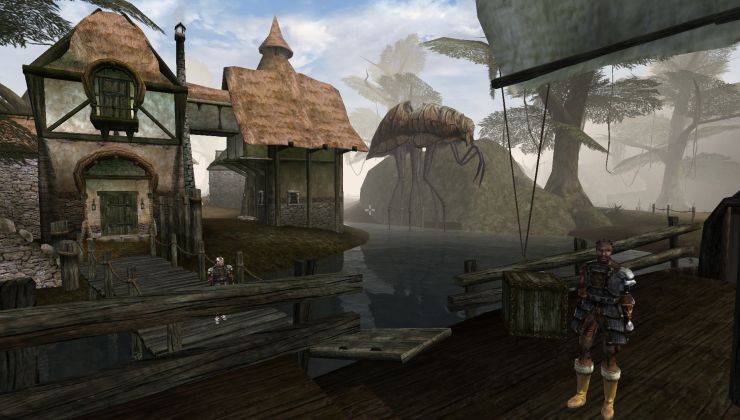 How to setup OpenMW for modern Morrowind on Linux / SteamOS and Steam Deck
 How to install Hollow Knight: Silksong mods on Linux, SteamOS and Steam Deck
Recently Updated
- Feedback needed - future website updates
- Liam Dawe - Steam Deck desktop mode localization
- on_en_a_gros - Why most people are approaching the xz-attack wrong.
- LoudTechie - Lutris alternatives
- sourpuz - Welcome back to the GamingOnLinux Forum
- sourpuz - See more posts