 Support us on Patreon
 PayPal
Latest Comments by slaapliedje
Linux continues to remain above 1% on the Steam Hardware Survey
5 Sep 2021 at 4:00 pm UTC
5 Sep 2021 at 4:00 pm UTC
Quoting: nenoroand 0.001% GentooI always thought of Gentoo users as people who enjoy walking down dark alleys and getting mugged. 😜
Probably the only one who uses gentoo and plays games on it...
I just hope Valve switches for gentoo for steam OS hue hue hue
Take-Two filed a lawsuit against the reverse-engineered GTA III and Vice City developers
5 Sep 2021 at 3:54 pm UTC Likes: 4
Why is everyone mentioning the Switch? You would still have to do a port to ARM, and somehow distribute it and Nintendo wouldn't touch it!
Having an open source engine really only helps x86 people, unless the engine actually has been ported to ARM, then you are looking at hacked Switches, new Macs and Raspberry Pis...Take Two just wants to make sure people buy their remasters instead of using this to mod their originals to look as good or better...
Here is a thought for them, instead of irritating their fan base by suing them, embrace ports to non-Windows!
5 Sep 2021 at 3:54 pm UTC Likes: 4
Quoting: slapinThanks, you basically said what I was trying to. That you can't just 'decompile' code... if you could do that, piracy would be a hell of a lot more rampant than it is, alsi game ports would happen all over the place.Quoting: F.UltraIt looks like you never seen a line of code in your life. They get "decompiled" junk which is mostly useless, and look at assembler output to guess what that is really doing and implement particular piece of code. No "decompiled" "code" remains in the process. Because that code is useless unreadable piece of junk. Usually the "decompile" portion is used to have sense of progress and have easier feel of control flow because disassembly might be too intimidating in large hunks, also compilers add various generated portions of code which can be lots and lots of jumps in there and it is a bit easier to look at these in "decompiled" output because semantic labels are there and some control flow operators and function calls are there. It does not produce useful code however, it is just better disassembly. It does not change the notion of looking at machine code then writing your own code. You should write totally your own code in the end. The decompile part is just to produce aid, it is impossible to use the output directly. And even if you manage to make that decompiled code work in your case, that will be too obvious because it will look like gibberish and there is no such code in re3 as I can tell. So it is safe to assume that reverse engineering was done right and the code produced is not Take-Two's code. All the harm portions are also sound not spectacular. There might be some if somebody would sell these games with assets of original games, but nothing like that happens. I guess Take-Two is the only game company in the world which considers modders as harm to their sales. So I guess the harm of the processing will surpass any harm which ever could be from modding these games.Quoting: slapinWell I do hope for their sake that you are correct and they can prove it, because the T2 lawyers have the main Re3 dev quoted as having written: "So what we typically do is work with the output of the decompiler and massage it back into readable C++"Quoting: F.UltraIIRC there is no decompiled code in re3 source. Also they explained they used dll injection process which would be totally meaningless if they had just decompiled it.Quoting: slapinThat is not what they did, what they did is:Quoting: F.UltraClaim 28 is quite damaging to the reverse-engineering team:This shows that plaintif and you did not understand what reverse engineers say:
28. Papenhoff has admitted that the source code developed via the re3 and reVCIf this is true and it appears to be so, then this is in fact copyright infringement and not something that any of us really can defend.
projects is not original, but rather is (and was intended to be) a copy of the original. In fact,
Defendants have bragged that their derivative source code was created by working backwards
from Take-Two’s final “machine” code to re-create the human-readable code in which GTA was
programmed:
“GTA 3 and Vice City were originally written in [programming
language] C++ . . . The compiled executables that are shipped are in
machine code. So the general task is to go from machine code back to
C++. . . . To go back to C++ is by no means a simple 1:1 mapping, but
over the last 10 or so years decompilers have appeared that help with this
process. . . . So what we typically do is work with the output of the
decompiler and massage it back into readable C++.” Id.
1. GTA code was written in C++
2. They managed to create their own code in C++ working in the same way as GTA code.
If you read they took original GTA code, you need to check your sight.
1. GTA code was written in C++
2. They used a decompiler to turn the GTA binary into fully working C++ code
3. They did changes to the generated C++ code to implement the changes they wanted to make
T2 owns the copyright to the C++ code of the game, but they also of course owns the copyright to the compiled binary so when you use a decompiler to turn the copyrighted binary machine code into autogenerated C++ code then you have just made a 1:1 transformation of the copyrighted code, so this step does not remove any copyrights.
Had they instead used a disassembler to look at how the game engine worked and then wrote their own C++ code based on that observation then what you said would be true, but that is not what they did according to their own wording. Hence why they will have a very hard time making a defense here. But then I'm not a lawyer, not do I play one on TV.
We were lucky that we had symbols from PS2 gta3 and the android games. other than that it was a lot of reading code in IDA and massaging it back into c++. I made a little video about part of the process [1] but i never did part 2.You can also read whole discussion: https://news.ycombinator.com/item?id=26130320 [External Link]
The strategy for gta3 was to replace function by function of the game until we had everything replaced. for VC we evolved our existing code base by, again, reversing function by function until we had everything done. Just not by dll injection this time.
[1] https://www.youtube.com/watch?v=22BeuOOERLo [External Link]
edit: He have also made a YouTube video where it's quite clear that he cleans up autogenerated decompiler c++ code: https://www.youtube.com/watch?v=22BeuOOERLo&t=48s [External Link]
And they should fail now or else lots of projects now are in danger.
Why is everyone mentioning the Switch? You would still have to do a port to ARM, and somehow distribute it and Nintendo wouldn't touch it!
Having an open source engine really only helps x86 people, unless the engine actually has been ported to ARM, then you are looking at hacked Switches, new Macs and Raspberry Pis...Take Two just wants to make sure people buy their remasters instead of using this to mod their originals to look as good or better...
Here is a thought for them, instead of irritating their fan base by suing them, embrace ports to non-Windows!
Take-Two filed a lawsuit against the reverse-engineered GTA III and Vice City developers
4 Sep 2021 at 8:30 pm UTC
4 Sep 2021 at 8:30 pm UTC
Quoting: F.UltraAh, my interpretation was that they rewrote the C++ code based on the assembly code. Not that they basically just did a translation of it to C++ and copied it.Quoting: slaapliedjeUsing a disassembler just to look at the code is not illegal no, but if the binary machine code is copyrighted to T2 then the disassembled C++ code is also copyrighted to T2 since its derived from the copyrighted binary. There is precedence here in Sega vs Accolade where the appeals court decided that disassembled code is "fruit of the poisonous tree".Quoting: F.UltraClaim 28 is quite damaging to the reverse-engineering team:They recreated the C++ code from the machine code disassembled, then patched it to compile on different platforms... From my understanding that's still one valid way of reverse engineering. The other method of course is to study the data files and create code around interpreting it. Copyright infringement would only be if they literally took the original source code and copied it. That's the part that is copyrighted. Using a disassembler is not illegal in any sense of the word.
28. Papenhoff has admitted that the source code developed via the re3 and reVCIf this is true and it appears to be so, then this is in fact copyright infringement and not something that any of us really can defend.
projects is not original, but rather is (and was intended to be) a copy of the original. In fact,
Defendants have bragged that their derivative source code was created by working backwards
from Take-Two’s final “machine” code to re-create the human-readable code in which GTA was
programmed:
“GTA 3 and Vice City were originally written in [programming
language] C++ . . . The compiled executables that are shipped are in
machine code. So the general task is to go from machine code back to
C++. . . . To go back to C++ is by no means a simple 1:1 mapping, but
over the last 10 or so years decompilers have appeared that help with this
process. . . . So what we typically do is work with the output of the
decompiler and massage it back into readable C++.” Id.
However they also decided that it fell under the fair use doctrine since "disassembly is required for humans to understand object code", but as I see it this does not apply here since the disassembled code was not used to understand how the game engine worked, it was used 1:1 to create the base source code of the project.
Arguing that this is legal would IMHO break the copyright protection that we have on GPL:ed code, in that companies can take our code as base and then do "changes" to it and now claim their own copyright on it and make it proprietary.
Steam not working right on Arch Linux? It's an issue with FreeType and there's a fix
3 Sep 2021 at 4:19 pm UTC
3 Sep 2021 at 4:19 pm UTC
Quoting: DebianUserHa, that's when liveCDs come into play :) Speaking of grub, it should be lunch time....Quoting: slaapliedjeYeah rescue mode is pretty helpful in some cases... but not when updates are breaking grub itself :sQuoting: DebianUserSpeaking of rescue modes... I am going to give a shout out to Red Hat here. I was playing around with RHEL 8 in a VM to see how it stood up as a desktop / workstation. I did something and then probably shut down before it had finished, so it was in a weird state. But yet choosing the rescue mode from the command line would boot up a full Gnome desktop! I was quite impressed.Quoting: slaapliedjeI think only users who have make an update at the wrong time have seen the issue (i hope the bug has been fixed rapidly, as reinstalling grub on the disk was sufficient).Quoting: DebianUserHuh, do you have something weird there? I've been running stable for decades, and haven't had grub break. Also, I mean why would you reboot unless you've updated the kernel? :PQuoting: GuestI kinda brace myself since some people love to point fingers at things like this and claim that Arch is a bad/buggy/difficult distro. I ran it for many years and something big like this happened maybe once or twice a year and always had a simple fix; it's darn solid. I am pretty sure I had more problems with my distro of choice's last upgrade than my entire Arch days..I don't know Arch but tu put things into perspective, i'm using Debian, and they have broken grub two times this two last years (on stable), leaving users who have updated at the wrong time with an unbootable device without any warning (have to use another install or live cd, and reinstall grub on the disk).
Of course, this problem has been spotted in derivatives (Ubuntu, Mint...)
So yeah... sh** happens, even on the most stable distros (and on Windows too, of course).
But searching the web for a solution, i found other users with the problem, and one who has stated it was the second time (and it was for me too).
I don't remember the first issue, but the second is here https://www.google.com/search?q=grub_malloc+grub+update&source=lmns&bih=1013&biw=2144&hl=en&sa=X&ved=2ahUKEwiKz9jFqeLyAhUI3OAKHXTDCVEQ_AUoAHoECAEQAA [External Link]
Since that, i keep a old non-updated install on a small partition on another disk, with grub on it, to have another grub/install for rescue, if the same problem happens, i just boot this system, chroot into my main system, and reinstall grub on the main disk.
I must shut down my computer because it is in the same room than my bed :p
Turns out I was playing with enabling fips mode, and it had gone a little sideways, and I just needed to run the command again so it could finish that. But I thought the rescue mode having a sort of 'snapshot' to get a bootable system with full GUI was quite impressive.
Steam not working right on Arch Linux? It's an issue with FreeType and there's a fix
3 Sep 2021 at 4:11 pm UTC
3 Sep 2021 at 4:11 pm UTC
Quoting: denyasisOh maybe? Valve definitely needs to walk a fine line between compatible with older Linux set ups vs using newer libraries. Though as it's mostly using it's own static libraries within it's own tree (separate from if it's sandboxed by flatpak/snap, which causes other strange issues) then it should remain fairly compatible. I thought the problem in this case was that Arch had a new Freetype2 lib, and it's one that Steam does use from the system, and there was some compatibility issue there, so they had to update their package either to include it's own freetype library or make it work with the system's. But then I only read the summary here, and didn't go digging into their github.Quoting: slaapliedjeWasn't this in the FreeType2 package, where the break was?My understanding was the opposite, but I must admit I could be wrong. I'm self taught, so I could be reading it the wrong way, but I figure if Valve has to patch Steam to work, it's likely not a Free type bug, right?
Edit: Looking at the github again, it appears Valve was shipping steam with libraries that were too out of date. Am I reading that right?
Steam not working right on Arch Linux? It's an issue with FreeType and there's a fix
3 Sep 2021 at 3:03 pm UTC
Turns out I was playing with enabling fips mode, and it had gone a little sideways, and I just needed to run the command again so it could finish that. But I thought the rescue mode having a sort of 'snapshot' to get a bootable system with full GUI was quite impressive.
3 Sep 2021 at 3:03 pm UTC
Quoting: DebianUserSpeaking of rescue modes... I am going to give a shout out to Red Hat here. I was playing around with RHEL 8 in a VM to see how it stood up as a desktop / workstation. I did something and then probably shut down before it had finished, so it was in a weird state. But yet choosing the rescue mode from the command line would boot up a full Gnome desktop! I was quite impressed.Quoting: slaapliedjeI think only users who have make an update at the wrong time have seen the issue (i hope the bug has been fixed rapidly, as reinstalling grub on the disk was sufficient).Quoting: DebianUserHuh, do you have something weird there? I've been running stable for decades, and haven't had grub break. Also, I mean why would you reboot unless you've updated the kernel? :PQuoting: GuestI kinda brace myself since some people love to point fingers at things like this and claim that Arch is a bad/buggy/difficult distro. I ran it for many years and something big like this happened maybe once or twice a year and always had a simple fix; it's darn solid. I am pretty sure I had more problems with my distro of choice's last upgrade than my entire Arch days..I don't know Arch but tu put things into perspective, i'm using Debian, and they have broken grub two times this two last years (on stable), leaving users who have updated at the wrong time with an unbootable device without any warning (have to use another install or live cd, and reinstall grub on the disk).
Of course, this problem has been spotted in derivatives (Ubuntu, Mint...)
So yeah... sh** happens, even on the most stable distros (and on Windows too, of course).
But searching the web for a solution, i found other users with the problem, and one who has stated it was the second time (and it was for me too).
I don't remember the first issue, but the second is here https://www.google.com/search?q=grub_malloc+grub+update&source=lmns&bih=1013&biw=2144&hl=en&sa=X&ved=2ahUKEwiKz9jFqeLyAhUI3OAKHXTDCVEQ_AUoAHoECAEQAA [External Link]
Since that, i keep a old non-updated install on a small partition on another disk, with grub on it, to have another grub/install for rescue, if the same problem happens, i just boot this system, chroot into my main system, and reinstall grub on the main disk.
I must shut down my computer because it is in the same room than my bed :p
Turns out I was playing with enabling fips mode, and it had gone a little sideways, and I just needed to run the command again so it could finish that. But I thought the rescue mode having a sort of 'snapshot' to get a bootable system with full GUI was quite impressive.
Take-Two filed a lawsuit against the reverse-engineered GTA III and Vice City developers
3 Sep 2021 at 2:53 pm UTC Likes: 1
1) T2 saw how popular this was.
2) T2 then thought 'but we can't really raise the price on this really old game, and most already own it...'
3) Rockstar, not known for doing remasters of old games... T2 was like 'well why not now? We can resell this!'
4) T2 realized that with an open source engine, and mods, that people could just make their own remastered edition!
5) T2 called lawyers!
3 Sep 2021 at 2:53 pm UTC Likes: 1
Quoting: EhvisI think what this comes down to is this; (and mind you I skipped most of the thread so it was probably already stated).Quoting: F.UltraClaim 28 is quite damaging to the reverse-engineering team:I'm not sure if that would actually be copyright infringement, but it certainly doesn't sound like clean room to me either. I think they'll have a hard time defending this one despite all the nonsense claims of T2 and I don't think any legal defenders of open source will want to burn themselves on this one.
28. Papenhoff has admitted that the source code developed via the re3 and reVCIf this is true and it appears to be so, then this is in fact copyright infringement and not something that any of us really can defend.
projects is not original, but rather is (and was intended to be) a copy of the original. In fact,
Defendants have bragged that their derivative source code was created by working backwards
from Take-Two’s final “machine” code to re-create the human-readable code in which GTA was
programmed:
“GTA 3 and Vice City were originally written in [programming
language] C++ . . . The compiled executables that are shipped are in
machine code. So the general task is to go from machine code back to
C++. . . . To go back to C++ is by no means a simple 1:1 mapping, but
over the last 10 or so years decompilers have appeared that help with this
process. . . . So what we typically do is work with the output of the
decompiler and massage it back into readable C++.” Id.
1) T2 saw how popular this was.
2) T2 then thought 'but we can't really raise the price on this really old game, and most already own it...'
3) Rockstar, not known for doing remasters of old games... T2 was like 'well why not now? We can resell this!'
4) T2 realized that with an open source engine, and mods, that people could just make their own remastered edition!
5) T2 called lawyers!
Take-Two filed a lawsuit against the reverse-engineered GTA III and Vice City developers
3 Sep 2021 at 2:46 pm UTC Likes: 1
3 Sep 2021 at 2:46 pm UTC Likes: 1
Quoting: F.UltraClaim 28 is quite damaging to the reverse-engineering team:They recreated the C++ code from the machine code disassembled, then patched it to compile on different platforms... From my understanding that's still one valid way of reverse engineering. The other method of course is to study the data files and create code around interpreting it. Copyright infringement would only be if they literally took the original source code and copied it. That's the part that is copyrighted. Using a disassembler is not illegal in any sense of the word.
28. Papenhoff has admitted that the source code developed via the re3 and reVCIf this is true and it appears to be so, then this is in fact copyright infringement and not something that any of us really can defend.
projects is not original, but rather is (and was intended to be) a copy of the original. In fact,
Defendants have bragged that their derivative source code was created by working backwards
from Take-Two’s final “machine” code to re-create the human-readable code in which GTA was
programmed:
“GTA 3 and Vice City were originally written in [programming
language] C++ . . . The compiled executables that are shipped are in
machine code. So the general task is to go from machine code back to
C++. . . . To go back to C++ is by no means a simple 1:1 mapping, but
over the last 10 or so years decompilers have appeared that help with this
process. . . . So what we typically do is work with the output of the
decompiler and massage it back into readable C++.” Id.
Take-Two filed a lawsuit against the reverse-engineered GTA III and Vice City developers
3 Sep 2021 at 2:32 pm UTC Likes: 3
3 Sep 2021 at 2:32 pm UTC Likes: 3
I am Jack's complete lack of surprise.
Steam not working right on Arch Linux? It's an issue with FreeType and there's a fix
2 Sep 2021 at 3:19 pm UTC
2 Sep 2021 at 3:19 pm UTC
Quoting: denyasisWasn't this in the FreeType2 package, where the break was? Also, I'm pretty sure Valve doesn't package Steam for Arch... or do they? They didn't used to at least. The Steam package in Arch always made me think it was the weirdest one, as it seemed to be the only one that creates icons for both the Native and Runtime ones and I've never quite understood what the difference is. Always seemed to me, one worked and the other didn't.Quoting: slaapliedjeI'm not sure they've actually said such things, or we've just assumed that's what they'll do, because it'd be madness otherwise.Lol. I don't see anyine saying Arch is buggy here. Obviously because Arch didn't break. Steam did. It's on them to fix it. Could have been any distro. That's what testing is for.
Quoting: GuestEven if Valve use their own repos, issues can still happenAgreed, but that's on Valve to fix it. They are promising a console like experience after all.
- New US Congress bill proposal requires all operating system providers to verify ages [updated]
- Mozilla announced "Thunderbolt", their open-source and self-hostable AI client
- US operating system age verification bill "Parents Decide Act" gets published
- PlayStation 3 emulator RPCS3 can now auto-configure games for you
- X.Org X server and Xwayland security advisory released for multiple issues
- > See more over 30 days here
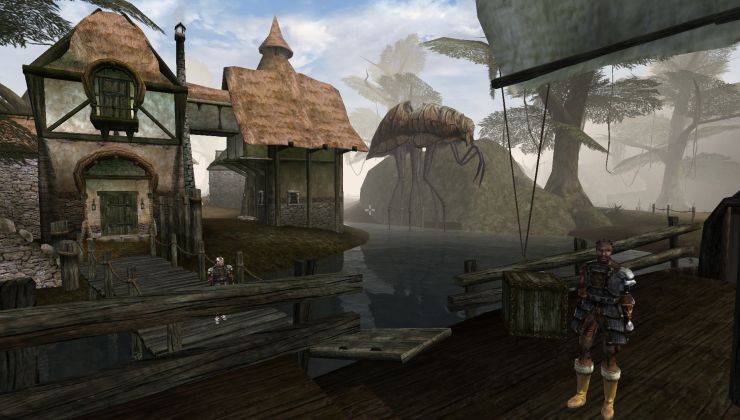 How to setup OpenMW for modern Morrowind on Linux / SteamOS and Steam Deck
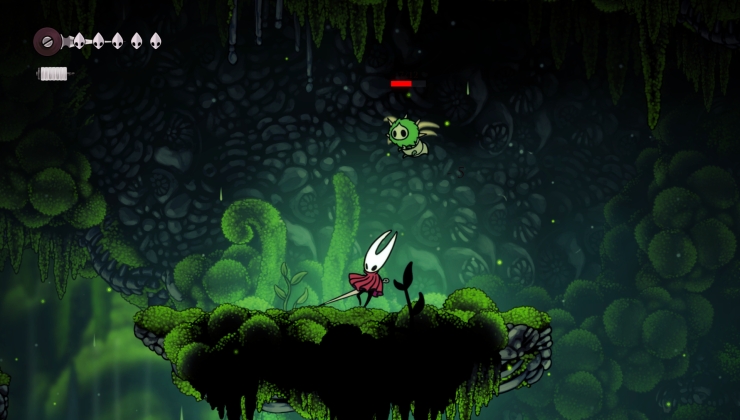 How to install Hollow Knight: Silksong mods on Linux, SteamOS and Steam Deck
- Away all of next week
- Liam Dawe - Testing the VRAM valve patch
- Koopa - New Desktop Screenshot Thread
- tmtvl - Shop Crush - Psychological Horror Thrift Sim with Literal Illusio…
- hollowlimb - Proton/Wine Games Locking Up
- Caldathras - See more posts