Latest Comments by F.Ultra
Timespinner is an upcoming metroidvania that’s looking great and is fun to play
8 Apr 2018 at 2:34 pm UTC Likes: 1
8 Apr 2018 at 2:34 pm UTC Likes: 1
Looks like the Amiga game that never was so I'll definitely instabuy once it gets released on steam.
Something for the weekend - Spec Ops: The Line is free on Humble Store
1 Apr 2018 at 11:53 pm UTC
1 Apr 2018 at 11:53 pm UTC
Anyone having any idea on how to complete the helicopter chase sequence on Fubar? Every other difficulty was a breeze but on Fubar it's basically instakill whatever I do here.
Survival horror games Outbreak & Outbreak: The New Nightmare now on Linux, the next game is coming too
31 Mar 2018 at 4:49 pm UTC
31 Mar 2018 at 4:49 pm UTC
Wow, those Resident Evil memories. Instabought.
Enhanced Doom engine 'GZDoom' has a fresh release, now collecting hardware information
27 Mar 2018 at 7:05 pm UTC Likes: 1
Please we must be able to distinguish between the collection of simple HW info that is useful to devs like this and the 4k+ data points that can fully profile you and predict your every future action that companies then can sell as a commodity to other companies. Allowing the first is not a slippery slope towards the second.
27 Mar 2018 at 7:05 pm UTC Likes: 1
Quoting: LeopardThanks!Quoting: F.UltraBtw how does one get the IWAD files out of the Doom bought from GOG, I reckon that it's a Windows installer so do one have to do a wine install and then move some files or is it possible to open the installer with an archiver and get the files that way or how does this work?You can extract like that , with innoextract.
https://forum.openmw.org/viewtopic.php?t=3510 [External Link]
Quoting: GuestTBH I don't like the (permanent) automatic upload of info to other sites. Especially HW info - how often is that going to change? Why not make it a (main) menu entry 'send HW info to developers'? I'm sure you'd get a LOT more feedback that way.Then the devs will only get the hw details of the few people which have a special interest in sharing that details and is how you end up with the false idea that your user base is 55% Linux users because we are more inclined to tell devs that we are that in order to promote our platform.
At least I would opt out, but happily send it once.
Please we must be able to distinguish between the collection of simple HW info that is useful to devs like this and the 4k+ data points that can fully profile you and predict your every future action that companies then can sell as a commodity to other companies. Allowing the first is not a slippery slope towards the second.
Enhanced Doom engine 'GZDoom' has a fresh release, now collecting hardware information
26 Mar 2018 at 8:11 pm UTC
26 Mar 2018 at 8:11 pm UTC
Btw how does one get the IWAD files out of the Doom bought from GOG, I reckon that it's a Windows installer so do one have to do a wine install and then move some files or is it possible to open the installer with an archiver and get the files that way or how does this work?
Enhanced Doom engine 'GZDoom' has a fresh release, now collecting hardware information
26 Mar 2018 at 8:07 pm UTC Likes: 2
26 Mar 2018 at 8:07 pm UTC Likes: 2
Quoting: throghThen you get data from a very small subset of the users and the data is basically useless. Collecting what HW you have and sending it home anonymized is hardly spying and I have no idea how you can paint this as doing irreversible damage to free software. The collecting that you should worry about is the "who you are and what you do" type of data that Google, Microsoft, Facebook et al collects since that can be used to profile you, the same cannot be said if you happen to have 8 cores or 4.Quoting: F.UltraAnd it is exactly that kind of wrong doing this. Instead it would be better asking for help and not collecting information as default setting or some kind of opt-out process. Besides: We are not talking about "customers" and instead of that "users". Those steps do irreversible damage to free software!Quoting: razing32Are data slurps the new trend ?It's the default because it's so extremely helpful to know exactly what kind of setup your customers actually use.
I get helping with development but it seems to be a default nowadays . :dizzy:
Enhanced Doom engine 'GZDoom' has a fresh release, now collecting hardware information
26 Mar 2018 at 7:43 pm UTC Likes: 1
26 Mar 2018 at 7:43 pm UTC Likes: 1
Quoting: razing32Are data slurps the new trend ?It's the default because it's so extremely helpful to know exactly what kind of setup your customers actually use.
I get helping with development but it seems to be a default nowadays . :dizzy:
AMD has announced 'Radeon-Rays' an open source ray tracing SDK using Vulkan
25 Mar 2018 at 9:06 pm UTC Likes: 1
25 Mar 2018 at 9:06 pm UTC Likes: 1
Quoting: Purple Library GuyYes, I am fully aware of the dangers of vendor lock in and/or monopoly but I'm not 100% sure that all studios are. My original comment was an observation not an opinion :)Quoting: F.UltraThat would be the rub, though (well, one of them). Once all your customers are stuck on one platform and you're dependent on the tools made by the vendor of that platform, they can take as much of your profits as they want, because you have no other choices. It's the vendor's tools or you're not selling anything.Quoting: TheRiddickMS and NVIDIA would be very happy if Vulkan died off, or developers steer away from it. But realistically who wants to forever be locked in to Windows10 and XBOX1 platform? at least who in their right mind would...Actually I think that many studios would be happy to be locked to a single platform like XBOX1 if this also meant that all customers where locked into it and there where no middle man taking 30% of the profits.
Why do people think companies struggle so hard to gain monopolies? Why do people think laws got passed against monopolies in the first place?
AMD has announced 'Radeon-Rays' an open source ray tracing SDK using Vulkan
25 Mar 2018 at 1:40 am UTC Likes: 1
25 Mar 2018 at 1:40 am UTC Likes: 1
Quoting: TheRiddickMS and NVIDIA would be very happy if Vulkan died off, or developers steer away from it. But realistically who wants to forever be locked in to Windows10 and XBOX1 platform? at least who in their right mind would...Actually I think that many studios would be happy to be locked to a single platform like XBOX1 if this also meant that all customers where locked into it and there where no middle man taking 30% of the profits. A single platform means far easier development and also that you can cheaply create a remaster for the next gen console and sell the same game once more and console means less piracy.
Doom (2016) could have been on Linux, id Software made a Linux version sound easy to do
25 Mar 2018 at 1:32 am UTC Likes: 2
25 Mar 2018 at 1:32 am UTC Likes: 2
This have exactly nothing to do with anything technical, it's all management decisions. That they releases Skyrim on the Switch is probably not only due to the Switch being a success but also that they have some back room deal with Nintendo for supporting the platform.
They will not sell the rights to Feral because what if Linux gaming suddenly takes off, then they would loose a lot of sales to Feral. So they would have to make the deal so expensive that Feral could not ever accept it. Also for some companies control is a big issue and they will never outsource any parts to an outside company like Feral and thus loose control over the Linux port.
Look at how Warner handled No One Lives Forever [External Link], they decided in the end to not earn any money on a re-release now since they perhaps one day in the future might decide to do it in house (which will never happen). Big corporations can afford to be this stupid.
That is not to say that things like SDL and Vulkan are stupid like some of the posters here have written. Yes that will not automagically make a Linux port happen, but it increases the likelihood of it happening. Once the management side decides to do it there have to also be a technical decision on the amount of work needed. Here we have the technical side ok but the management side denying the port, it could as easily have been the other way around as well. We need them both on our side.
They will not sell the rights to Feral because what if Linux gaming suddenly takes off, then they would loose a lot of sales to Feral. So they would have to make the deal so expensive that Feral could not ever accept it. Also for some companies control is a big issue and they will never outsource any parts to an outside company like Feral and thus loose control over the Linux port.
Look at how Warner handled No One Lives Forever [External Link], they decided in the end to not earn any money on a re-release now since they perhaps one day in the future might decide to do it in house (which will never happen). Big corporations can afford to be this stupid.
That is not to say that things like SDL and Vulkan are stupid like some of the posters here have written. Yes that will not automagically make a Linux port happen, but it increases the likelihood of it happening. Once the management side decides to do it there have to also be a technical decision on the amount of work needed. Here we have the technical side ok but the management side denying the port, it could as easily have been the other way around as well. We need them both on our side.
- Valve announce a reservation system for the new Steam Controller
- VKD3D-Proton 3.0.1 brings many Linux gaming enhancements for Direct3D 12 via Vulkan
- Proton Experimental gets fixes for Rocket League, Crimson Desert, Helldivers 2 and more
- Civilization VII "Test of Time" update lands May 19, finally letting you play entirely as one civ
- Classic Eugen Systems RTS game R.U.S.E. returns with upgrades and Steam Deck support
- > See more over 30 days here
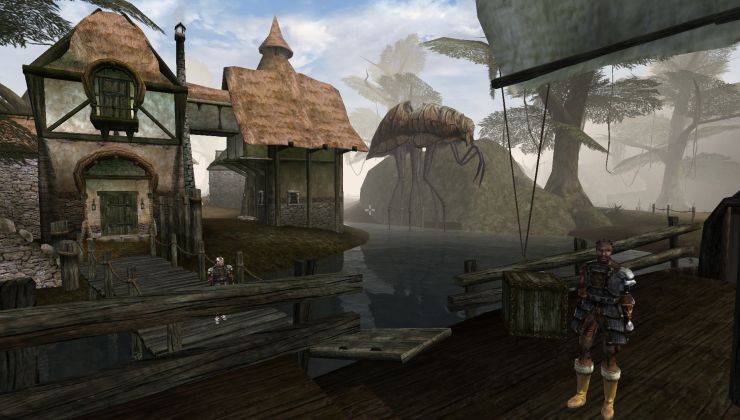 How to setup OpenMW for modern Morrowind on Linux / SteamOS and Steam Deck
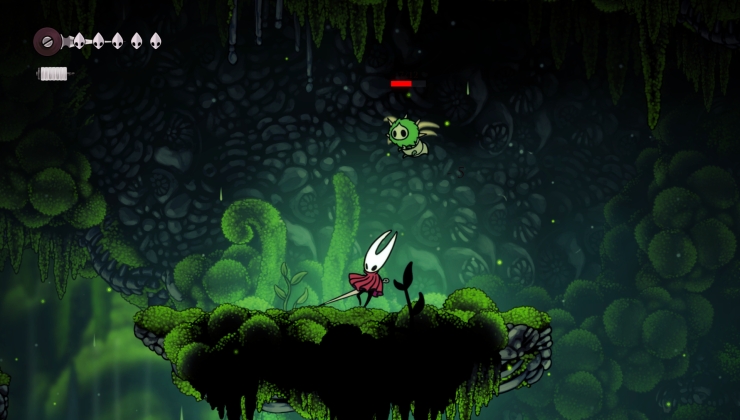 How to install Hollow Knight: Silksong mods on Linux, SteamOS and Steam Deck