 Support us on Patreon
 PayPal
Latest Comments by CatKiller
Collabora put up their patches for Linux Kernel work to help Windows games on Linux
20 Nov 2020 at 7:10 pm UTC Likes: 4
20 Nov 2020 at 7:10 pm UTC Likes: 4
Quoting: Purple Library GuyI have a cunning strategy for dealing with this situation:That's so cunning you could put a tail on it and call it a weasel.
Wait.
Facebook are now funding the open source 3D creation suite Blender
20 Nov 2020 at 6:40 pm UTC Likes: 4
More interesting is oomd, which is a proper open source infrastructure product out of Facebook that serves a genuine need in the Linux ecosystem. They had an itch that needed scratching, and everyone benefits, exactly as it should be.
20 Nov 2020 at 6:40 pm UTC Likes: 4
In a move that's sure to raise a few eyebrows, the Blender Foundation has announced that Facebook has joined the Blender Development Fund.It's not really that big a deal: others have already shown that donating money to Blender is an easy and cheap way to get some positive PR, and I'd imagine that they would like people to be able to make game assets so they can sell them in their games store to run on their games hardware.
More interesting is oomd, which is a proper open source infrastructure product out of Facebook that serves a genuine need in the Linux ecosystem. They had an itch that needed scratching, and everyone benefits, exactly as it should be.
Collabora put up their patches for Linux Kernel work to help Windows games on Linux
20 Nov 2020 at 2:38 pm UTC Likes: 1
20 Nov 2020 at 2:38 pm UTC Likes: 1
Oh, also
5.6 was released on 29 March 2020 and 5.7 was released on 31 May 2020, so 63 days between them.
Quoting: scaineI'm not sure what the release schedule is for kernels - they seem to be every two months or so, although there was a 6 month gap between 5.6 and 5.7.2-3 months between versions. They switched to a more regular cadence after the trials of the 2.x era. Less than that, and it isn't done, and more than that and Linus gets fidgety.
5.6 was released on 29 March 2020 and 5.7 was released on 31 May 2020, so 63 days between them.
Collabora put up their patches for Linux Kernel work to help Windows games on Linux
20 Nov 2020 at 2:29 pm UTC Likes: 2
20 Nov 2020 at 2:29 pm UTC Likes: 2
Quoting: scaineI'm currently running the latest 5.9 from mainline using the low-latency option. It works really well, but I think I might give Liquorix a shot, since it will update automatically, AND includes the fsync patches. Liquorix (https://liquorix.net [External Link] ) support PPA and AUR updates, which is pretty cool.Bear in mind that the last benchmarks I saw showed the liquorix kernel significantly underperforming compared to the standard generic and lowlatency Ubuntu kernels. You might find that it helps the games that need the newer scheduler patches, but makes everything else worse.
Total War: WARHAMMER II – The Twisted & The Twilight announced for December
20 Nov 2020 at 12:19 pm UTC Likes: 1
20 Nov 2020 at 12:19 pm UTC Likes: 1
I don't really like strategy games all that much, and I don't have that much interest in Warhammer, but I am still tempted to get this to help keep Feral in the Linux-porting business.
AMD Radeon RX 6800 and the RX 6800 XT are out today
18 Nov 2020 at 6:33 pm UTC
The invention of xorg.conf.d and being able to use snippets rather than having to specify the whole thing was a great improvement.
18 Nov 2020 at 6:33 pm UTC
Quoting: tuubiYou should simply remove the old xorg.conf file. You don't need one for AMD or Intel.You don't need one with Nvidia, either, and the butchered thing that their automated tool produces is just awful.
In case you want to fiddle with options (e.g. to enable TearFree), it's better to just create a new file in /etc/X11/xorg.conf.d/ containing nothing but the device section for the driver.
The invention of xorg.conf.d and being able to use snippets rather than having to specify the whole thing was a great improvement.
War Thunder gets a huge upgrade along with Vulkan by default on Linux (updated)
18 Nov 2020 at 1:01 pm UTC Likes: 1
18 Nov 2020 at 1:01 pm UTC Likes: 1
Quoting: NanobangThough I'm grateful for everything Valve has done for Linux gaming, the one place where I feel they've dropped the ball is in creating and maintaining a standard Linux for Steam gaming. Originally it was Ubuntu 12.04, wasn't it? And/or SteamOS?They did. It was the Steam Linux Runtime, which was based on the libraries that were in Ubuntu 12.04. If developers targeted that rather than any particular distro, they'd have many fewer things to deal with. The issues with that implementation, and the things they've done to improve it since, are detailed in some recent videos that Liam put up some articles about. They're worth a watch.
A year later Stadia has messaging, user profiles and possibly new countries coming
18 Nov 2020 at 11:52 am UTC
18 Nov 2020 at 11:52 am UTC
I'm quietly hopeful that Embr will be a game that goes from Stadia to desktop Linux. Guns Of Icarus was Linux-native, and worked well, but they didn't bother to release their subsequent game for Linux. Now that they've likely been paid already (apparently Capcom got $10 million to put RE7 & 8 on Stadia) to make the Linux version of Embr work, and it's done in Unity, and they've released Linux-native games before, the fact that they've already done the work might be enough to clear the hurdles. It won't happen till it happens, though, of course.
Valve contractor working to add Direct3D 12 support to APITrace for VKD3D-Proton
18 Nov 2020 at 11:33 am UTC Likes: 12
18 Nov 2020 at 11:33 am UTC Likes: 12
For those that aren't aware, it was also Joshua Ashton that did the work [External Link] to move Quake 2 RTX to the vendor-neutral Vulkan ray tracing extension, for when Khronos gets round to finalising it. Busy, busy, busy.
War Thunder gets a huge upgrade along with Vulkan by default on Linux (updated)
18 Nov 2020 at 11:28 am UTC Likes: 2
Like a Proton title, that lack of support from the developer means that the product just isn't worth as much as if it were supported.
18 Nov 2020 at 11:28 am UTC Likes: 2
Quoting: Lord_PhoenixI watched an interview with the producer (I think) and they said they are not really investing into linux, because while it works somewhat it's fine, but no major investment/improvement planned because linux is such a mess.For clarification, if that's their position, they're saying that Linux is not supported, which means that no one should give them money in exchange for their Linux support.
Like a Proton title, that lack of support from the developer means that the product just isn't worth as much as if it were supported.
- Linux smashes past 5% on the Steam Survey for the first time
- Wine 11.6 is an exciting release to make modding Windows games on Linux simpler
- Heretic II has a new reverse-engineered source port
- French consumer group UFC-Que Choisir sues Ubisoft over The Crew shutdown
- Lakehopper looks like a wonderful casual seaplane flight simulator
- > See more over 30 days here
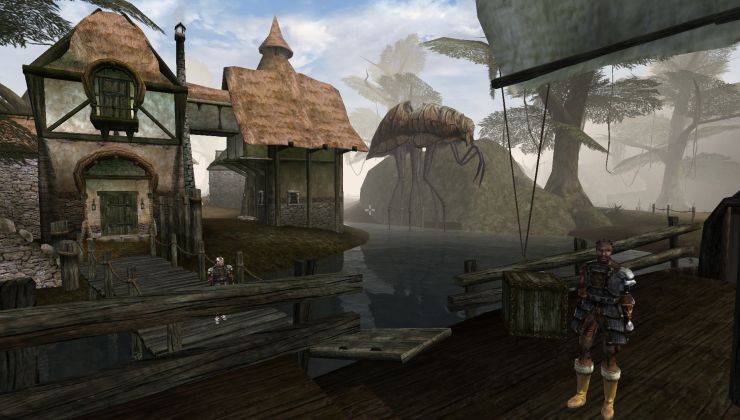 How to setup OpenMW for modern Morrowind on Linux / SteamOS and Steam Deck
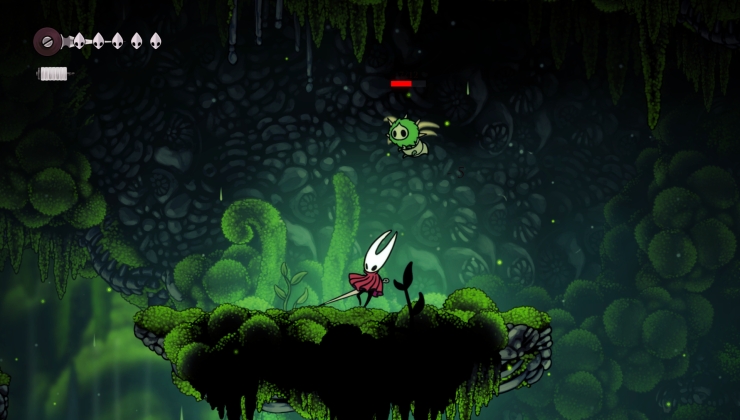 How to install Hollow Knight: Silksong mods on Linux, SteamOS and Steam Deck
- The Great Android lockdown of 2026.
- tmtvl - New Desktop Screenshot Thread
- Hamish - Away all of next week
- Xpander - What Multiplayer Shooters are yall playing?
- Liam Dawe - Proton/Wine Games Locking Up
- Caldathras - See more posts