 Support us on Patreon
 PayPal
Latest Comments by F.Ultra
Canonical want help testing their Steam snap package for Ubuntu
27 Mar 2023 at 8:58 am UTC
But I can guess that it is difficult since they obviously want their users to use snap so they have built it into the system basically.
27 Mar 2023 at 8:58 am UTC
Quoting: slaapliedjeOne can always criticize the implementation of course. I have zero experience with the software center since I only use apt directly and thus had zero problems removing snap from e.g servers (I run a few micro servers at aws where I had to really squeeze out every available byte of RAM).Quoting: F.UltraMy actual problem with snap is how difficult it is to remove it from an Ubuntu system... well less about how difficult it is, but it's annoying that it breaks the Ubuntu Software Center when you do. If you want to just use flatpak / debs, you're basically going to be using gnome-software (if you want gui).Quoting: slaapliedjeOf course, but then perhaps also at the same time stop the hate for snap? I mean that was the context, not that you had to use it ;)Quoting: F.UltraRight, but who would want to bother when you can just use flatpak? :)Quoting: slaapliedjeThe URL to the store is most likely hardcoded in the source code of snapd, but the code is open so it can be forked and so far we don't know how Canonical would treat a patch that changes that to a config value under say /etc/snap.d/.Quoting: F.UltraI'd like to be proven wrong, but I'm pretty sure their backend is tied very much into their client.Quoting: slaapliedjeI bet you if there could be alt stores to snap, no one would hate it as much as they do.Well that is the situation today but people still hate it as much as they do. Now there AFAIK does not yet exist such a store, but there _could_ do since everything needed to build it is available, it's just that no one have bothered and that is hardly Canonical:s fault.
But I can guess that it is difficult since they obviously want their users to use snap so they have built it into the system basically.
Atari are acquiring Night Dive Studios
26 Mar 2023 at 4:01 pm UTC
26 Mar 2023 at 4:01 pm UTC
Quoting: SslaxxThe plot thickens indeed. Not sure why though, the company does not go well economically.Quoting: F.UltraAlso Wade owns 13% of Night Dive. Come to a deal with them to carve up Atari, perhaps?Quoting: Purple Library GuyI don't think they have talked to any banks, Irata LLC who they loaned money from looks to be a holding company controlled by the CEO of Atari (Wade Rosen) so it looks like he is for some reason trying to take over the company from the other owners. And it took me until right now before I realied that Irata is atarI spelled backwards...Quoting: F.UltraHmmm . . . maybe they said to the banks "Look, we aren't profitable, we have no idea how to start turning a profit, and we already owe you money. Our only chance of paying it back is if we take over someone who can make a profit and use their money. Lend us more so we can do that!"Quoting: Mumrik93Where did Atari get the money to buy them? The Atari VCS was a massive failure on so many levels I have issues believing any bank would be inclined to give them a loan.They received €12.5M from their share holders last year by way of a rights issue and got a €2.4M loan from Irata LLC, according to their latest report they are still not profitable and had a higher loss in 2022-H2 then 2022-H1
They might go for it--that's more or less the business model of a lot of private equity firms.
Atari are acquiring Night Dive Studios
25 Mar 2023 at 11:27 pm UTC Likes: 3
25 Mar 2023 at 11:27 pm UTC Likes: 3
Quoting: Purple Library GuyI don't think they have talked to any banks, Irata LLC who they loaned money from looks to be a holding company controlled by the CEO of Atari (Wade Rosen) so it looks like he is for some reason trying to take over the company from the other owners. And it took me until right now before I realied that Irata is atarI spelled backwards...Quoting: F.UltraHmmm . . . maybe they said to the banks "Look, we aren't profitable, we have no idea how to start turning a profit, and we already owe you money. Our only chance of paying it back is if we take over someone who can make a profit and use their money. Lend us more so we can do that!"Quoting: Mumrik93Where did Atari get the money to buy them? The Atari VCS was a massive failure on so many levels I have issues believing any bank would be inclined to give them a loan.They received €12.5M from their share holders last year by way of a rights issue and got a €2.4M loan from Irata LLC, according to their latest report they are still not profitable and had a higher loss in 2022-H2 then 2022-H1
They might go for it--that's more or less the business model of a lot of private equity firms.
Atari are acquiring Night Dive Studios
24 Mar 2023 at 9:27 pm UTC Likes: 2
24 Mar 2023 at 9:27 pm UTC Likes: 2
Quoting: Mumrik93Where did Atari get the money to buy them? The Atari VCS was a massive failure on so many levels I have issues believing any bank would be inclined to give them a loan.They received €12.5M from their share holders last year by way of a rights issue and got a €2.4M loan from Irata LLC, according to their latest report they are still not profitable and had a higher loss in 2022-H2 then 2022-H1
Canonical want help testing their Steam snap package for Ubuntu
24 Mar 2023 at 9:15 pm UTC
24 Mar 2023 at 9:15 pm UTC
Quoting: slaapliedjeOf course, but then perhaps also at the same time stop the hate for snap? I mean that was the context, not that you had to use it ;)Quoting: F.UltraRight, but who would want to bother when you can just use flatpak? :)Quoting: slaapliedjeThe URL to the store is most likely hardcoded in the source code of snapd, but the code is open so it can be forked and so far we don't know how Canonical would treat a patch that changes that to a config value under say /etc/snap.d/.Quoting: F.UltraI'd like to be proven wrong, but I'm pretty sure their backend is tied very much into their client.Quoting: slaapliedjeI bet you if there could be alt stores to snap, no one would hate it as much as they do.Well that is the situation today but people still hate it as much as they do. Now there AFAIK does not yet exist such a store, but there _could_ do since everything needed to build it is available, it's just that no one have bothered and that is hardly Canonical:s fault.
Canonical want help testing their Steam snap package for Ubuntu
22 Mar 2023 at 6:45 pm UTC
22 Mar 2023 at 6:45 pm UTC
Quoting: slaapliedjeThe URL to the store is most likely hardcoded in the source code of snapd, but the code is open so it can be forked and so far we don't know how Canonical would treat a patch that changes that to a config value under say /etc/snap.d/.Quoting: F.UltraI'd like to be proven wrong, but I'm pretty sure their backend is tied very much into their client.Quoting: slaapliedjeI bet you if there could be alt stores to snap, no one would hate it as much as they do.Well that is the situation today but people still hate it as much as they do. Now there AFAIK does not yet exist such a store, but there _could_ do since everything needed to build it is available, it's just that no one have bothered and that is hardly Canonical:s fault.
Canonical want help testing their Steam snap package for Ubuntu
20 Mar 2023 at 8:26 pm UTC Likes: 2
20 Mar 2023 at 8:26 pm UTC Likes: 2
Quoting: slaapliedjeI bet you if there could be alt stores to snap, no one would hate it as much as they do.Well that is the situation today but people still hate it as much as they do. Now there AFAIK does not yet exist such a store, but there _could_ do since everything needed to build it is available, it's just that no one have bothered and that is hardly Canonical:s fault.
Canonical want help testing their Steam snap package for Ubuntu
20 Mar 2023 at 8:23 pm UTC Likes: 2
A browser because it is a major target and thus benefits much from being sand-boxed, also all browsers use heavily forked dependencies so they already have to bundle all their dependencies anyway making the practical difference between a container and a .deb
And a games store have all of the above _and_ also hosts closed source, so not trusted, applications combined with the fact that those applications (aka games) don't really have to interact with the rest of the system.
The supplied .deb from Valve is also nothing else than a small script that downloads the real steam package, so it is not a .deb containing the Steam application.
20 Mar 2023 at 8:23 pm UTC Likes: 2
Quoting: SchattenspiegelSo, there is a working .deb of Steam provided by Valve and then Canonical decides, nah, that is working to well on our distribution, let's introduce additional points of failure by wrapping it into lot's of additional bubble wrap withWhile I am among the crowd that hates containers with a passion I must say that _if_ there ever would be a use case for containers on a desktop then a browser and a games store would be it.our personal logothis totally open and free packaging standard that everyone could use if they went a little bit out of their way and accepted a few performance and efficiency regressions - on it an then ask the community - assuming said community can fit the 'improved' product's more ...chunky... dimensions into their existing gaming spaces and time schedules - to QA it because otherwise to big a task?
At first glance one might be tempted to ask: Why?
But then I remembered something that is easily forgotten these days: this is Linux! So if someone is doing to do some crazy and unnecessary Stuff - just because!- , you take a casual, fascinated glance at this marvel, offer a barely audible, but heartfelt 'Neat!' as commentary, and move on with your life.
A browser because it is a major target and thus benefits much from being sand-boxed, also all browsers use heavily forked dependencies so they already have to bundle all their dependencies anyway making the practical difference between a container and a .deb
And a games store have all of the above _and_ also hosts closed source, so not trusted, applications combined with the fact that those applications (aka games) don't really have to interact with the rest of the system.
The supplied .deb from Valve is also nothing else than a small script that downloads the real steam package, so it is not a .deb containing the Steam application.
Apex Legends banning some Linux players, keep an eye out Steam Deck players
2 Mar 2023 at 12:56 am UTC Likes: 4
2 Mar 2023 at 12:56 am UTC Likes: 4
Quoting: GuestIndie devs: port their games to every platform possible, flawless native linux ports.While true on a level we also have to remember that indie devs owns their own games and can make their own decisions. When it comes to AAA studios the devs are not allowed to make any decision like this on their own. And the finance guys that runs the show in AAA studios sees the Linux market as far to little to be worth the effort (compare with say the movie industry where the financiers require that the movie makes 3-4 times the money or they consider it as a flop while a indie movie maker would see anything above production costs as a huge win).
AAA studios with billions of dollards profit: wE cAn't aFfOrD LiNUx sUpPoRt uwu :cry::cry::cry:
just admit that game industry is full of incompetent useless people managed by greedy billioners. even though you buy all games, you don't support developers. you support upper management's annual paychecks so they buy another yacht size of aircraft carrier
Ubuntu flavours to drop Flatpak by default and stick to Snaps
23 Feb 2023 at 9:32 pm UTC Likes: 3
People also tend to forget the sorry state of Gnome 3.0 when it was released that made every distro out there either keep using the old Gnome 2.0, switch to something else or create something new like MATE or Unity.
And now again people are up in arms because some variant of Ubuntu will not default install flatpack, while it will remain in repos so any one that wants it can install it. Sometimes our community is worse than The People's Front of Judea.
23 Feb 2023 at 9:32 pm UTC Likes: 3
Quoting: CatKillerAnd they did plan to use Wayland, and if I don't remember wrong they where about to be the first distro to use it (just like they where the first to use Pulse) but then they discovered that it wasn't fully functional yet so they moved that back and started to work on bringing Mir to the desktop instead.Quoting: F.UltraThe same is also true of snaps, Mir, and Unity. Snaps predate flatpaks and have features that flatpaks still lack. Wayland wasn't (and still isn't) a good choice for phones since it's for the desktop. There (still) isn't a convergent desktop environment that will work across phones, netbooks, tablets and the desktop, which was the aim of Unity.Quoting: whizseI can't say I have a stake in this, but it's interesting to ponder that Ubuntu seems to have a habit of betting on the wrong horse, Mir and upstart, for example.I wish that people would stop bringing up Upstart in discussions like these. Upstart predates systemd by 4 years and was at the time the best candidate to replace the ancient SysVinit which is why many, including Red Hat and Chromebooks, move over to Upstart.
Canonical's problem is that they want to push things forward but don't have Red Hat (IBM now) money.
People also tend to forget the sorry state of Gnome 3.0 when it was released that made every distro out there either keep using the old Gnome 2.0, switch to something else or create something new like MATE or Unity.
And now again people are up in arms because some variant of Ubuntu will not default install flatpack, while it will remain in repos so any one that wants it can install it. Sometimes our community is worse than The People's Front of Judea.
- Valve announce a reservation system for the new Steam Controller
- Civilization VII "Test of Time" update lands May 19, finally letting you play entirely as one civ
- Proton Experimental gets fixes for Rocket League, Crimson Desert, Helldivers 2 and more
- Linux security flaws Dirty Frag and Copy Fail are a good reminder to stay up to date
- SteamOS 3.8.4 Beta brings further Steam Machine support and fixes for experimental nested desktop mode
- > See more over 30 days here
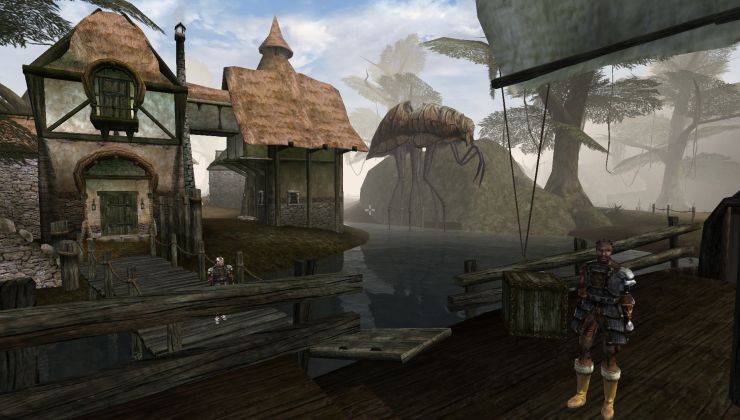 How to setup OpenMW for modern Morrowind on Linux / SteamOS and Steam Deck
 How to install Hollow Knight: Silksong mods on Linux, SteamOS and Steam Deck
- The Great Android lockdown of 2026.
- mr-victory - What's bad about generative AI on the Internet and beyond, exactl…
- GustyGhost - The value of ecosystem.
- LoudTechie - Lutris alternatives
- Tulon - Terminal trick - progress indicator in the task manager…
- Shmerl - See more posts